Millermatic 255 vs Lincoln 260: Technical Review
Choosing a heavy-duty multi-process welder requires evaluating arc stability and power delivery. This technical breakdown analyzes the operational differences between these two flagship machines.

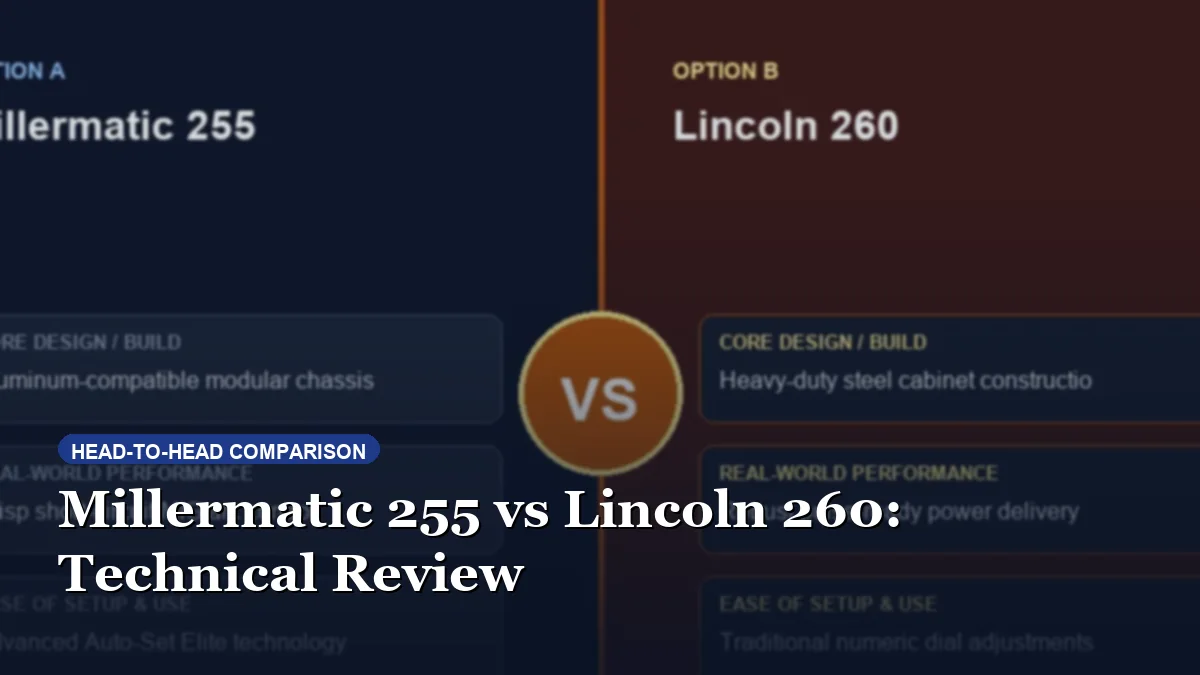
Pick the Millermatic 255 for intuitive digital interface controls and lighter mobile fabrication setups. Choose the Lincoln 260 when you require superior heavy industrial duty cycles and traditional transformer-style reliability.
Compare all top models in our Best Welder: Top Home Shop & Jobsite Picks Tested.
Side-by-Side Breakdown
| Criteria | Millermatic 255 | Lincoln 260 | Edge |
|---|---|---|---|
| Core Design / Build | Aluminum-compatible modular chassis | Heavy-duty steel cabinet construction | Lincoln 260 |
| Real-World Performance | Crisp short-circuit MIG arc control | Robust pulse-ready power delivery | Millermatic 255 |
| Ease of Setup & Use | Advanced Auto-Set Elite technology | Traditional numeric dial adjustments | Millermatic 255 |
| Durability & Reliability | Industrial grade internal components | Rugged industrial wire drive system | Tie |
| Efficiency / Operating Footprint | Compact inverter power source | Heavier conventional transformer architecture | Millermatic 255 |
| Maintenance Requirements | Routine inverter dust blowing | Standard drive roll gear lubrication | Tie |
| Best Ideal Use Case | Job shops needing quick adjustments | Production floors running solid wire | Split |
Core Design & Engineering Differences
Engineering a flagship multi-process machine demands balancing raw power output against structural weight. Both manufacturers approach physical housing design using distinct architectural philosophies built for demanding workshops.
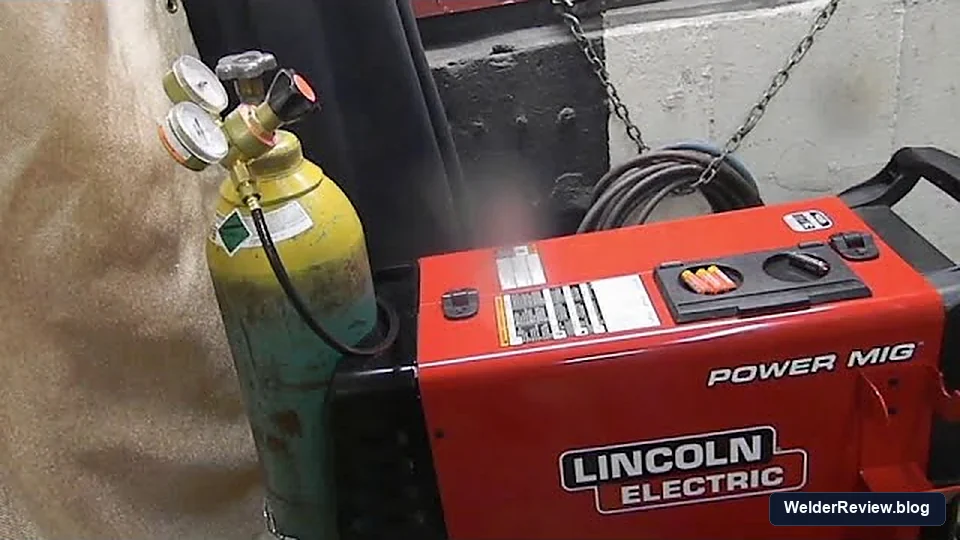
The internal topology dictates how each unit handles thermal dissipation during extended structural steel fabrication runs and heavy industrial applications.
The Miller Millermatic 255 utilizes an inverter-based architecture designed to reduce overall cabinet weight while maintaining robust structural integrity for mobile service trucks and busy fabrication floor environments.
Read our Lincoln Power MIG 260 review to see why it incorporates a heavy-duty transformer-rectifier hybrid design prioritizing long-term industrial durability and resistance to harsh shop conditions over lightweight portability.
- Inverter-based architecture reduces total operational weight significantly.
- Heavy-gauge steel housings protect internal components from jobsite impacts.
- Optimized airflow channels isolate sensitive digital circuit boards.
Chassis Construction and Materials
Heavy-duty internal frames prevent alignment shifts during transport across rough concrete floors. Structural integrity remains paramount when mounting dual gas cylinders.
Panel coatings resist corrosion from aggressive workshop chemicals and standard industrial cleaning solvents.
- Powder-coated external panels prevent rust formation.
- Reinforced base trays support large shielding gas cylinders securely.
Real-World Performance & Arc Quality
Evaluating real-world arc characteristics requires striking beads on structural carbon steel and aluminum plates. Stable arc initiation minimizes spatter and reduces post-weld cleanup time.
As detailed in our Miller Millermatic 255 review, precise voltage control sensitivity allows operators to dial in exact parameters for thin sheet metal or heavy plate welding without compromising penetration profiles.
During short-circuit MIG processes on thin carbon steel, the Miller unit delivers exceptional arc stability through proprietary waveform control technology that minimizes spatter and reduces post-weld cleanup time.
The Lincoln alternative excels in spray transfer modes by providing a wider voltage sweet spot that penetrates thick structural plates smoothly without requiring constant manual parameter adjustments.
- Consistent voltage stabilization prevents unexpected arc wander.
- Deep puddle penetration ensures structural weld integrity on thick joints.
- Low spatter transfer modes reduce secondary grinding requirements.
Short-Circuit and Spray Transfer
Transitioning between short-circuit and spray transfer modes must occur seamlessly during multi-pass structural fabrication. Proper inductance tuning directly influences puddle wetting action.
Operators running heavy wire diameters benefit from consistent amperage output across extended arc durations.
- Smooth globular transfer reduction improves bead appearance.
- Precise inductance tuning controls puddle fluidity effectively.
Interface Usability & Digital Control Systems
Modern digital displays transform how welders interact with complex multi-process parameter menus. Clear screen layouts reduce operator error during high-production shift work.
Preset material thickness charts help novice operators achieve correct baseline settings before fine-tuning arc characteristics for specific joint configurations.
Miller integrates a large 7-inch color LCD screen featuring Auto-Set Elite technology, allowing operators to dial in material thickness and wire diameter rapidly with minimal training overhead.
Lincoln relies on an industrial digital display paired with a traditional control dial, favoring glove-friendly tactile feedback and straightforward menu navigation over graphical touch interfaces.
- High-contrast screens remain visible under harsh shop lighting.
- Simplified menu navigation accelerates operator onboarding times.
- Precise digital readouts display actual voltage and wire feed speed.
Preset Programs and Custom Memories
Saving proprietary weld parameters into onboard memory banks streamlines repetitive production tasks. Operators can recall exact voltages instantly.
Advanced synergic controls automatically match wire feed speed to requested voltage inputs.
- Memory slots store custom job profiles securely.
- Synergic curves optimize parameters for various shielding gases.
Wire Feed Mechanics & Drive Roll Systems
Reliable wire feeding directly prevents costly birdnesting issues during continuous production runs. Precision-machined drive rolls maintain constant tension on soft aluminum or hard steel wires.
Four-roll drive mechanisms provide superior pushing force through long gun assemblies without slipping or chewing soft electrode materials.
Both machines feature cast aluminum dual-drive mechanisms designed to prevent bird-nesting, yet Miller includes toolless quick-change rolls that simplify swapping between solid and flux-cored wires.
Lincoln counters with a precision-geared four-roll drive system option on specific configurations, ensuring exceptionally consistent wire delivery over extended torch lead lengths in heavy production setups.
- Toolless drive roll changes accelerate routine maintenance tasks.
- Adjustable tension arms accommodate varying wire spool diameters.
- Enclosed feed compartments protect filler metals from shop dust.
Drive Motor Torque and Spool Guns
High-torque gear motors maintain steady wire feed speeds even when welding leads are stretched across large workspaces.
Direct plugin compatibility for specialized spool guns simplifies aluminum fabrication without external interface modules.
- Consistent motor torque eliminates wire stuttering issues.
- Quick-disconnect gun ports reduce setup downtime.
Maintenance Protocols & Thermal Efficiency
Scheduled maintenance preserves internal component lifespan and prevents unexpected thermal overloads. Dust accumulation on circuit boards requires regular compressed air cleaning intervals.
Efficient cooling fans operate on demand to minimize dust ingestion while maintaining safe operating temperatures under heavy industrial workloads.
Proper upkeep requires regular inspection of the cooling fan assembly and internal dust barriers to maintain optimal thermal efficiency during high-amperage structural welding operations.
Operators must also routinely service the drive roll tensioners and contact tips to prevent erratic wire feeding and electrical resistance issues during continuous multi-pass fabrication tasks.
- Removable side panels provide easy access to internal dust filters.
- Thermal overload indicators protect transformers from permanent damage.
- Sealed electrical connections resist moisture and corrosive vapors.
Consumable Wear and Replacement
Contact tips, nozzles, and liners experience high thermal stress during continuous spray transfer operations. Routine inspection prevents erratic arc behavior and poor gas coverage.
Keeping spare consumables organized minimizes equipment downtime on busy fabrication schedules.
- Standardized consumable threading simplifies replacement parts stocking.
- Heavy-duty diffuser designs withstand high radiant heat loads.
Electrical Demands & Duty Cycle Ratings
Industrial input power requirements dictate proper breaker sizing and extension cord gauge selections. Operating near maximum output demands robust electrical supply infrastructure.
High duty cycle ratings allow continuous welding operations without forcing unexpected thermal shutdown periods during critical project deadlines.
Operating on standard single-phase 230V power, the Miller unit delivers a 250-amp output at a 40 percent duty cycle, perfectly suited for medium-duty commercial fabrication workloads.
In our Lincoln 260 welder review, we evaluate how the machine provides robust electrical performance with a 260-amp rating, offering the thermal headroom required for prolonged runs on thick steel weldments.
- Dual-voltage capabilities accommodate diverse shop power drops.
- High amperage output supports large solid and flux-cored wires.
- Efficient power factor correction lowers overall electrical consumption.
Input Voltage Fluctuations
Advanced circuitry compensates for minor input voltage drops common in older rural fabrication facilities. Stable output ensures consistent penetration profiles.
Proper grounding techniques eliminate electrical noise interference with sensitive shop equipment.
- Voltage compensation protects against line power sags.
- Robust internal grounding prevents stray arc paths.
Which Option Fits Your Fabrication Shop
Selecting the correct machine requires matching technical specifications to your specific daily fabrication demands. Heavy structural shops have different priorities than custom automotive restoration garages.
Weighing initial equipment investment against long-term reliability ensures optimal productivity across your entire welding department.
Choose the Miller system if your operation prioritizes lightweight portability, advanced digital interfaces, and rapid setup times for varied repair and maintenance fabrication tasks.
Consult our Lincoln Power MIG 260 review if your shop demands traditional industrial toughness, superior wire feeding consistency, and maximum reliability during heavy daily production cycles.
- Assess average material thicknesses before finalizing your purchase decision.
- Consider portability needs for field repair versus static shop use.
- Evaluate operator familiarity with digital versus analog controls.
Making the Final Selection
Review your primary wire types, shielding gas mixes, and typical duty cycles to determine the ideal tool. Proper equipment selection maximizes profitability.
Consult local welding distributors for hands-on demonstrations before committing to a final purchase.
- Match machine duty cycles to your peak production hours.
- Verify warranty coverage terms for peace of mind.
Frequently Asked Questions
Can both machines weld aluminum effectively?
Yes, both units support aluminum welding when paired with the proper spool gun setup. Proper wire tensioning prevents birdnesting.
What input power do these welders require?
They typically operate on standard single-phase industrial power supplies. Dedicated electrical breakers ensure safe high-amperage operation.
How do digital screens perform in dusty shops?
High-visibility screens remain clear under bright shop lighting conditions. Sealed membrane panels protect internal electronics from airborne grit.
Are the drive roll systems easy to swap out?
Toolless mechanisms allow quick changes between different wire diameters. Reversible drive rolls extend operational lifespan significantly.
Which welder offers better portability for field work?
Inverter-based models generally offer lower overall operating weights. Compact chassis designs fit easily into service truck beds.