Miller Multimatic 200 vs 215: Technical Showdown
Choosing between these multiprocess machines involves weighing rugged industrial heritage against modern digital convenience. Both units deliver exceptional arc stability across multiple welding processes.

Professional fabricators needing rugged field endurance should choose the Multimatic 200. Mobile maintenance technicians and hobbyists prioritizing simplified digital setup will prefer the Multimatic 215.
Compare all top models in our Best Welder: Top Home Shop & Jobsite Picks Tested.
Side-by-Side Breakdown
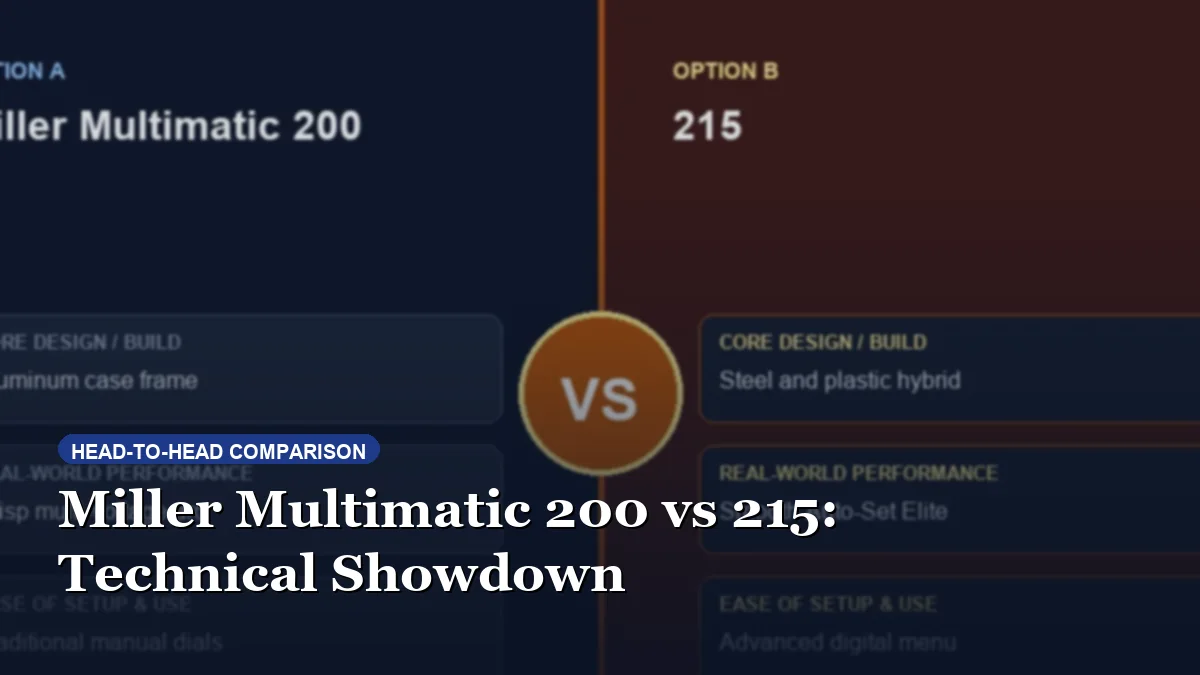
| Criteria | Miller Multimatic 200 | 215 | Edge |
|---|---|---|---|
| Core Design / Build | Aluminum case frame | Steel and plastic hybrid | Side A |
| Real-World Performance | Crisp multi-voltage arc | Smooth Auto-Set Elite | Side B |
| Ease of Setup & Use | Traditional manual dials | Advanced digital menu | Side B |
| Durability & Reliability | Heavy-duty industrial shell | Lighter commercial chassis | Side A |
| Efficiency / Operating Footprint | Compact dual-voltage | Optimized power draw | Side B |
| Maintenance Requirements | Standard drive roll service | Angled drive mechanism upkeep | Side A |
| Best Ideal Use Case | Harsh jobsite fabrication | Light shop and garage work | Split |
Core Architecture and Engineering Profiles
Evaluating the structural design of these two multiprocess welding systems reveals distinct engineering philosophies. The older platform emphasizes rugged industrial durability, whereas the newer variant focuses on refined ergonomics and modern internal packaging.
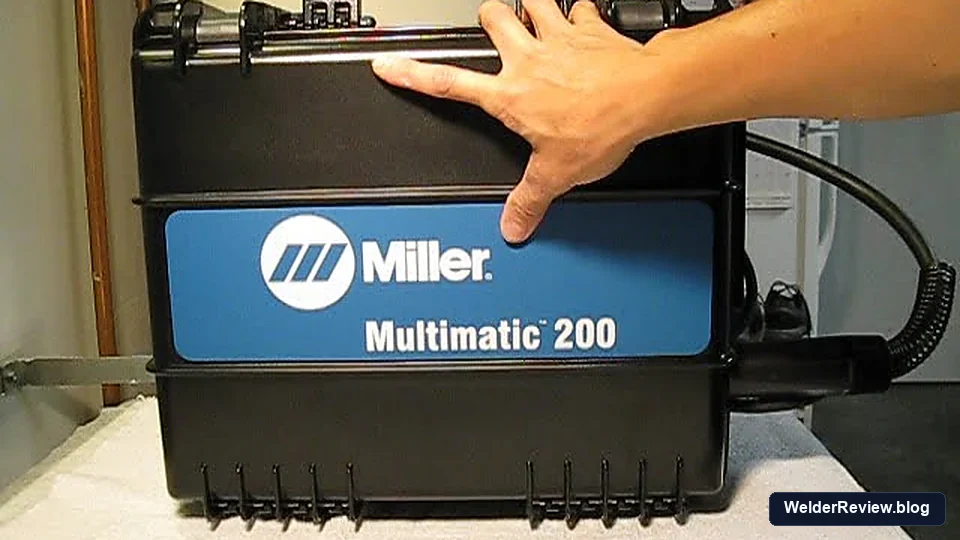
Internal component arrangement dictates how each machine handles thermal dissipation. Reviewing insights from our Miller Multimatic 215 review helps technicians anticipate long-term reliability under demanding shop conditions.
Weight distribution and physical enclosure materials further separate these portable units during daily transport. Contractors must weigh raw mechanical toughness against modern manufacturing refinements when selecting equipment.
- Cast aluminum chassis components on the older generation machine
- Stamped steel outer panels featuring reinforced corner bumpers
- Redesigned internal inverter architecture for reduced total weight
Enclosure Materials and Mechanical Housing
Heavy-duty jobsite environments demand robust exterior protection against impact and weather exposure. The legacy model utilizes a tough metal frame designed to withstand rigorous daily abuse.
Modern manufacturing trends favor lightweight composites to improve overall portability without sacrificing structural integrity. Operators working in controlled shop spaces benefit greatly from this weight reduction.
- Impact-resistant handle integration for secure lifting
- Weather-sealed control panel membranes to prevent dust ingress
Arc Dynamics and Real-World Welding Performance
Achieving consistent weld puddle control depends heavily on inverter arc response and voltage regulation. Testing results detailed in our Miller Multimatic 215 with TIG kit review demonstrate commendable arc stability across varied steel thicknesses.
Fine-tuning arc characteristics prevents common defects like lack of fusion or excessive spatter. Professional welders notice subtle differences in puddle wetting action during complex joint configurations.
Voltage drop compensation ensures steady performance even when operating on long extension cords. This electrical stability remains crucial for remote mobile repair operations.
- Smooth short-circuit MIG transfer on thin sheet metal
- Reliable DC TIG arc initiation without high-frequency interference
- Stable stick welding output for low-hydrogen and cellulosic electrodes
MIG and Flux-Core Operational Behavior
Wire feed consistency directly influences bead profile uniformity during high-speed production runs. Precision drive rolls maintain steady wire pressure to eliminate frustrating bird-nesting issues.
Shielding gas coverage and inductance tuning combine to minimize post-weld cleanup time. Fabricators appreciate predictable puddle wetting when transitioning between different metal alloys.
- Quick-change reversible drive roll mechanisms
- Optimized inductance curves for minimal weld spatter
Input Power Flexibility and Electrical Efficiency
Dual-voltage capability allows these welders to adapt seamlessly to standard residential or industrial power sources. Automatic voltage selection eliminates the need for manual internal jumper link changes.
Power factor correction technology enhances electrical efficiency while reducing unnecessary current draw on limited breakers. This optimization protects sensitive circuit breakers during high-amperage welding sessions.
Generator compatibility ensures reliable field operation when commercial grid power is completely unavailable. Contractors depend on this electrical resilience for remote infrastructure repairs.
- Multi-voltage plug adapters for changing power receptacles
- Surge protection circuitry against dirty generator power
- Low idle power consumption for energy conservation
Generator Power Compatibility
Running inverter welders off portable engine-driven generators requires robust internal surge suppression. Clean power output prevents premature failure of sensitive microprocessors and circuit boards.
Engineers designed these power supplies to tolerate fluctuating input frequencies common on older jobsite generators. Field technicians enjoy uninterrupted workflow during critical outdoor projects.
- Wide operational voltage tolerance bands
- Harmonic distortion filtering for stable arc output
User Interfaces and Setup Simplicity
Digital control panels have transformed how operators configure welding parameters for specific material thicknesses. Clear screen layouts reduce guesswork and accelerate machine setup times for apprentices.
Manual override capabilities remain essential for experienced welders demanding absolute control over arc parameters. Balancing automated assistance with granular manual adjustments satisfies diverse skill levels.
Menu navigation speeds up workflow transitions between different welding processes in busy environments. Ergonomic control knobs provide tactile feedback even when wearing heavy leather gloves.
- High-contrast digital readouts visible in direct sunlight
- Intuitive process selection buttons with LED status indicators
- Quick parameter storage for recurring fabrication tasks
Automated Parameter Selection Technologies
Smart setup programs automatically configure voltage and wire feed speed based on material gauge. This automation drastically shortens learning curves for novice fabricators entering the trade.
Advanced users can easily bypass preset parameters to fine-tune arc characteristics for specialized joint designs. Practical takeaways found in our Miller Multimatic 220 review show how flexibility remains paramount for handling varied fabrication projects.
- Pre-programmed wire diameter and gas type selections
- Instantaneous feedback loops for optimal heat input
Thermal Management and Duty Cycle Ratings
Effective thermal management prevents overheating during intense, continuous production welding operations. Internal cooling fans ramp up dynamically based on transformer and inverter temperature sensors.
Duty cycle ratings dictate how long a machine can weld before requiring a mandatory cooling period. Understanding these thresholds prevents premature thermal overload trips on demanding projects.
Fan-on-demand technology reduces dust accumulation inside the cabinet by minimizing idle airflow. This smart feature extends electronic component lifespan in dirty fabrication environments.
- Heavy-duty heat sinks mounted directly to switching transistors
- Thermal overload indicator lights for immediate user warning
- Optimized internal wind tunnel design for directional airflow
Sustained Duty Cycle Performance
Heavy plate fabrication pushes power supplies to their maximum thermal limits. Data from our comprehensive Miller 215 welder review confirms that monitoring operating temperatures ensures uninterrupted productivity throughout long shift rotations.
Industrial-grade transformers handle sustained arcs better than scaled-down residential alternatives. Professional shops rely on these robust ratings to meet tight project deadlines.
- Rated output verified at standard ambient temperatures
- Automatic thermal cutout switches to prevent permanent damage
Maintenance, Consumables, and Long-Term Service
Routine upkeep preserves optimal wire feeding and electrical conductivity over years of heavy usage. Inspecting contact tips, nozzles, and drive rolls prevents erratic arc behavior during critical passes.
Accessing internal service components should remain straightforward for shop mechanics performing scheduled preventative maintenance. Durable hinges and latch mechanisms reduce cabinet wear over time.
Availability of replacement parts directly impacts long-term equipment ownership costs and downtime duration. Choosing established brands guarantees reliable component support throughout the product lifecycle.
- Standardized consumables compatible with major industrial brands
- Toolless drive roll tension adjustments for fast maintenance
- Accessible internal circuit boards for diagnostic testing
Consumable Longevity and Replacement
High-quality contact tips resist thermal erosion during high-amperage spray transfer welding processes. Using premium copper alloys significantly extends consumable lifespan in production settings.
Liner maintenance prevents wire friction that causes erratic feeding and poor weld quality. Regular cleaning schedules keep the entire delivery system operating smoothly.
- Teflon-lined gun cables for aluminum wire feeding
- Heavy-duty brass diffuser blocks for superior gas flow
Field Portability and Mechanical Durability
Transporting welding equipment across rugged jobsites requires secure handles and balanced chassis design. Units must withstand being loaded into service truck toolboxes without sustaining structural damage.
Vibration resistance protects delicate internal circuit boards from harsh transport conditions over rough terrain. Reliable latching mechanisms keep side doors closed during transit.
Shoulder straps and running gear enhance mobility for technicians servicing remote industrial equipment. Every pound saved improves overall operator fatigue levels at the end of the day.
- Balanced center of gravity for comfortable single-hand carrying
- Reinforced base feet to absorb hard drops on concrete floors
- Optional running gear carts for effortless shop mobility
Jobsite Resilience and Transport
Mobile service vehicles subject tools to constant vibration and mechanical shock loading daily. Rugged housing construction ensures internal components remain securely mounted during transit.
Weather-resistant external controls prevent moisture damage during unexpected outdoor rain showers. Dependable field readiness separates professional equipment from consumer-grade alternatives.
- Locking storage compartments for spare welding consumables
- Heavy-duty power cord wraps for tangle-free storage
Determining the Right Choice for Your Shop
Selecting the ideal multiprocess welder requires a careful assessment of your typical workload and power availability. Budget constraints, desired automation features, and physical workspace size also dictate the final purchase decision.
Evaluating long-term project demands ensures your chosen equipment will not become obsolete as your skills grow. Consulting experienced fabricators provides valuable insight into real-world machine reliability.
Investing in quality welding equipment pays dividends through reduced downtime and superior weld integrity. Make your final selection based on proven engineering merit rather than marketing claims.
- Assess maximum material thickness requirements for your projects
- Verify available electrical service amperage in your workspace
- Weigh the value of digital setup menus versus manual controls
Matching Machine Specs to Applications
Automotive restoration tasks demand delicate thin-gauge control without blowing through sheet metal. Structural fabrication requires high duty cycles and deep penetration on thick steel plates.
Matching your primary applications to the appropriate machine specification guarantees maximum productivity. Reviewing comprehensive technical data sheets clarifies operational capabilities before buying.
- Tailor process selection to your everyday metal alloys
- Consider future business expansion requirements carefully
Frequently Asked Questions
Can both welders run on standard household 120V power?
Yes, both machines feature multi-voltage plugs that operate seamlessly on standard household circuits. This flexibility makes them ideal for garage fabricators needing true mobile versatility.
Which machine is better suited for aluminum MIG welding?
Both units handle aluminum MIG welding effectively when paired with a spool gun. Utilizing a dedicated spool gun setup ensures smooth wire feeding without bird-nesting issues.
Are the control interfaces difficult to learn for beginners?
The digital interface on the newer model offers automated setup menus that simplify operation. Novice users will achieve consistent results faster thanks to guided parameter selection.
Do these welders support high-frequency TIG starts?
Neither machine provides high-frequency arc ignition for aluminum TIG welding. Both rely on dependable lift-arc technology for clean DC TIG starts on steel and stainless.
What is the maximum steel thickness each unit can weld?
Both power sources can handle material up to three-eighths of an inch thick in a single pass. Proper joint preparation ensures full structural penetration on heavy plate sections.