Miller Maxstar 161 STH vs STL: Technical Comparison
Choosing between these portable TIG machines depends entirely on your need for high-frequency arc starts. Compare their professional capabilities here.

Choose the STH if you require advanced high-frequency TIG starts and pulse controls for thin sheet metal. Pick the STL if you primarily need a rugged lift-arc machine for standard structural steel work.
Compare all top models in our Best Welder: Top Home Shop & Jobsite Picks Tested.
Side-by-Side Breakdown
| Criteria | Miller Maxstar 161 STH | Miller Maxstar 161 STL | Edge |
|---|---|---|---|
| Core Design / Build | Advanced TIG/Stick package | Standard Lift-Arc TIG/Stick package | STH |
| Real-World Performance | High-frequency starts and pulse modes | Reliable Lift-Arc without high-frequency | STH |
| Ease of Setup & Use | Digital controls for parameters | Simplified analog-style interface | STL |
| Durability & Reliability | Industrial composite casing | Industrial composite casing | Tie |
| Efficiency / Operating Footprint | Multi-voltage 120V to 240V input | Multi-voltage 120V to 240V input | Tie |
| Maintenance Requirements | Routine terminal cleaning and airflow checks | Routine terminal cleaning and airflow checks | Tie |
| Best Ideal Use Case | Precision stainless steel fabrication | Mobile maintenance and structural welding | STH |
Core Design and Engineering Differences
Both welding machines share foundational architecture built by Miller Electric. As shown in our Miller Multimatic 215 review, they utilize inverter technology to deliver a maximum output of 160 amps while maintaining a compact physical footprint.
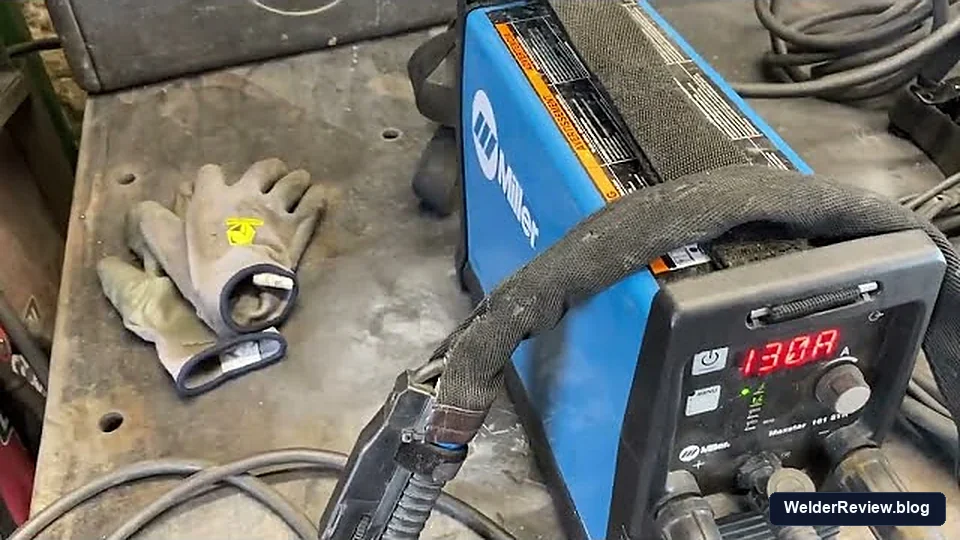
Engineering teams focused heavily on weight reduction without sacrificing structural integrity. The primary divergence lies within their internal control boards, which dictate the specific arc initiation methods available to the operator.
Industrial enclosures protect sensitive electronics from conductive shop dust and moisture. Ventilation channels are optimized to keep internal components cool during extended operating cycles under heavy site loads.
- Inverter-based power source weighing under thirteen pounds
- Multi-voltage plug system supporting flexible jobsite power
- Durable composite housing engineered for impact resistance
- Enclosed circuit boards protected against harsh environments
Electrical Architecture and Inverter Topology
Modern inverter topologies allow these machines to draw power efficiently from standard household circuits. Auto-line technology automatically senses whether you plug into 120V or 240V input sources instantly.
Power factor correction ensures maximum electrical efficiency while minimizing harmonic distortion on shared generators. This protects downstream electronics and reduces overall amperage draw during peak welding output.
- Automatic voltage sensing across standard ranges
- Generator compatibility for remote fieldwork applications
Housing Materials and Thermal Management
Heavy-duty composite materials form the outer shell, shielding internal transformers from accidental drops. Internal thermal overload protection prevents damage by shutting down the unit if duty cycles are exceeded.
Fan-on-demand cooling systems activate only when necessary to reduce the intake of airborne contaminants. This design feature significantly extends the overall operational lifespan of the power source.
- Impact-resistant outer casing for rugged job sites
- Smart cooling fans minimizing dust ingestion
Real-World Performance and Arc Control
Performance parameters vary noticeably when striking an arc on thin metals. As detailed in our Miller 215 welder review, the STH variant provides superior control configurations tailored for precision fabrication shops requiring meticulous heat management.
Both units deliver stable stick welding arcs capable of running electrodes up to three-sixteenths of an inch. Arc force control is dynamically managed to prevent electrode sticking during tight root passes.
Operators working on carbon steel pipes will find both models exceptionally responsive. Voltage stability remains high even when running long extension cords across remote industrial jobsites.
- Consistent stick welding output across varying lengths
- Dynamic arc force control for smooth electrode transfer
- Stable voltage regulation on generator power sources
- Responsive thermal management during heavy output
Stick Welding Capabilities
Stick welding performance remains virtually identical between both machines during field repairs. Hot start technology provides extra amperage during initial ignition to prevent electrode sticking.
Welders can easily switch polarities depending on the specific electrode selection required by structural codes. Penetration profiles remain deep and consistent throughout the entire amperage range.
- Hot start technology for reliable electrode striking
- Deep penetration profiles on structural steel
TIG Welding Stability
TIG welding performance is where these two machines truly diverge in professional applications. The STH incorporates sophisticated pulse controls that reduce heat affected zones on thin materials.
Maintaining a stable arc at lower amperage settings is crucial for aerospace and food grade piping. Both machines handle low current starts well, but feature sets dictate exact application suitability.
- Low amperage arc stability for thin sheet metal
- Precise heat management through advanced pulsing
Lift-Arc Versus High-Frequency Starts
Understanding arc initiation methods is critical when selecting between these two specific models. High-frequency starts on the STH allow non-contact arc ignition, preventing tungsten contamination on critical aerospace welds.
The STL relies exclusively on lift-arc technology, which requires physical contact with the base metal. While this method requires careful technique, it prevents high-frequency interference with nearby sensitive digital equipment.
Code-driven industries often mandate non-contact ignition to eliminate tungsten inclusions in aluminum or stainless steel welds. Evaluating your specific quality control standards will clarify which initiation method you need.
- Non-contact high-frequency arc initiation for STH
- Physical contact lift-arc initiation for STL
- Elimination of tungsten contamination risks
- Compliance with strict aerospace quality codes
High-Frequency Advantage on the STH
High-frequency arc starts eliminate the need to scratch or touch the tungsten to the workpiece. This preserves the sharp point of your electrode and keeps weld pools completely clean.
Operators working on thin stainless steel tubing benefit immensely from this contactless ignition method. It prevents immediate burn-through and minimizes cosmetic cleanup required after welding completes.
- Contactless ignition preserving electrode sharpness
- Clean weld starts without material surface damage
Lift-Arc Simplicity on the STL
Lift-arc technology provides a safe, low-voltage scratch start that minimizes tungsten sticking. Operators simply touch the tungsten to the metal and lift up to establish the stable welding arc.
This method is preferred in maintenance environments where high-frequency arc starters might disrupt computers. It offers a reliable mechanical ignition process without complex electronic high-frequency components.
- Safe low-voltage ignition without electrical interference
- Mechanical reliability for heavy industrial field service
Portability, Power Input, and Ergonomics
Mobility is a defining characteristic of both machines, featuring integrated shoulder straps and lightweight chassis. Technicians can easily carry either unit up ladders or into tight maintenance spaces.
The proprietary multi-voltage plug system allows users to switch between 120V and 240V receptacles without tools. This flexibility ensures you can weld wherever power is available on the job.
Ergonomic front panels feature recessed control knobs to protect vulnerable digital displays from impact. Carrying handles are balanced securely over the center of gravity for effortless transport.
- Lightweight chassis design under thirteen pounds
- Toolless multi-voltage plug adapter system
- Recessed control knobs for enhanced impact protection
- Balanced carrying handle for fatigue-free transport
Jobsite Mobility and Weight
Weighing significantly less than traditional transformer welders, these inverters reduce operator fatigue during transport. Field service technicians can pack them into standard service truck storage compartments easily.
The compact footprint allows placement in congested mechanical rooms where larger welding equipment cannot fit. This mobility saves valuable setup time on remote repair jobs.
- Reduced operator fatigue during daily site transport
- Compact footprint for tight mechanical room access
Power Input Adaptability
Smart circuitry automatically adapts to available electrical infrastructure without manual jumper link changes. You can plug into standard workshop outlets or dedicated generator lines safely.
Voltage spikes are absorbed efficiently by internal surge suppression systems, protecting the motherboard. This robust electrical design ensures uninterrupted workflow in variable power environments.
- Automatic input voltage sensing and adjustment
- Internal surge protection against dirty generator power
Maintenance, Efficiency, and Longevity
Preventative maintenance procedures remain straightforward for both Miller inverter models. As highlighted in our Miller Diversion 180 review, routine cleaning with compressed air removes conductive dust accumulation from internal cooling fins and transformers.
Energy efficiency ratings exceed older transformer-based welders by a substantial operational margin. This reduces electrical utility consumption during heavy daily usage inside production fabrication facilities.
Long-term reliability is backed by robust internal component selection and industrial grade manufacturing standards. Properly maintained units routinely deliver years of trouble-free service in demanding environments.
- Routine compressed air cleaning for cooling fins
- High electrical efficiency reducing power consumption
- Robust internal components ensuring long service life
- Industrial manufacturing standards for extreme reliability
Routine Inspection Protocols
Operators should inspect input power cords regularly for cuts, fraying, or exposed internal conductors. Loose terminal connections inside the welding machine can cause excessive heat buildup and component failure.
Checking gas solenoid valves and quick-disconnect fittings prevents shielding gas leaks during precision TIG welding. Simple weekly checks prevent unexpected downtime during critical project deadlines.
- Regular inspection of input power cords and plugs
- Checking shielding gas fittings for secure seals
Cooling System and Dust Management
Dust accumulation acts as an insulator, trapping heat inside the sensitive inverter compartment. Clearing debris from ventilation louvers ensures optimal thermal transfer during maximum output cycles.
Operating in dusty environments requires more frequent internal cleaning schedules to protect circuit boards. Following manufacturer maintenance guidelines preserves warranty coverage and operational integrity.
- Keeping ventilation louvers clear of shop debris
- Adhering to recommended service interval schedules
Consumables and Setup Requirements
Setting up either machine requires standard TIG torches, shielding gas regulators, and appropriate tungsten electrodes. The STH model includes extra control wiring for hand or foot remote amperage controls.
Consumable selection directly impacts weld quality, necessitating high purity argon shielding gas for stainless steel. Collets, gas lenses, and ceramic cups must match your specific tungsten diameter requirements.
Proper grounding is essential for stable arc performance, requiring clean metal contact points. Investing in quality ground clamps ensures low electrical resistance across the entire welding circuit.
- Standard TIG torch and shielding gas regulator needs
- Remote amperage control compatibility on the STH
- High purity argon gas for stainless steel fabrication
- Quality ground clamps for low electrical resistance
Torch Compatibility and Remotes
Both machines accept standard valve-style or switch-equipped TIG torches depending on the setup. The STH model features a multi-pin receptacle designed for remote foot pedals or fingertip controls.
Connecting remote amperage control enhances precision during complex welding sequences on thin sheet metal. The STL model relies on torch valve gas control and scratch starts.
- Multi-pin receptacle for remote foot pedal controls
- Standard torch valve options for simplified setups
Shielding Gas and Tungsten Prep
Pure argon shielding gas is mandatory for achieving clean, oxidation-free welds on stainless steel. Flow meters should be adjusted accurately to maintain adequate coverage without turbulence.
Grinding tungsten electrodes longitudinally ensures a stable arc path and prevents erratic wandering. Proper preparation of consumables maximizes overall welding efficiency and joint integrity.
- Accurate flow meter adjustment for shielding gas
- Longitudinal grinding for stable tungsten arcs
Which Option Fits Your Shop Setup
Selecting the correct machine requires careful evaluation of your everyday fabrication workload. If your shop welds thin stainless steel or aerospace alloys, the STH is the mandatory choice.
Maintenance contractors focusing on structural steel repairs will find the STL more than adequate. Its rugged simplicity handles heavy stick welding tasks without unnecessary electronic complexity.
Budget considerations also play a role, as the advanced features of the STH increase initial investment. Assess your long-term project requirements before committing to a specific model variant.
- Evaluate everyday fabrication workload and material types
- Consider precision requirements for thin stainless steel
- Assess structural steel maintenance repair needs
- Balance feature sets against initial equipment investment
Ideal Applications for the STH
Precision sheet metal fabrication shops benefit greatly from the high-frequency starts and pulse controls. Motorsports fabricators welding thin chromoly tubing will appreciate the superior heat input management.
Any application requiring strict adherence to code standards prohibiting tungsten contamination demands the STH. It delivers professional results on demanding architectural and food processing projects.
- Motorsports fabrication on thin chromoly tubing
- Architectural and food processing stainless projects
Ideal Applications for the STL
Mobile repair trucks and maintenance yards find the STL to be an exceptional workhorse. It excels at heavy stick welding tasks and straightforward structural steel fabrication work.
Contractors who prioritize durability and simplified operation over advanced pulse controls will save money. As noted in our Miller Multimatic 220 review, the STL provides legendary Miller reliability for everyday heavy-duty industrial tasks.
- Mobile repair trucks and field maintenance yards
- Heavy stick welding and standard structural steel
Frequently Asked Questions
What is the primary difference between the Miller Maxstar 161 STH and STL?
The primary difference is that the STH model includes high-frequency arc starts and pulse TIG controls, whereas the STL uses lift-arc technology.
Can both machines operate on standard household electrical outlets?
Yes, both units feature multi-voltage plugs that support 120V and 240V input power sources automatically.
Is the STL model suitable for precision stainless steel fabrication?
While possible, the STL lacks high-frequency starts and pulse controls, making the STH a much better choice for precision thin metals.
Do these welders require special generators when working on remote jobsites?
They are generator-friendly, but you should use a clean power inverter generator rated for at least six thousand watts.
Can I use a remote foot pedal with the STL model?
No, the STL lacks the multi-pin receptacle required to connect remote foot pedal controls for amperage adjustment.