Miller Diversion 165 vs 180: Direct Performance Review
Comparing two popular Miller TIG welders reveals distinct trade-offs in power output, input voltage requirements, and portablility for fabrication shops.

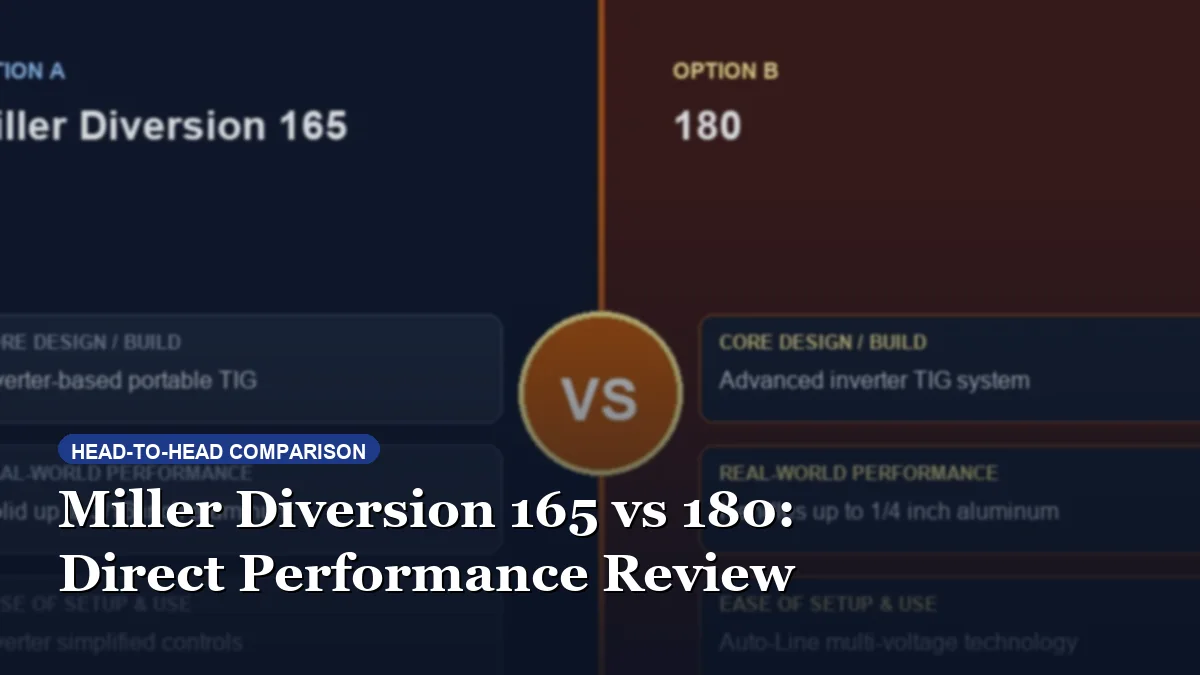
Choose the Diversion 165 for ultimate portability on standard household circuits, or select the Diversion 180 when you require higher amperage output for thicker aluminum plates.
Compare all top models in our Best Welder: Top Home Shop & Jobsite Picks Tested.
Side-by-Side Breakdown
| Criteria | Miller Diversion 165 | 180 | Edge |
|---|---|---|---|
| Core Design / Build | Inverter-based portable TIG | Advanced inverter TIG system | Diversion 180 |
| Real-World Performance | Solid up to 3/16 inch aluminum | Handles up to 1/4 inch aluminum | Diversion 180 |
| Ease of Setup & Use | Inverter simplified controls | Auto-Line multi-voltage technology | Diversion 180 |
| Durability & Reliability | Robust industrial chassis | Heavy-duty internal cooling setup | Tie |
| Efficiency / Operating Footprint | Compact lightweight aluminum frame | Slightly heavier dual-voltage chassis | Diversion 165 |
| Maintenance Requirements | Standard torch and cooler checks | Routine inverter dust cleaning | Tie |
| Best Ideal Use Case | Mobile repair and hobbyists | Professional light fabrication shops | Diversion 180 |
Core Design and Engineering Differences
Modern TIG welding demands robust engineering to handle high-frequency arc starts and steady shielding gas flow. Both Miller machines utilize advanced inverter topologies to minimize physical transformer weight while maintaining stable outputs.
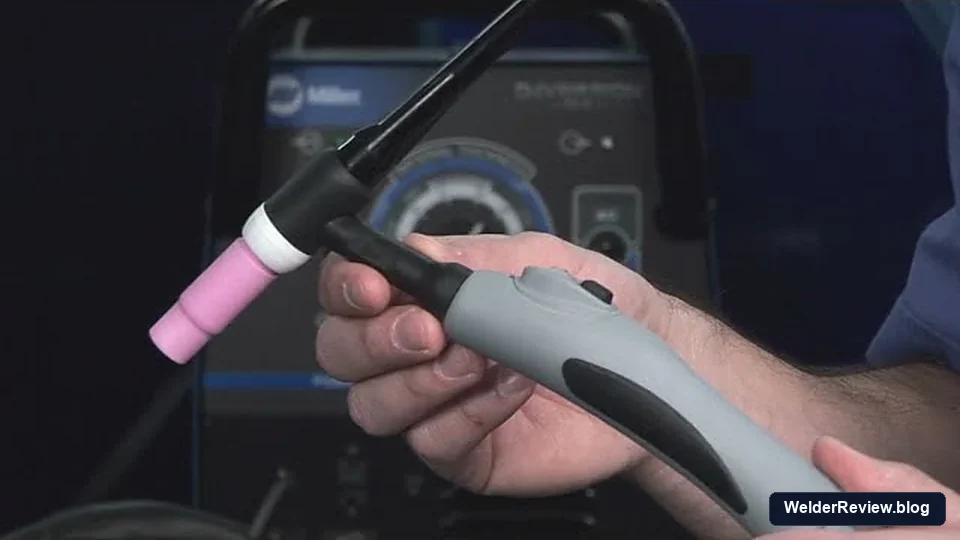
Engineering priorities diverge significantly when examining internal electrical layouts. Our diversion 180 tig welder review details how this series focuses heavily on user-friendly operation, removing complicated parameter adjustments in favor of simplified preset controls.
Choosing between these structural frameworks depends entirely on your mobile fabrication needs and shop electrical supply limitations. Structural rigidity remains exceptional across both units, utilizing heavy gauge steel exterior housings.
- Inverter-based architecture reduces total unit weight.
- Simplified user interfaces eliminate complex menus.
- Heavy-duty steel housings protect internal circuit boards.
Chassis Construction and Physical Footprint
Physical dimensions dictate how easily you can transport these machines between job sites or around a crowded fabrication floor. The Diversion 165 maintains a remarkably compact profile that stows away under standard workbenches.
Weight distribution is carefully balanced, featuring a single top-mounted handle that makes one-handed carrying manageable. The slightly larger housing accommodates advanced dual-voltage components without sacrificing overall workshop mobility.
- Integrated top handle ensures secure manual transport.
- Compact footprint fits easily in service truck beds.
Internal Component Layout and Cooling
Internal thermal management relies on dedicated fan-on-demand cooling systems to expel heat from critical transistor banks. This design prevents premature thermal overload during extended aluminum welding sessions on thick plates.
Dust and metal debris rejection is managed through strategic louver placement and internal baffling around sensitive electronics. Component layout prioritizes technician access during routine annual electrical inspections and preventative cleaning.
- Fan-on-demand technology reduces ambient shop noise.
- Strategic baffling protects sensitive printed circuit boards.
Power Delivery and Electrical Architecture
Electrical efficiency forms the backbone of any reliable TIG welding machine operating in modern fabrication facilities. Inverter technology allows these units to convert standard incoming wall power into smooth, controllable welding currents.
Input voltage flexibility determines where you can plug in your machine without tripping standard facility circuit breakers. Voltage drop compensation ensures stable arc characteristics even when running on long extension cords.
Power factor correction modules maximize electrical draw efficiency, lowering overall utility costs during high-amperage aluminum fabrication projects. Understanding your shop receptacle availability is critical before finalizing your purchase decision.
- Inverter technology optimizes incoming power conversion rates.
- Voltage drop protection maintains steady arc voltage levels.
- Power factor correction lowers overall electrical operating costs.
Input Voltage Compatibility and Auto-Line
Operating across multiple facility voltage standards requires smart internal circuitry. As noted in our miller diversion 180 review, this machine features advanced adaptability for seamless transitions between single-phase power receptacles.
Plugging into different receptacles requires no manual link board switching or tool-based internal jumper modifications. This plug-and-play capability prevents costly blown fuses and protects internal transformers from voltage spikes.
- Automatic voltage sensing eliminates manual jumper configurations.
- Seamless switching between standard electrical service lines.
Amperage Output Range and Arc Stability
Maximum amperage output dictates the upper thickness limits of steel, stainless steel, and aluminum materials you can join. The Diversion 180 delivers higher maximum amperage to tackle demanding structural joint configurations.
Low-amperage arc stability remains remarkably crisp, allowing precise control when welding razor-thin sheet metal components. High-frequency arc starting initiates instantly without tungsten contamination or erratic high-voltage wandering.
- Crisp low-amperage arc control for thin sheet metals.
- High-frequency arc starting prevents tungsten electrode fouling.
Real-World Performance and Arc Characteristics
Translating raw electrical specifications into clean, defect-free metal welds is the ultimate test for any welding machine. Arc stiffness and puddle control determine how easily operators can manipulate molten metal across various joint types.
Aluminum fabrication presents unique challenges due to the oxide layer requiring continuous AC balance adjustments during welding. Both units manage AC output efficiently, though the higher output model provides broader processing windows.
Penetration profiles remain deep and consistent, minimizing the risk of lack-of-fusion defects on critical structural weldments. Weld bead aesthetics show minimal spatter and clean edge wetting across all tested material thicknesses.
- Deep penetration profiles ensure structural weld integrity.
- Clean edge wetting minimizes post-weld grinding requirements.
- Stable AC output simplifies aluminum oxide cleaning action.
Aluminum TIG Welding Capabilities
Welding aluminum requires high-frequency stabilization and precise heat input management. According to our detailed miller diversion 180 review, this machine excels on thin marine-grade sheet and automotive tubing applications.
Stepping up to heavier plate assemblies demands the extra thermal capacity found in the higher-rated model. Puddle fluidity is exceptionally responsive to foot pedal adjustments during complex multi-pass fillet welds.
- Excellent puddle fluidity on thin automotive aluminum.
- Sufficient thermal reserves for multi-pass structural plates.
Steel and Stainless Steel Fabrication
Carbon steel and stainless steel processing benefits immensely from DC TIG mode stability and rapid arc initiation. Root passes on stainless tubing fuse cleanly without excessive sugaring or backside oxidation issues.
Fine-tuning heat input allows operators to maintain narrow heat-affected zones on corrosion-resistant alloy assemblies. Pulse frequency control options help manage distortion on precision sheet metal enclosures and brackets.
- Clean root passes on stainless steel tubing joints.
- Narrow heat-affected zones prevent severe metal distortion.
Usability, Controls, and Setup Ergonomics
Operator efficiency relies heavily on intuitive control layouts and straightforward machine configuration procedures prior to welding. Complex digital menus often slow down production workflows in fast-paced commercial fabrication and repair shops.
Miller utilizes streamlined interface panels that guide operators through basic amperage selection based on material thickness. Color-coded indicators and tactile knobs provide immediate visual feedback even through welding helmet lenses.
Torch ergonomics and flexible power cable assemblies reduce hand fatigue during extended overhead or out-of-position joint welding. Foot pedal connectors feature secure twist-lock mechanisms that prevent accidental disconnection during shop movement.
- Streamlined interface panels speed up daily machine setup.
- Tactile control knobs allow adjustments with gloved hands.
- Secure twist-lock pedal connectors prevent accidental dropouts.
Interface Simplicity Versus Advanced Tuning
Minimizing setup variables allows novice operators to achieve quality welds without extensive metallurgical training backgrounds. Preset parameter scales correlate directly with metal gauge measurements stamped on common shop materials.
Advanced fabricators might miss granular frequency controls, but the simplified logic significantly reduces operator error rates. This streamlined approach proves ideal for educational institutions and multi-user maintenance departments.
- Material gauge scales simplify target amperage selection.
- Reduced parameter options lower overall operator error rates.
Torch Design and Foot Pedal Response
Included TIG torches feature comfortable rubber grips and flexible head assemblies for reaching tight joint angles. Torch switch integration provides remote contactor control when foot pedals are impractical for field repairs.
Foot pedal assemblies offer smooth linear resistance, translating subtle foot movements into precise amperage modulation. Durable internal potentiometers withstand harsh shop environments without developing dead spots or erratic signals.
- Flexible torch heads reach difficult joint configurations easily.
- Linear foot pedal resistance ensures precise heat modulation.
Maintenance, Thermal Efficiency, and Longevity
Maximizing equipment lifespan requires adherence to scheduled maintenance intervals and proper environmental storage practices. Inverter power sources accumulate airborne dust and metallic particles, making periodic internal cleaning essential.
Thermal efficiency depends heavily on keeping cooling fans and internal heat sinks clear of shop debris blockages. High-quality internal components resist voltage fluctuations, reducing the likelihood of unexpected solid-state component failures.
Consumable maintenance remains straightforward, utilizing standard industry collets, gas lenses, and tungsten electrode sizes. Investing time in preventative upkeep ensures reliable arc performance throughout years of rigorous daily operation.
- Periodic internal cleaning prevents dust-induced component shorts.
- Standardized torch consumables simplify routine parts replacement.
- Robust cooling heat sinks extend overall inverter lifespan.
Preventative Maintenance Best Practices
Scheduling monthly compressed air blowouts removes conductive dust from delicate circuit boards and transformer windings. Inspecting welding cables for cuts and abrasions prevents dangerous electrical short circuits during operation.
Checking shielding gas hose connections eliminates costly argon leaks that cause porous, brittle weld deposits. Maintaining clean electrical ground clamp contact points ensures consistent arc starting and stable voltage output.
- Monthly compressed air cleaning removes conductive dust deposits.
- Regular cable inspections prevent dangerous electrical short circuits.
Consumable Wear and Torch Upkeep
Tungsten electrode preparation directly influences arc focus and overall weld bead contamination levels. Using dedicated diamond grinding wheels prevents tungsten splitting and ensures consistent arc initiation characteristics.
Replacing worn ceramic cups and collet bodies stops turbulent shielding gas flow before porosity ruins welds. Keeping spare consumables on hand minimizes costly downtime during critical commercial fabrication deadlines.
- Dedicated grinding wheels ensure proper tungsten tip geometry.
- Timely ceramic cup replacement prevents shielding gas turbulence.
Duty Cycle Realities and Operational Limits
Understanding thermal duty cycle ratings prevents unexpected machine shutdowns during intense, high-amperage fabrication runs. Duty cycle percentages indicate how many minutes out of ten a machine can weld continuously.
Pushing these portable units past their specified thermal limits triggers internal protection circuits that halt welding output. Monitoring amperage settings relative to joint thickness helps maintain optimal productivity without overheating.
Commercial production environments demand careful workload management to balance welding speed with thermal recovery periods. Respecting equipment boundaries ensures long-term reliability and prevents catastrophic transformer or inverter failure.
- Duty cycle ratings measure continuous welding capacity reliably.
- Thermal protection circuits prevent permanent internal component damage.
- Workload management balances fabrication speed with cooling times.
Interpreting Thermal Duty Cycle Ratings
Rated duty cycle performance scales inversely as welding amperage output increases toward maximum capacity limits. Operating at lower amperages significantly extends continuous run times for intricate stainless steel assemblies.
Exceeding specified thermal thresholds causes the yellow indicator light to illuminate and disables arc output. Allowing the internal fan to run while powered on accelerates the cool-down period significantly.
- Lower amperage settings extend continuous running times safely.
- Forced-air cooling rapidly resets thermal protection circuits.
Managing Heavy Production Workloads
High-volume fabrication shops require disciplined shift rotation or multiple machines to handle continuous output demands. Staging materials ahead of time minimizes idle torch-off periods while the machine remains energized.
Evaluating your typical daily arc-on time helps determine whether a portable hobbyist unit suffices. Investing in higher capacity equipment prevents bottlenecking during peak production schedules and urgent repairs.
- Staging materials efficiently minimizes idle torch-off times.
- Evaluating arc-on time prevents commercial production bottlenecks.
Which Option Fits Your Shop Setup
Selecting the ideal welding machine depends on your specific spatial constraints, power availability, and budget parameters. Matching equipment capabilities to your most frequent fabrication tasks ensures maximum long-term operational satisfaction.
Mobile repair technicians prioritize lightweight portability and standard household circuit compatibility above maximum output thresholds. Stationary fabrication shops lean toward higher amperage capacity to handle diverse structural metal thicknesses.
Carefully evaluating your current workload and future expansion plans prevents purchasing underpowered or oversized machinery. Investing in the right tool from day one saves valuable time and eliminates costly trade-in hassles.
- Match machine specifications directly to frequent project types.
- Consider future fabrication demands before finalizing purchase choices.
- Balance portability needs against maximum metal thickness capacities.
Ideal Profile for the Diversion 165
The Diversion 165 suits mobile repair technicians, automotive enthusiasts, and hobbyists requiring simple setup. Operating smoothly on standard 230-volt lines makes garage installation straightforward without expensive electrical upgrades.
Lighter aluminum brackets and thin stainless steel exhaust piping pose no challenge for this agile machine. Its compact dimensions allow effortless storage in small workshops or service truck compartments.
- Ideal for automotive hobbyists and mobile repair technicians.
- Simple setup operates reliably on standard shop circuits.
Ideal Profile for the Diversion 180
Choose the Diversion 180 when your fabrication work involves thicker structural aluminum and heavy plates. The increased amperage ceiling prevents thermal bottlenecks during extended welding sessions on demanding projects.
Multi-voltage flexibility accommodates various shop power receptacles without requiring internal wiring modifications. As highlighted in our diversion 180 review, professional fabricators appreciate the extra power headroom for challenging commercial repair assignments.
- Handles thicker structural plates and heavy aluminum sections.
- Multi-voltage flexibility adapts easily to diverse shop receptacles.
Frequently Asked Questions
Can both welders operate on standard household electrical circuits?
The Diversion 165 runs easily on standard 230-volt single-phase power. Ensure your wall receptacle matches the required plug configuration to prevent nuisance tripping during heavy welding.
What is the maximum aluminum thickness each machine can weld?
The Diversion 165 handles aluminum up to three-sixteenths of an inch thick effectively. Stepping up to the Diversion 180 allows you to process quarter-inch plate materials successfully.
Do these TIG welders require external shielding gas cylinders?
Yes, both machines require pure argon shielding gas to protect the molten weld puddle. Always verify your regulator flow rate is properly adjusted before striking an arc.
Are foot pedals included with these Miller TIG welding packages?
Both models typically include a robust wireless or wired foot pedal for remote amperage control. This allows precise heat modulation during intricate multi-pass welding applications.
How often should I clean internal components of dust buildup?
Inspect and blow out internal inverter components with compressed air every six months. Regular preventative maintenance prevents conductive dust accumulation and extends overall equipment lifespan.