Miller Digital Infinity vs Lincoln Viking 3350: Performance Breakdown
Choosing between these elite welding helmets involves weighing massive viewing dimensions against advanced optical clarity technology. Both units dominate professional fabrication environments.

Choose the Miller Digital Infinity for maximum viewing area and integrated grind mode versatility. Pick the Lincoln Viking 3350 for superior 4C lens clarity and exceptional headgear comfort.
Compare all top models in our Best Welder: Top Home Shop & Jobsite Picks Tested.
Side-by-Side Breakdown
| Criteria | Miller Digital Infinity | Lincoln Viking 3350 | Edge |
|---|---|---|---|
| Core Design / Build | Massive hood profile with rugged shell geometry | Ergonomic, lightweight shell with strategic contouring | Lincoln Viking 3350 |
| Real-World Performance | ClearLight 2.0 technology with vibrant color contrast | 4C lens technology reducing eye strain remarkably | Tie |
| Ease of Setup & Use | Intuitive large digital screen control interface | External grind button and simple push-button controls | Miller Digital Infinity |
| Durability & Reliability | High-impact nylon built for harsh industrial sites | Rugged thermoplastic resistant to spatter and heat | Tie |
| Efficiency / Operating Footprint | Generous 13.4 square inch total viewing canvas | Optimized power management with reliable solar assist | Miller Digital Infinity |
| Maintenance Requirements | Standard protective cover lens replacement protocols | Readily available consumables and easy cleaning | Lincoln Viking 3350 |
| Best Ideal Use Case | Heavy fabrication requiring expansive vertical sightlines | Precision TIG welding demanding absolute color accuracy | Split |
Optical Clarity and Lens Technology Comparison
Modern welding helmets rely heavily on advanced liquid crystal displays to protect operator eyes while maintaining true color representation. Evaluating these two flagships reveals distinct engineering philosophies.
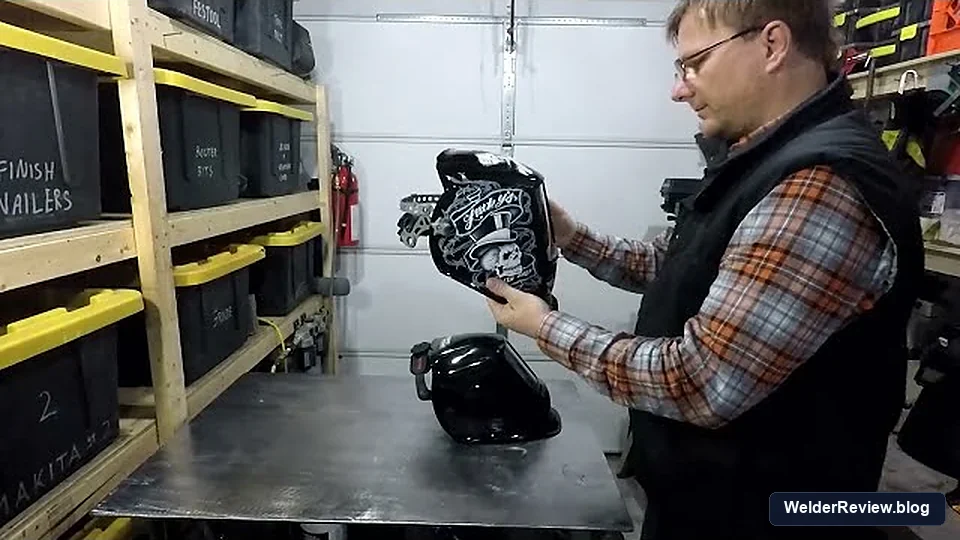
Miller incorporates proprietary ClearLight 2.0 technology to reduce green hues, offering a more natural view of the weld puddle. This enhancement significantly boosts puddle control during high-amperage processes.
The Miller Digital Infinity employs ClearLight 2.0 technology, delivering a true 1/1/1/1 optical clarity rating. This advanced filter minimizes green tint while enhancing contrast during complex TIG and MIG welding operations.
Conversely, the Lincoln Viking 3350 features 4C lens technology, which also achieves a perfect optical rating. This proprietary liquid crystal design broadens the color spectrum to reduce eye strain over extended industrial fabrication shifts.
- Miller utilizes ClearLight 2.0 for reduced eye fatigue.
- Lincoln employs 4C lens technology to eliminate distortion.
- Both helmets achieve a top-tier optical rating of 1/1/1/1.
True Color Rendering in TIG Applications
Precision welding requires absolute color fidelity to spot contamination or porosity instantly. Both manufacturers excel at delivering bright, realistic workspace illumination.
The advanced Lincoln 4C filter maintains performance across varying angles, much like our findings in the detailed Lincoln 140HD review, while Miller offers exceptional brightness in light states for setup tasks.
- Lincoln maintains shade consistency across extreme viewing angles.
- Miller provides a remarkably bright light state of shade three.
Viewing Area and Workspace Visibility
Field of view directly impacts welder posture and overall productivity during complex assembly tasks. Having a larger window reduces the need for constant head repositioning.
The Miller Digital Infinity boasts an impressive viewing area measuring over thirteen square inches. This massive panel is ideal for pipefitters and structural fabricators.
Miller provides a massive 13.4 square inch viewing area, giving operators an expansive peripheral perspective. This wide window simplifies overhead joint tracking and reduces the need for constant head repositioning inside cramped manufacturing environments.
Lincoln counters with a robust 12.5 square inch viewing field, highlighting details analyzed in our Lincoln Weld-Pak 140 HD review. The optimized aspect ratio maintains distortion-free clarity across the entire top-to-bottom welding puddle zone.
- Miller offers a massive 13.4 square inch viewing window.
- Lincoln provides a slightly smaller yet highly optimized viewing pane.
- Larger screens reduce neck strain during marathon fabrication shifts.
Peripheral Awareness on the Shop Floor
Expanded viewing windows allow operators to monitor surrounding equipment and fixtures without lifting their hoods. This capability enhances safety in busy industrial environments.
While Miller dominates total surface area, Lincoln balances its viewing size with superior frame geometry to maintain a compact overall footprint.
- Expanded periphery prevents accidental bumps against hot metal.
- Optimized frame weight distribution prevents forward-pull strain.
Headgear Ergonomics and Comfort Engineering
Wearing protective gear for ten hours daily demands sophisticated weight distribution and adjustable suspension systems. Poorly designed headgear causes chronic neck pain and fatigue.
Lincoln features the legendary X6 headgear system, distributing weight evenly across six distinct contact points. This design virtually eliminates pressure points on the forehead.
The Miller headgear utilizes a four-way adjustable design that distributes weight evenly across the skull. This mechanical layout relieves pressure points on the forehead and neck during prolonged structural steel assembly tasks.
Lincoln integrates an innovative 320-degree pivot mechanism into its heavy-duty suspension system. This ergonomic enhancement lowers the center of gravity when the helmet is flipped upward, minimizing cervical fatigue throughout daily shop shifts.
- Lincoln X6 suspension offers six-way adjustability for custom fits.
- Miller utilizes a large ratchet mechanism with supportive padding.
- Both options outperform standard entry-level headgear systems easily.
Weight Distribution and Neck Strain
Heavy electronic auto-darkening cartridges test the limits of neck muscles during overhead welding tasks. Proper balance keeps the center of gravity close to the skull.
Lincoln engineers managed to keep the overall weight balanced despite housing advanced electronics. Miller feels slightly more front-heavy due to its expansive lens module.
- Balanced weight profiles reduce end-of-day muscle fatigue.
- Padded rear cradles secure the helmet firmly during movement.
Control Interfaces and Digital Usability
Adjusting sensitivity, delay, and shade settings should be straightforward even when wearing heavy leather gloves. Digital interfaces offer precise control over analog dials.
Miller features a large internal digital screen with intuitive push-button menus for all welding modes. Changing parameters requires minimal guesswork thanks to clear readouts.
Operating the Miller requires interacting with an internal digital control panel featuring large push buttons. Welders can seamlessly adjust shade, sensitivity, and delay parameters even while wearing heavy leather MIG welding gloves.
Lincoln opts for an external low-profile grind button paired with internal digital touchpads. This dual-access layout lets fabricators switch rapidly between grinding and welding modes without removing personal protective equipment on site.
- Miller utilizes an oversized internal digital display screen.
- Lincoln offers a convenient external grind mode activation button.
- Both systems provide memory settings for quick process switching.
Grind Mode Accessibility in Production
Transitioning between welding and grinding frequently slows down workflow if controls are hard to reach. External switches offer a massive efficiency advantage.
Lincoln includes an easily accessible external low-profile button for immediate shade switching. Miller requires lifting the hood or accessing internal digital menus.
- External grind buttons streamline multi-step fabrication tasks.
- Accidental activation is prevented through recessed switch designs.
Durability, Build Quality, and Consumables
Industrial fabrication shops subject protective gear to extreme heat, flying slag, and accidental drops. Shell materials must withstand harsh physical abuse daily.
Both helmets utilize high-grade thermoplastic polymers engineered to resist UV degradation and thermal warping. Their matte finishes prevent distracting glare from overhead lights.
Constructed from high-impact nylon polymers, as noted in our Miller 215 welder review, the Miller shell withstands severe drop impacts and radiant heat exposure. Replacement cover lenses snap securely into place against harmful UV leaks.
The Lincoln chassis utilizes reinforced thermal plastics designed to resist spatter pitting and chemical degradation. Its front-loading cover lens holder simplifies routine maintenance routines, reducing downtime on fast-paced production assembly lines.
- Robust shell construction withstands accidental drops and impacts.
- Replacement cover lenses are widely available for both models.
- Sealed electronic cartridges prevent dust and moisture intrusion.
Consumable Availability and Long-Term Value
Owning a premium welding helmet involves routine replacement of front and rear spatter shields. Readily accessible parts minimize costly workshop downtime.
Both brands ensure widespread distribution of replacement cover plates, sweatbands, and replacement headgear components through local welding supply distributors.
- Standardized cover lenses simplify routine maintenance supplies.
- Durable sensor lenses resist pitting from heavy spatter.
Power Management and Sensor Reliability
Auto-darkening filters rely on a combination of solar cells and replaceable lithium batteries to function reliably. Sensor placement determines reaction speed during low-amp TIG.
Miller incorporates four independent arc sensors paired with reliable solar backup power. This configuration eliminates blind spots during out-of-position welds.
Four independent arc sensors power the Miller auto-darkening filter, backed by replaceable CR2450 lithium batteries. This reliable dual-power architecture prevents accidental flashing during low-amp TIG welding processes on thin stainless steel tubing.
Lincoln utilizes four proprietary optical sensors integrated with solar-assisted battery power. The smart circuitry automatically transitions into a low-power standby mode when idle, maximizing overall battery longevity in professional shop settings.
- Four arc sensors ensure rapid switching in tight spaces.
- Solar assist extends primary battery lifespan significantly.
- Low-battery indicators warn operators before power failure occurs.
Low-Amperage TIG Sensitivity Performance
Welding thin stainless steel at low amperages challenges inferior sensors, causing unwanted flashing. Premium helmets maintain dark states seamlessly.
Lincoln and Miller both handle low-amp TIG exceptionally well, similar to results seen in our Miller Diversion 180 review, though Lincoln's sensor calibration feels slightly more forgiving out of the box.
- Reliable low-amp TIG detection prevents harmful arc flash.
- Adjustable sensitivity dials fine-tune sensor response thresholds.
Frequently Asked Questions
Which helmet has a larger viewing area?
The Miller Digital Infinity features a massive viewing canvas exceeding thirteen square inches. This expansive glass provides superior peripheral awareness during structural fabrication tasks.
Is the headgear comfortable for all-day wear?
The Lincoln Viking 3350 utilizes an advanced six-point suspension system. This design distributes weight evenly to eliminate uncomfortable forehead pressure points.
Do both models feature an external grind mode?
Lincoln includes an easy-to-reach external button for quick grinding transitions. Miller relies on internal digital menu selections for mode changes.
How do their optical clarity ratings compare?
Both helmets achieve the highest possible 1/1/1/1 optical rating. They deliver exceptional color accuracy and virtually eliminate visual distortion completely.
Can I use standard replacement cover lenses?
Both manufacturers supply widely available proprietary replacement cover plates. Local welding distributors stock these standard maintenance items for quick purchase.