Mig Welding vs Tig Welding: Comprehensive Technical Showdown
Choosing the right electric arc process defines your fabrication shop. Mastering wire feed deposition versus precise tungsten control elevates structural integrity.

Choose MIG welding for high-speed production and thick joint fabrication. Opt for TIG welding when requiring microscopic control on thin stainless and aluminum assemblies.
Compare all top models in our Best Welder: Top Home Shop & Jobsite Picks Tested.
Side-by-Side Breakdown
| Criteria | Mig Welding | Tig Welding | Edge |
|---|---|---|---|
| Core Design / Build | Continuous consumable wire feed mechanism | Non-consumable tungsten electrode torch | TIG for precision |
| Real-World Performance | High deposition rates for rapid output | Exceptional puddle visibility and cleanliness | MIG for speed |
| Ease of Setup & Use | Forgiving parameters for rapid learning | Steep learning curve requiring coordination | MIG for beginners |
| Durability & Reliability | Robust welds with proper voltage tuning | Superior structural integrity and zero slag | TIG for quality |
| Efficiency / Operating Footprint | High duty cycle with minimal waste | Slower travel speeds and manual rod feeding | MIG for efficiency |
| Maintenance Requirements | Frequent contact tip and liner replacements | Regular tungsten grinding and torch upkeep | Tie |
| Best Ideal Use Case | General fabrication and automotive repair | Motorsports, aerospace, and artistic work | Context-dependent |
Core Design and Engineering Differences
Metal inert gas equipment relies on a continuous motorized wire feed system. This automated delivery drastically reduces operator fatigue during extended production runs across heavy industrial environments.
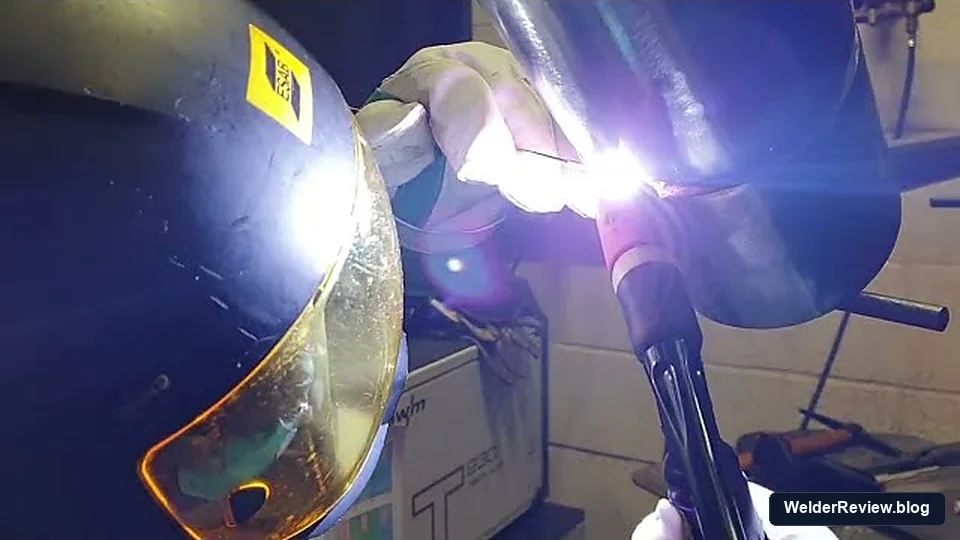
Gas tungsten arc technology utilizes a non-consumable electrode coupled with separate filler rods. This architecture allows absolute independent control over the heat input and puddle volume.
Metal Inert Gas welding relies on a continuous wire feed, whereas manual processes require meticulous preparation, such as following our guide to sharpening tungsten electrodes before striking an arc.
Tungsten Inert Gas welding separates filler metal addition from the non-consumable arc zone. Operators manually feed filler rods into the high-frequency arc while managing amperage through foot pedals or torch switches.
- Continuous electrode feeding versus manual rod manipulation
- Constant voltage power sources versus constant current units
- Internal drive rolls versus external torch body switches
Power Source Architecture
MIG systems typically employ constant voltage outputs to maintain arc stability automatically. Adjusting wire feed speed dictates the overall amperage and penetration depth.
TIG machines require sophisticated constant current circuits with high-frequency arc starters. This prevents tungsten contamination while establishing a stable arc across varied metals.
- Constant voltage profile stability
- High frequency arc ignition systems
Real-World Performance Comparison
Executing structural joints demands reliable penetration profiles and consistent bead geometry. Evaluating our best mig tig plasma combo review helps fabricators select versatile multi-process machines for diverse shop environments.
Precision applications require the refined puddle control offered by tungsten inert gas equipment. Fabricators can manipulate cooling rates to minimize distortion on delicate sheet metal components.
Production throughput heavily favors continuous wire feeding systems on long structural joints. Fabricators achieve rapid travel speeds while minimizing downtime, making these units ideal for heavy structural fabrication environments.
Precision applications demand the clean puddle control characteristic of tungsten-based electric arcs. Welders can manipulate heat input independently, preventing burn-through on thin gauge metals like aerospace-grade aluminum alloys.
- Rapid travel speeds for high productivity
- Superior aesthetic stack of dimes appearance
- Minimal post-weld cleanup on critical joints
Penetration and Bead Profile
Heavy plates require high amperage settings and proper joint preparation to ensure structural soundness. Wire feed systems deliver deep initial fusion when paired with correct shielding gases.
Thin materials demand precise heat management to prevent burn-through defects during assembly. Tungsten arc processes allow micro-adjustments that safeguard delicate structural components easily.
- Deep fusion zones on thick steel
- Controlled heat input for thin sheets
Setup, Usability, and Ergonomics
Operator training times vary significantly between these two processes, especially when examining specialized configurations like our best cup for tig welding aluminum picks for advanced fabrication tasks.
Ergonomic considerations include torch weight, cable flexibility, and foot pedal positioning. Balancing these physical factors reduces fatigue during lengthy fabrication schedules in busy shops.
Operating a wire-fed gun requires managing contact tip-to-work distance and steady gun angles. Beginners often master the basic muscle memory faster because the machine automatically meters wire speed continuously.
Managing a two-handed tungsten torch demands exceptional coordination and fine motor skills. Operators must balance filler rod additions while maintaining a strict arc length to avoid tungsten contamination in the weld pool.
- Simplified parameter matching charts on modern machines
- Dual-hand coordination required for tungsten setups
- Remote amperage control via foot pedals or torches
Learning Curve Analysis
Beginners appreciate the self-regulating arc characteristics inherent in standard wire feed setups. Maintaining a consistent contact tip distance remains the primary operational skill required.
Mastering tungsten equipment demands simultaneous coordination of both hands and a foot pedal. Operators must feed filler metal smoothly while steering the torch along joint lines.
- Self-regulating arc length dynamics
- Simultaneous multi-limb operational demands
Maintenance, Efficiency, and Longevity
Routine upkeep preserves equipment lifespan and ensures consistent weld quality across projects. Wire feed guns require regular inspections of drive rolls, liners, and contact tips.
Tungsten torches demand meticulous maintenance of collets, cups, and electrode geometry. Contaminated electrodes degrade arc stability and compromise the structural integrity of finished weldments.
Wire drive assemblies require routine cleaning of drive rolls, liners, and contact tips to prevent birdnesting. Proper preventative maintenance ensures consistent wire delivery and reduces costly electrical resistance faults during shifts.
Non-consumable tungsten torches demand meticulous grinding to maintain precise tip geometries. Technicians must inspect water-cooling lines and gas lenses regularly to prevent premature torch failure under high amperage settings.
- Drive roll groove cleaning and tension checks
- Frequent tungsten electrode grinding and pointing
- Shielding gas hose integrity inspections
Consumable Lifecycle Management
Contact tips experience accelerated wear from electrical arcing during high-amperage production runs. Keeping spare tips on hand prevents frustrating downtime in active fabrication shops.
Proper tungsten preparation requires longitudinal grinding marks to stabilize the electric arc. Improperly shaped electrodes wander unpredictably and create defective weld puddles.
- Contact tip replacement schedules
- Longitudinal tungsten grinding best practices
Material Compatibility and Thickness Limits
Selecting the correct process depends heavily on the base metals and material thickness involved. Carbon steel, stainless steel, and aluminum require tailored shielding gases and filler wires.
Heavy structural plates require the high deposition rates of continuous wire feed systems. Conversely, exotic alloys and aerospace components demand the extreme precision of tungsten welding.
Continuous wire systems excel when joining carbon steels exceeding three millimeters in thickness. Industrial applications leverage spray transfer modes for deep penetration profiles without risking lack of fusion defects.
Alternating current configurations on tungsten units safely process exotic metals like titanium and magnesium. These specialized machines handle ultra-thin sheet components where precision heat control prevents warping or metallurgical degradation.
- Thick carbon steel structural fabrication
- Thin aluminum sheet metal assemblies
- Exotic alloy and titanium component joining
Aluminum Fabrication Challenges
Welding aluminum requires alternating current capabilities and specialized spool guns for wire feed setups. Clean base metal preparation remains mandatory to prevent porous weld defects.
Tungsten machines handle aluminum effortlessly when configured with proper high-frequency AC balance controls. This combination cleans surface oxides while maintaining stable arc penetration profiles.
- Spool gun usage for soft aluminum wire
- Alternating current balance for oxide cleaning
Shielding Gas and Consumable Dynamics
Shielding gases protect molten weld pools from atmospheric contamination and oxidation. Argon, carbon dioxide, and helium blends dictate arc characteristics and penetration profiles.
Flow meters must be calibrated accurately to prevent turbulence and atmospheric entrainment. Choosing the correct gas mixture directly influences spatter levels and mechanical properties.
Selecting the correct shielding gas mixture dictates weld bead profile and spatter levels. Consult our best gas for mig welding mild steel guide to optimize carbon steel joints effectively.
Consumable costs vary significantly between the two welding processes over standard operating cycles. Contact tips and nozzles wear steadily, whereas high-purity tungsten electrodes require careful preservation to minimize frequent replacement expenses.
- Argon and carbon dioxide mixes for steel
- Pure argon shielding for aluminum joints
- Flow rate optimization for windy environments
Gas Selection Principles
Carbon dioxide provides deep penetration on steel but increases spatter generation significantly. Adding argon smooths the arc transfer and reduces post-weld cleanup labor considerably.
Pure inert gases like argon are mandatory when fusing reactive metals with tungsten electrodes. This prevents embrittlement and ensures maximum corrosion resistance in finished structures.
- Active versus inert gas behaviors
- Preventing atmospheric contamination defects
Which Option Fits Your Shop Setup
Evaluating your typical projects helps determine the most economical equipment investment. Automotive repair shops and general fabrication facilities benefit greatly from versatile wire feed units.
Specialized artisans, motorsport fabricators, and aerospace contractors require the unmatched precision of tungsten systems. Investing in the correct technology maximizes operational efficiency and output quality.
High-output fabrication shops prioritize wire feed systems for maximum deposition rates and reduced operator fatigue. Evaluating daily production quotas helps determine if continuous welding processes offer the best return.
Custom fabrication and motorsport repair facilities typically select tungsten-based equipment for ultimate versatility. These shops handle intricate geometries where aesthetic weld quality and metallurgical integrity outweigh high-speed deposition rates.
- Assess average material thickness and joint types
- Evaluate available electrical power infrastructure
- Consider operator skill levels and training budgets
Final Decision Framework
Prioritize metal inert gas machines if your primary goals involve high production speeds and thick plates. These robust systems maximize throughput on standard carbon steel projects.
Select tungsten equipment when aesthetic perfection and metallurgical purity outweigh fabrication speed. This advanced process handles intricate joints on thin exotic materials flawlessly.
- Production speed versus aesthetic precision
- Long-term shop capability planning
Frequently Asked Questions
Which welding process is easier for complete beginners to learn?
Mug welding is generally much easier for beginners due to its self-regulating arc and automated wire feed system. Operators can achieve acceptable structural joints quickly without mastering complex manual coordination.
Can I weld aluminum effectively with both machine types?
Yes, both processes handle aluminum successfully when configured with appropriate shielding gases and equipment modifications. However, tungsten inert gas provides superior control on thin sheet aluminum assemblies.
Why do professional fabricators prefer tungsten equipment for motorsports?
Motorsport applications demand absolute structural reliability and aesthetic perfection on thin-walled tubing. The precise heat control of tungsten systems prevents burn-through and ensures maximum joint integrity.
What shielding gas is required for standard carbon steel wire feeding?
Standard carbon steel wire feeding typically utilizes a blend of argon and carbon dioxide gases. This specific mixture ensures deep penetration while minimizing troublesome weld spatter.
How often should I replace consumable contact tips and tungsten electrodes?
Contact tips require replacement when the internal bore enlarges and causes erratic arc stability. Similarly, tungsten electrodes need frequent regrinding whenever contamination or rounding occurs.