Mig Welder vs Wire Feed: Technical Comparison
Understanding the mechanical differences between traditional shielding gas setups and flux-cored wire systems helps fabricators choose correctly. Making the right equipment investment prevents costly rework in structural fabrication shops.

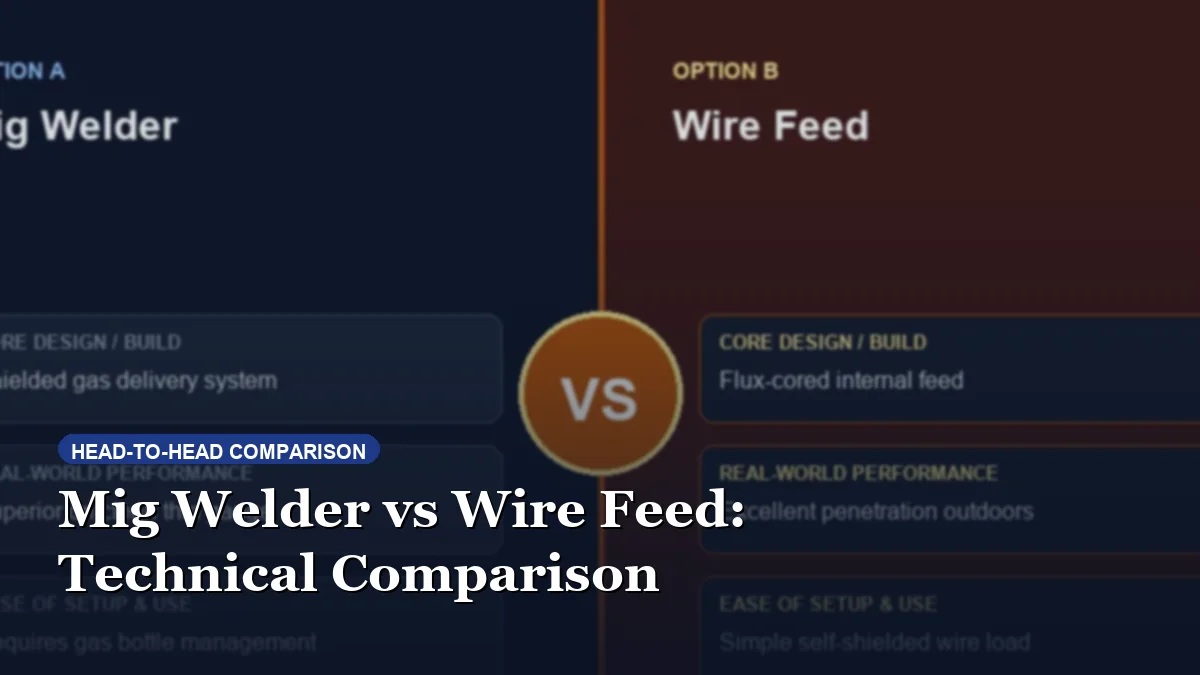
Choose a MIG welder for clean, low-spatter automotive sheet metal work, while a wire feed flux-cored setup excels for outdoor heavy steel repairs.
Compare all top models in our Best Welder: Top Home Shop & Jobsite Picks Tested.
Side-by-Side Breakdown
| Criteria | Mig Welder | Wire Feed | Edge |
|---|---|---|---|
| Core Design / Build | Shielded gas delivery system | Flux-cored internal feed | Mig Welder |
| Real-World Performance | Superior on clean thin gauge | Excellent penetration outdoors | Wire Feed |
| Ease of Setup & Use | Requires gas bottle management | Simple self-shielded wire load | Wire Feed |
| Durability & Reliability | Heavy-duty internal drive rolls | Rugged compact housing builds | Mig Welder |
| Efficiency / Operating Footprint | Higher duty cycle capacity | Portable mobile service trucks | Wire Feed |
| Maintenance Requirements | Regular contact tip cleaning | Frequent liner and tip checks | Mig Welder |
| Best Ideal Use Case | Precision indoor shop fabrication | Outdoor ranch and farm repairs | Split |
Core Design & Engineering Differences
Evaluating the structural engineering of welding machines reveals distinct internal architectures. A MIG welder incorporates precision gas solenoids and regulated flow meters to manage external shielding gas bottles during every single arc cycle.
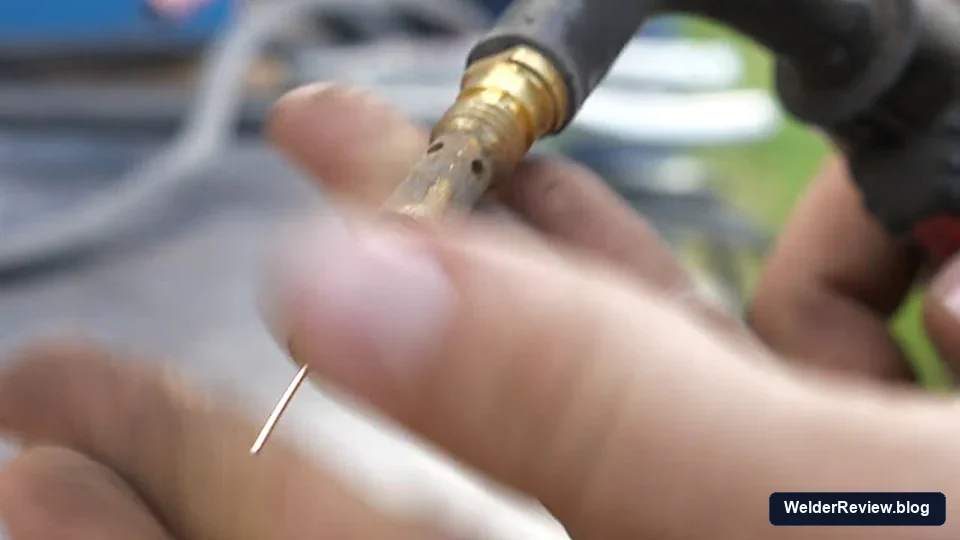
Conversely, standard wire feed machines frequently rely on self-shielded flux-cored processes. This specific design eliminates heavy compressed gas cylinders entirely by generating its own protective gaseous plume directly from the burning flux core.
Internal drive mechanisms also vary across these categories. Professional MIG systems utilize cast aluminum tensioners, while hobby units rely on polymer gearboxes. Proper setup requires mastering mig wire feed speed for clean welds.
- Shielded gas integration requires precise solenoid valves and external regulators.
- Self-shielded wire feed systems eliminate the need for cumbersome argon tanks.
- Drive roll assemblies range from heavy cast aluminum to lightweight polymers.
Internal Wire Drive Mechanisms
Smooth wire delivery directly dictates bead consistency and arc stability. Heavy-duty drive mechanisms prevent bird-nesting issues when feeding soft aluminum or rigorous steel wires through long welding gun liners.
Proper tension adjustments protect the consumable wire from crushing deformation. Operators must inspect roller grooves regularly to match specific wire diameters ranging from zero point thirty to forty-five thousandths.
- Roller grooves must match the exact wire diameter to prevent slippage.
- Proper tension calibration stops bird-nesting inside the drive compartment.
Real-World Performance Comparison
Assessing actual workshop performance highlights clear operational divergences. Traditional MIG configurations produce virtually zero spatter when paired with pure argon or argon-carbon dioxide shielding gas blends on clean mild steel components.
Wire feed flux-cored welding generates notable slag layers and spatter. However, this aggressive process cuts effortlessly through rusted, painted, or mill-scaled structural steel plates without requiring extensive surface grinding beforehand.
Penetration profiles differ noticeably under identical amperage outputs. Self-shielded wire feed setups dump deep heat into thick plate joints, while shielded MIG arcs provide superior control on delicate automotive sheet metal.
- MIG setups deliver pristine, slag-free welds on clean carbon steel.
- Flux-cored wire feed handles dirty, oxidized metals with aggressive arc force.
- Heat input characteristics dictate success on thin versus thick stock.
Handling Contaminated Materials
Field repairs often present rusted farm equipment or weathered beams. Choosing the best wire feed welder for beginners ensures internal deoxidizers smoothly cleanse surface impurities and molten puddles.
Attempting similar repairs with standard gas-shielded MIG frequently causes severe porosity. Atmospheric contamination ruins the weld bead integrity when protective shielding gas blows away outdoors.
- Internal deoxidizers in flux wire neutralize rust and mill scale.
- Outdoor wind drafts easily disrupt external shielding gas coverage.
Shielding Gas Dynamics & Penetration
Shielding gas chemistry dictates arc characteristics and mechanical properties. MIG welding relies completely on external gases like argon, helium, or carbon dioxide to protect the molten weld pool from atmospheric nitrogen and oxygen.
Without continuous gas flow, weld metal becomes brittle and porous. Reviewing a best 110v wire feed welder option highlights how internal chemical compounds successfully shield the arc autonomously.
Penetration depth remains a critical structural metric for certified fabricators. Deep-penetrating flux-cored arcs excel in structural steel erection, while shallow MIG puddles prevent burn-through on thin automotive body panels.
- External shielding gas prevents atmospheric embrittlement of molten steel.
- Tubular flux wires generate protective gas shields from the inside out.
- Penetration levels vary widely based on gas choice and wire type.
Gas Cylinder Management and Safety
Managing compressed gas cylinders introduces logistical challenges in mobile environments. Shop-based MIG welders require secure cart storage, regulator inspections, and frequent cylinder exchanges to maintain continuous operational workflow.
Eliminating gas bottles makes wire feed units remarkably portable. Maintenance technicians can easily toss a compact flux-cored machine into a service truck for emergency roadside repairs without safety hazards.
- Compressed gas bottles demand secure storage and safety chains.
- Portable wire feed machines eliminate heavy tank logistics entirely.
Setup, Usability & Operator Ergonomics
Operator experience levels dictate how quickly a technician becomes productive. Wire feed machines offer exceptional simplicity because users only need to load a spool, set voltage taps, and pull the gun trigger.
MIG welding requires balancing wire speed, voltage, and gas flow rates simultaneously. Beginners often struggle initially to dial in the correct parameters for optimal arc transfer and minimal spatter accumulation.
Torch ergonomics significantly impact daily fatigue during long fabrication shifts. Balanced gun handles, flexible power cables, and lightweight torch assemblies reduce wrist strain and improve overall weld bead tracking accuracy.
- Simplified wire feed controls speed up training times for new recruits.
- MIG parameter balancing requires understanding voltage and wire speed ratios.
- Ergonomic welding guns reduce operator fatigue during long shifts.
Parameter Tuning and Calibration
Achieving a stable, crackling bacon sound requires precise adjustments. Modern digital microprocessors simplify parameter tuning by offering preset voltage and wire speed charts directly inside the side panel door.
Manual machines demand empirical testing on scrap metal pieces. Welders must evaluate bead profile, sound, and spatter levels to fine-tune settings before working on critical structural weldments.
- Digital microprocessors provide helpful parameter starting points.
- Manual calibration requires testing on scrap material of identical thickness.
Maintenance, Efficiency & Longevity
Long-term equipment reliability depends on rigorous routine maintenance protocols. Contact tips, drive rolls, and gun liners suffer continuous mechanical wear and must be inspected and replaced on strict schedules.
MIG torches accumulate copper shavings inside the liner over time. Regular compressed air purging and tip cleaning prevent erratic wire feeding issues and maintain steady electrical contact during high-amperage runs.
Electrical transformer efficiency impacts overall energy consumption in busy shops. Modern inverter-based power sources deliver high duty cycles while drawing less current from standard 230-volt facility wall outlets.
- Routine maintenance prevents erratic wire feeding and poor electrical contact.
- Gun liners require periodic cleaning and replacement to reduce friction.
- Inverter power sources maximize electrical efficiency and duty cycles.
Consumable Inspection and Replacement
Ignoring worn contact tips leads to arc wandering and poor fusion. Welders should inspect nozzles and contact tips daily, removing accumulated weld spatter with specialized pliers to ensure smooth gas or current delivery.
Drive rolls also accumulate metallic debris from soft wires. Brushing out the drive housing compartment prevents premature motor wear and eliminates frustrating wire slippage during production runs.
- Daily tip inspection stops arc wandering and unstable fusion.
- Cleaning drive roll grooves prevents metallic debris accumulation.
Power Delivery & Electrical Specs
Electrical specifications dictate machine capabilities across various job sites. Selecting the right best 110-volt wire feed welder guarantees reliable operation on standard residential circuits without expensive wiring upgrades.
Heavy industrial MIG machines demand robust 230-volt or 460-volt three-phase power. These heavy-duty circuits provide the amperage necessary to weld thick structural steel plates continuously without tripping thermal overload protection breakers.
Duty cycle ratings measure continuous welding capacity before requiring cooldown. A machine rated at a sixty percent duty cycle can weld for six minutes out of ten before needing mandatory cooling intervals.
- Standard 115-volt circuits suit light-duty portable wire feed machines.
- Industrial MIG systems require heavy 230-volt or three-phase power.
- Duty cycle percentages define safe operating limits under heavy loads.
Inverter Versus Transformer Technology
Modern welding machine design has shifted heavily toward solid-state electronics. Inverter technology reduces overall machine weight dramatically while offering superior arc stability and precise electronic control over voltage drops.
Traditional copper-wound transformers remain exceptionally durable against harsh shop environments. However, their heavy weight and bulky footprints make them less desirable for mobile service technicians constantly on the move.
- Inverter circuits offer lightweight portability and precise arc control.
- Copper transformers provide rugged durability for permanent shop floors.
Which Option Fits Your Setup
Selecting the ideal equipment category requires evaluating your primary workspace. If you weld primarily indoors on clean automotive sheet metal, a traditional MIG welder delivers the neatest finish and minimal clean-up effort.
Conversely, field service technicians repairing heavy outdoor machinery will benefit immensely from a versatile wire feed machine. Its ability to burn flux-cored wire without shielding gas makes it unbeatable for windy outdoor locations.
Budget considerations and electrical availability also narrow down the choices. Assess your typical material thickness, power supply access, and environment before investing in a dedicated welding machine setup.
- Indoor precision sheet metal work favors traditional MIG setups.
- Outdoor field repairs demand portable self-shielded wire feed units.
- Evaluate power supply limits and typical material thicknesses carefully.
Making the Final Equipment Investment
Investing in professional-grade welding equipment pays dividends over time. Prioritize units with robust drive assemblies, accessible replacement parts, and adequate amperage output for your most demanding projected fabrication tasks.
Matching the machine to your actual skill level prevents frustration. Take time to evaluate manufacturer specifications, warranty terms, and local technical support before purchasing your next workshop welding system.
- Prioritize robust drive systems and readily available replacement parts.
- Ensure machine amperage matches your most demanding projected projects.
Frequently Asked Questions
Can a standard MIG welder run flux-cored wire without gas?
Yes, most MIG machines can run flux-cored wire by switching the polarity and removing the gas nozzle. You must ensure the drive rolls match the wire diameter for smooth feeding.
Which machine is better for outdoor welding projects?
A wire feed machine running self-shielded flux-cored wire is far superior outdoors. Wind gusts easily blow away shielding gas used in standard MIG setups, causing severe weld porosity.
Do I need a special electrical outlet for a MIG welder?
It depends entirely on the machine size and transformer rating. Smaller units run on standard household current, while heavy industrial MIG welders require dedicated 230-volt or three-phase power.
Why does my wire feed machine keep bird-nesting?
Bird-nesting usually happens when drive roll tension is set too high or the contact tip is clogged. Adjust the tension knob properly and clear any debris inside the gun liner.
Is flux-cored wire welding stronger than standard MIG?
Both methods achieve high structural strength when executed correctly by certified operators. Flux-cored wire typically provides deeper penetration, making it ideal for thick, uncleaned structural steel plates.