Mig vs Tig Welding Stainless Steel
Choosing the right arc process dictates stainless steel weld integrity. Balancing speed against metallurgical control determines your shop output.

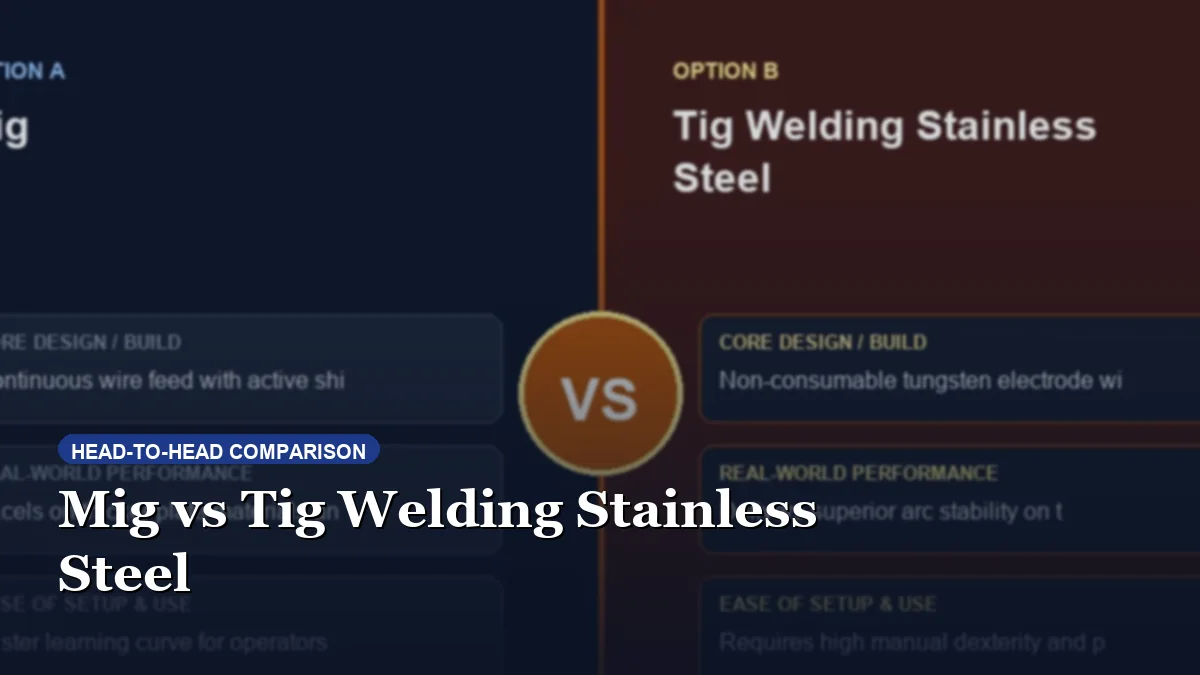
Choose MIG for high-speed structural fabrication where minor post-weld cleanup is acceptable. Select TIG when absolute puddle control and metallurgical precision are required.
Compare all top models in our Best Welder: Top Home Shop & Jobsite Picks Tested.
Side-by-Side Breakdown
| Criteria | Mig | Tig Welding Stainless Steel | Edge |
|---|---|---|---|
| Core Design / Build | Continuous wire feed with active shielding gas delivery. | Non-consumable tungsten electrode with manual filler rod addition. | Tig Welding Stainless Steel |
| Real-World Performance | Excels on thicker plate materials and long production runs. | Delivers superior arc stability on thin sheet assemblies. | Tig Welding Stainless Steel |
| Ease of Setup & Use | Faster learning curve for operators with pre-set machine parameters. | Requires high manual dexterity and precise foot pedal coordination. | Mig |
| Durability & Reliability | Robust wire drives withstand heavy industrial fabrication floors. | Precision high-frequency arc starters need clean internal electronics. | Mig |
| Efficiency / Operating Footprint | High deposition rates reduce overall time spent per linear inch. | Slower travel speeds demand more labor hours per weld joint. | Mig |
| Maintenance Requirements | Frequent contact tip replacements and liner cleanings are necessary. | Tungsten grinding and torch cup inspections prevent contamination. | Tig Welding Stainless Steel |
| Best Ideal Use Case | High-volume commercial fabrication and structural stainless frames. | Architectural handrails, sanitary piping, and precision motorsport exhaust. | Tig Welding Stainless Steel |
Core Design and Engineering Differences
Welding stainless steel requires a deep understanding of thermal input and chromium carbide precipitation. Both processes protect the molten weld pool differently.
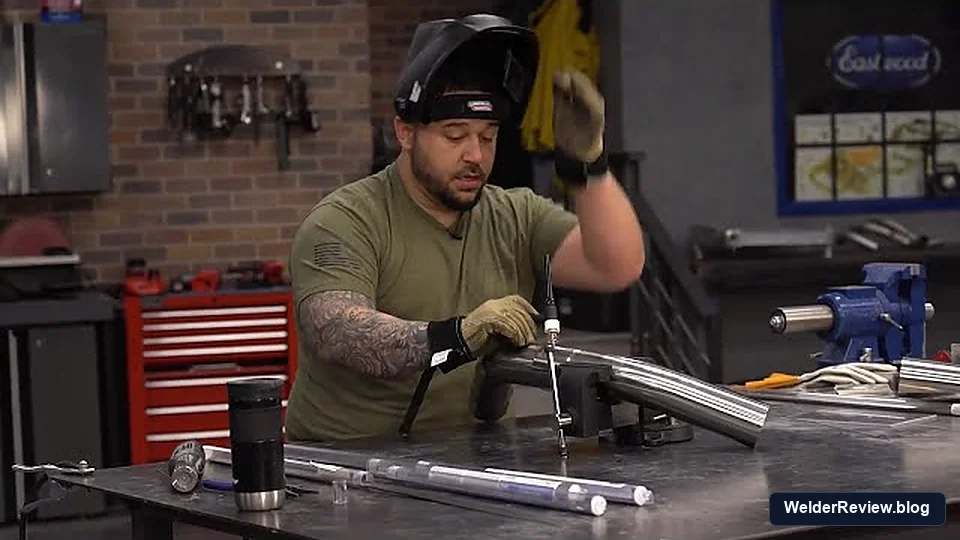
Gas metal arc systems continuously feed a solid wire electrode through a dynamic weld gun. This creates an automatic arc that melts filler metal directly into the joint.
Gas tungsten units rely on a separate hand-fed filler rod while an independent tungsten electrode maintains the arc. This separation grants total control over heat input and filler volume.
MIG systems utilize a continuous wire feed mechanism paired with constant voltage power sources. This configuration simplifies operator control while demanding precise inductance tuning to stabilize the short-circuit transfer mode.
Conversely, TIG architecture relies on constant current output paired with high-frequency arc initiation. Operators must manually coordinate filler metal addition while maintaining exact arc length using tungsten electrode geometry.
Equipment portability also diverges significantly between these setups. MIG units require specific blends like the best gas for mig welding mild steel, whereas TIG configurations demand dedicated water coolers.
- MIG utilizes consumable solid wires matched to austenitic or ferritic base metals.
- TIG employs non-consumable tungsten alloy rods to establish a stable electrical arc.
- Shielding gases vary from pure argon to specialized helium-argon-carbon dioxide tri-mix blends.
Power Source Architecture
Modern power sources dictate arc stability through advanced inverter technology. Constant voltage outputs dominate wire feed systems for predictable arc lengths.
Constant current machines provide stable amperage despite minor arc length variations. This is vital for maintaining puddle consistency during manual welding tasks.
- Inverter power sources reduce overall machine weight and improve energy efficiency.
- Waveform control minimizes spatter during short-circuit transfer modes.
Metallurgical Behavior and Shielding Requirements
Stainless steel alloys demand rigorous shielding to prevent atmospheric oxidation at elevated temperatures. Chromium reacts rapidly with ambient oxygen if left unprotected.
Wire feed setups often utilize tri-mix shielding gases to stabilize the arc and reduce spatter. Pure argon causes excessive undercutting and erratic transfer behaviors.
Tungsten setups excel with pure argon shielding because it provides a clean, stable cleaning action. Back purging is frequently mandatory to protect the root pass from oxidation.
Stainless steel welding demands rigorous inert gas coverage to prevent chromium oxidation at elevated temperatures. Following the correct cfh for tig welding stainless steel parameters ensures optimal flow rates during extended arc passes.
TIG welding strictly requires pure argon or helium mixtures to safeguard the non-consumable tungsten electrode. Inadequate post-weld shielding causes carbide precipitation, severely degrading the corrosion resistance of austenitic stainless alloys.
Heat input management remains critical to prevent excessive grain growth and thermal distortion. Maintaining interpass temperatures below 150 degrees Celsius preserves mechanical integrity and prevents sensitization zones along the heat-affected area.
- Tri-mix gas typically consists of helium, argon, and small carbon dioxide percentages.
- Back purging requires inert gas flow inside hollow structural tubing during assembly.
- Inadequate shielding leads to carbide precipitation and loss of corrosion resistance.
Thermal Distortion Control
High thermal expansion coefficients in austenitic stainless steels cause severe warping during fabrication. Controlling heat input prevents costly geometric deformation on finished parts.
Pulsed parameters help limit total heat saturation by alternating peak and background current. This allows the base metal to cool slightly between high-energy pulses.
- Pulsed waveforms significantly reduce heat-affected zone dimensions.
- Copper chill bars help dissipate excess thermal energy away from the weld joint.
Real-World Performance on Thin Sheet Metal
Fabricating thin stainless sheet metal exposes the primary limitations of high-amperage equipment. Burn-through occurs rapidly if voltage and wire feed speeds are not properly calibrated.
Traditional setups struggle with thin-gauge material unless equipped with specialized waveform controls. Cold metal transfer variants help mitigate burn-through risks on delicate assemblies.
Manual tungsten setups remain the undisputed champion for thin-gauge fabrication when paired with the best tig welder for aluminum and stainless steel. Operators feather the foot pedal to instantly drop amperage.
Joining thin stainless gauges requires exceptional control over heat input to prevent catastrophic burn-through. Pulsed MIG parameters significantly reduce overall thermal output, enabling reliable penetration on twenty-gauge sheets without warping components.
TIG welding excels on ultra-thin materials due to precise amperage adjustments down to five amps. The pinpoint arc concentration allows fabricators to fuse razor-sharp edges without filler metal using autogenous joint designs.
Fixturing plays an equally vital role when processing thin austenitic sheet assemblies. Employing copper backing bars helps dissipate residual thermal energy rapidly, minimizing angular distortion and ensuring strict dimensional tolerances.
- Sheet gauges below sixteen-gauge require precise parameter adjustments to prevent warping.
- Foot pedal modulation gives real-time thermal management during complex manual passes.
- Fit-up tolerances must be exceptionally tight when joining thin stainless components.
Overhead and Positional Challenges
Positional welding introduces unique obstacles regarding gravity and puddle fluidity. Wire feed systems allow steady travel speeds across vertical and overhead joints.
Holding a torch while manually feeding filler wire demands exceptional ambidextrous coordination. This difficulty increases exponentially when working in cramped structural positions.
- Vertical-up progressions ensure adequate penetration on thick structural plate.
- Overhead manipulation requires strict arc length control to avoid tungsten contamination.
Efficiency, Deposition Rates, and Speed
Production environments prioritize high deposition rates to minimize labor costs per assembly. Continuous wire feed systems deposit filler metal significantly faster than manual methods.
Time spent changing spools and cleaning contact tips is offset by rapid travel speeds. This makes automated wire systems ideal for large batch manufacturing runs.
Manual tungsten welding is inherently slower due to the requirement for manual rod addition. However, the time saved in post-weld cleanup often balances overall project timelines.
Production environments prioritizing output velocity naturally gravitate toward continuous wire processes. High deposition rates allow operators to fill thick joint configurations rapidly, minimizing total arc-on time per completed assembly.
TIG operations inherently trade speed for absolute metallurgical and aesthetic precision. The manual addition of filler rod restricts overall travel speeds, making it less economical for heavy structural fabrication tasks.
Balancing labor costs against material thickness determines the true economic efficiency of each method. While MIG cuts fabrication schedules, TIG eliminates secondary cleanup operations by avoiding spatter accumulation entirely.
- Continuous wire delivery maximizes arc-on time across extended production shifts.
- Manual filler addition limits linear inches welded per hour on complex assemblies.
- Grinding spatter is eliminated entirely when using properly tuned inert gas systems.
Consumable Economics
Consumable costs directly impact operational budgets in heavy fabrication facilities. Solid wire spools offer low cost per pound for high-volume production floors.
Tungsten electrodes and specialized gas lenses incur higher initial setup investments. Proper electrode maintenance extends grinding intervals and reduces overall shop waste.
- Solid wire spools reduce downtime through extended continuous welding cycles.
- Thoriated or lanthanated tungsten electrodes require careful handling and disposal.
Maintenance, Consumables, and Long-Term Upkeep
Routine equipment maintenance ensures consistent arc ignition and reliable wire feeding performance. Drive rolls must match the specific diameter of the stainless wire used.
Worn contact tips cause erratic wire feeding and electrical resistance issues during operation. Replacing these inexpensive parts prevents costly downtime on the factory floor.
Tungsten torch assemblies require regular inspection of collets, gas lenses, and ceramic cups. A contaminated electrode must be reground immediately to maintain arc stability.
Equipment longevity depends heavily on proactive maintenance routines for drive rolls and torch liners. Replacing worn contact tips prevents erratic wire feeding and maintains consistent electrical resistance during production runs.
TIG maintenance focuses primarily on tungsten preparation and torch body integrity. Proper grinding using dedicated wheels prevents tungsten inclusions, while inspecting gas lenses ensures laminar shielding flow and prevents porosity defects.
Consumable expenditures vary based on duty cycles and shielding gas consumption rates. Stocking high-grade ceramic nozzles and correct collet bodies minimizes costly downtime and guarantees optimal gas coverage.
- Drive roll tension must be kept low to prevent crushing soft wires.
- Teflon liners reduce friction during long wire feed paths.
- Gas lenses improve shielding coverage and reduce turbulence in drafty shops.
Troubleshooting Common Arc Flaws
Porosity remains a primary defect when shielding gas coverage is compromised by drafts. Inspecting gas hoses and flow meters resolves most atmospheric contamination issues.
Lack of fusion occurs when travel speed exceeds the melting capacity of the arc. Adjusting voltage and wire feed parameters restores proper sidewall penetration profiles.
- Porosity appears as tiny pinholes within the solidified weld bead matrix.
- Inadequate gas flow rates invite atmospheric oxygen into the hot metal zone.
Joint Preparation and Fit-Up Tolerances
Stainless steel fabrication demands meticulous joint preparation before striking any arc. Organic oils, grease, and mill scale must be removed using dedicated stainless wire brushes.
Wire feed systems tolerate slightly wider gaps due to the high deposition of filler metal. However, excessive gaps still lead to burn-through on critical pressure vessels.
Manual tungsten welding requires exceptional fit-up with zero gap tolerance on thin sheets. Fitting parts tightly together prevents blow-outs and ensures uniform root penetration.
Stainless steel joints demand meticulous cleaning prior to welding to eliminate organic contaminants. Choosing the best welding machine for stainless steel paired with proper prep prevents subsequent intergranular corrosion.
MIG processes tolerate slight fit-up variations better due to the wider arc profile and continuous wire addition. However, excessive root openings still require backing strips to prevent melt-through failures on thin sections.
TIG welding requires exceptionally tight joint fit-up tolerances because the localized arc offers minimal bridging capability. Precision shearing and milling ensure gap-free joints necessary for high-integrity pressure vessel fabrication.
- Dedicated stainless steel wire brushes prevent cross-contamination from carbon steel.
- Acetone wipes remove surface contaminants that cause subsurface weld porosity.
- Bevel angles on thick plates ensure complete root pass tie-in.
Post-Weld Cleaning Procedures
Heat tint discoloration must be removed to restore maximum corrosion resistance on stainless surfaces. Chemical passivation removes chromium-depleted surface layers effectively.
Mechanical grinding removes excess reinforcement but leaves microscopic scratches. These scratches can trap moisture and initiate localized pitting corrosion over time.
- Pickling pastes restore passive chromium oxide layers on finished welds.
- Electrochemical weld cleaning offers a faster alternative to hazardous acid pastes.
Which Process Fits Your Production Setup
Selecting the correct welding process depends on your specific shop requirements and project scope. High-volume structural fabrication benefits immensely from the speed of wire feed systems.
Precision architectural work, sanitary tubing, and custom exhaust systems demand manual tungsten control. Evaluating your operator skill levels helps determine the most viable equipment investment.
Many modern fabrication shops maintain both machine types to handle diverse customer demands. Matching the tool to the material thickness guarantees high-quality structural results.
Selecting the ideal welding process requires evaluating your shop volume and part geometry. High-volume manufacturing environments benefit immensely from automated MIG systems equipped with water-cooled guns for continuous shifts.
Custom architectural fabrication and aerospace components demand the refined control offered by TIG equipment. Evaluating welder skill levels and available training programs ensures successful integration into your existing workflow.
Assessing long-term capital investments involves weighing equipment costs against anticipated project requirements. Matching the specific metallurgical traits of stainless steel to your operational goals guarantees superior structural performance.
- Assess average material thicknesses before purchasing industrial welding equipment.
- Consider available operator training time when implementing new shop processes.
- Evaluate post-weld cleanup labor when calculating total project manufacturing costs.
Balancing Cost Versus Quality
Initial equipment acquisition costs vary widely between basic wire feed and advanced inverter units. Investing in quality power sources pays dividends through reduced rework rates.
Balancing consumable expenses with labor efficiency dictates overall shop profitability. Prioritizing weld aesthetics often points directly toward manual tungsten arc deployment.
- Advanced pulse waveforms reduce post-weld grinding labor significantly.
- Multi-process machines offer flexibility for shops tackling diverse metal alloys.
Frequently Asked Questions
Can I use standard shielding gas for stainless steel?
Standard pure argon works exceptionally well for manual tungsten setups. Wire feed applications typically require a specialized tri-mix gas blend for optimal arc stability.
Why does my stainless steel weld turn black?
A black, oxidized weld surface indicates inadequate shielding gas coverage during the welding cycle. Increasing gas flow rates or adding a root purge resolves this issue.
Is wire feed welding harder to learn than tungsten welding?
Wire feed systems feature a much faster learning curve for beginner fabricators. Manual tungsten welding requires advanced hand-eye coordination and precise foot pedal manipulation.
How do I prevent warping on thin stainless sheet metal?
Control thermal input by using pulsed waveform settings and copper chill blocks. Maintaining fast travel speeds also minimizes the overall heat-affected zone expansion.
Do I need dedicated tools for stainless steel fabrication?
Using dedicated stainless steel wire brushes prevents iron contamination from carbon steel. Cross-contamination causes rust spots and compromises the corrosion resistance of the weld.