Mig vs Tig vs Stick vs Flux Core: Ultimate Guide
Choosing the right welding process requires understanding distinct arc characteristics. Different shielding methods directly impact penetration, travel speed, and operational complexity.


Pick MIG for speed and clean fabrication on sheet metal. Choose TIG, stick, or flux-core when dealing with heavy structural steel, outdoor wind, or exotic alloys.
Compare all top models in our Best Welder: Top Home Shop & Jobsite Picks Tested.
Side-by-Side Breakdown
| Criteria | Mig | Tig Vs Stick Vs Flux Core | Edge |
|---|---|---|---|
| Core Design / Build | Continuous wire feed with external shielding gas. | Diverse architectures ranging from tungsten arcs to consumable flux rods. | MIG for general speed |
| Real-World Performance | High deposition rates on clean carbon steel sheets. | Exceptional control or heavy penetration through thick rust and paint. | Variable by task |
| Ease of Setup & Use | Very beginner friendly with preset voltage charts. | Steep learning curves requiring precise coordination and manual dexterity. | Mig |
| Durability & Reliability | Sensitive to drive roll tension and contact tip wear. | Extremely rugged field reliability, especially for traditional stick units. | Stick |
| Efficiency / Operating Footprint | High duty cycle indoors with bulky gas cylinders. | Varies widely from portable inverters to gas-heavy tungsten setups. | Mig |
| Maintenance Requirements | Requires regular liner cleaning and tip replacements. | Minimal mechanical upkeep aside from stinger and torch upkeep. | Stick |
| Best Ideal Use Case | Automotive sheet metal and production fabrication shops. | Pipeline welding, structural erection, and precision aerospace work. | Variable |
Core Design And Engineering Architecture
Metal inert gas welding relies on a continuous wire feed mechanism coupled with an external shielding gas bottle. This automated delivery system keeps deposition rates high during long production runs.
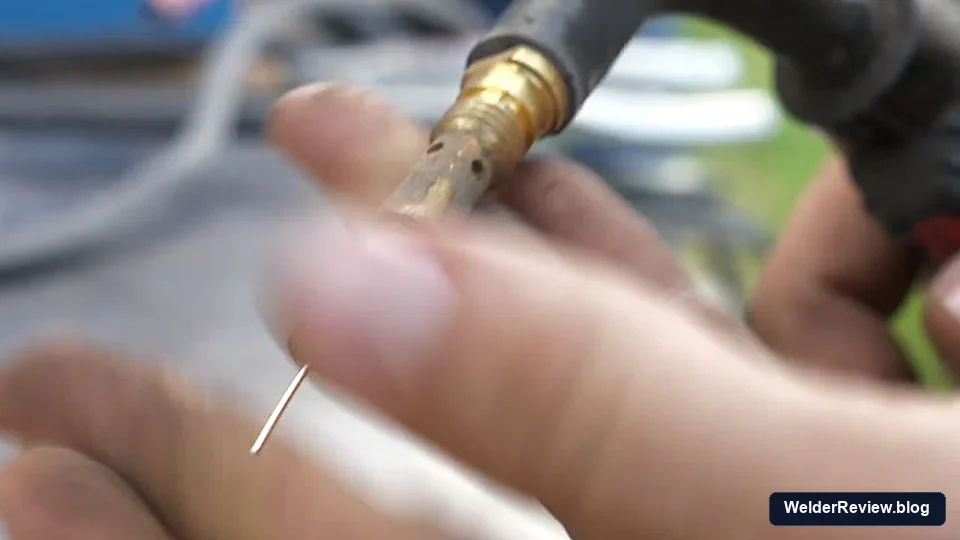
Conversely, alternative processes feature fundamentally different engineering layouts. Shielded metal arc welding uses consumable coated electrodes, while tungsten inert gas systems demand manual filler rod feeding alongside high-frequency arc initiation.
MIG machines use constant voltage power sources paired with motorized wire feeders. Pairing these systems with the best flux core wire for beginners maximizes deposition rates and simplifies training.
TIG systems rely on constant current inverters with high-frequency arc starts. They give welders precise manual control over heat input, making them ideal for thin aerospace alloys and critical root passes.
- MIG utilizes motorized drive rolls pushing solid wire.
- TIG employs non-consumable tungsten electrodes inside a specialized torch.
- Stick welding depends on flux-coated consumable metallic rods.
Shielding Gas Versus Flux Cores
Shielded processes rely on pressurized bottled gases like argon and carbon dioxide to protect the molten weld pool. Flux-cored alternatives eliminate external gas bottles by utilizing internal chemical shielding agents.
This fundamental metallurgical difference dictates where you can operate. Wind disruption easily displaces bottled shielding gas, whereas flux-generated slag inherently shields the weld puddle in adverse outdoor conditions.
- Solid wire MIG strictly demands external shielding gas delivery.
- Self-shielded flux core generates its own gaseous protection layer.
Real-World Arc Performance And Penetration
Evaluating real-world performance requires analyzing arc stability across various joint configurations. MIG delivers smooth spray or short-circuit transfers ideal for production line manufacturing and thin automotive panels.
When confronting heavy industrial plate, alternative processes excel. Selecting the best flux core welder for beginners helps hobbyists punch through mill scale effortlessly while mastering basic fabrication techniques safely.
Stick welding delivers deep joint penetration through thick rust and mill scale thanks to heavy flux coatings. The resulting slag shields the molten puddle, though post-weld cleanup demands mechanical chipping and brushing.
Flux-cored arc welding utilizes a tubular wire filled with flux agents, generating high deposition rates. It excels outdoors in windy conditions where shielding gases would otherwise dissipate and cause weld porosity.
- Short-circuit MIG minimizes thermal distortion on thin sheet metal.
- Stick welding provides deep mechanical penetration on thick structural beams.
- TIG eliminates spatter entirely for pristine aesthetic finishes.
Penetration Profiles And Heat Control
Penetration profiles dictate the structural integrity of welded joints under heavy loads. TIG welding allows fine heat manipulation, preventing burn-through on delicate aerospace aluminum and stainless steel components.
In contrast, heavy-duty stick electrodes concentrate massive thermal energy directly into the base metal. This ensures complete fusion on thick structural steel without requiring extensive multi-pass beveling preparations.
- TIG offers unmatched puddle fluidity and heat input precision.
- Stick provides aggressive arc force for deep root penetration.
Operational Setup And Usability Factors
Minimizing setup time directly improves shop productivity and operator comfort. MIG machines offer straightforward voltage and wire speed synergies that allow novices to lay acceptable beads within minutes.
Alternative methods demand more preparatory effort and specialized hand-eye coordination. TIG requires simultaneous foot pedal control, torch positioning, and precise filler rod feeding for clean results.
Configuring a MIG setup requires matching shielding gas mixtures, contact tips, and wire diameter to the base metal. Incorrect parameters lead to poor fusion, excessive spatter, and weak mechanical properties.
TIG demands exceptional hand-eye coordination to feed filler rod smoothly into the puddle. Operators must maintain a tight arc gap while shielding the tungsten electrode from contamination during every single pass.
- MIG simplifies parameters using intuitive digital thickness calculators.
- TIG requires ambidextrous coordination for torch and filler wire.
- Stick demands careful striking techniques to prevent electrode sticking.
Learning Curves For Operators
Mastering each welding methodology demands distinct temporal investments from technicians. MIG features the shallowest learning curve, making it the preferred choice for vocational training programs and hobbyists.
Stick and TIG processes require extensive muscle memory development. Operators must spend countless hours perfecting arc length consistency, travel angle discipline, and puddle manipulation techniques.
- MIG allows rapid skill acquisition for production environments.
- TIG and stick require rigorous practice to achieve code-quality welds.
Maintenance Demands And Long-Term Efficiency
Equipment longevity depends on proactive maintenance schedules tailored to each specific machine type. MIG setups require frequent cleaning of drive rolls, contact tips, and flexible torch liners to prevent birdnesting.
Alternative systems experience different wear patterns over extended operational lifespans. Stick welders feature virtually no internal moving parts, resulting in exceptional ruggedness and minimal mechanical failure rates.
Regular upkeep of drive rolls, liners, and contact tips prevents wire feeding issues in high-production MIG environments. Preventive maintenance extends equipment lifespan and ensures consistent electrical conductivity across shifts.
TIG torches require careful inspection of collets, cups, and tungsten geometry to maintain focused arcs. Proper grinding prevents wandering arcs and preserves weld quality on critical stainless steel piping.
- MIG guns accumulate spatter requiring anti-gel compounds and tip changes.
- TIG torches demand careful tungsten grinding and gas lens maintenance.
- Stick electrode holders experience thermal wear but last for years.
Consumable Costs And Upkeep
Consumable expenses accumulate steadily during high-volume commercial fabrication operations. MIG requires constant replenishment of contact tips, nozzles, shielding gas refills, and large wire spools.
Stick welding relies primarily on specialized electrode rods stored in moisture-controlled ovens. Managing consumable inventory efficiently prevents unexpected downtime and maintains strict quality control standards.
- Shielding gas cylinder rentals add fixed overhead expenses.
- Flux-cored wire eliminates gas cylinder logistics and rental fees.
Field Portability And Environmental Constraints
Job site mobility heavily influences equipment selection for remote construction crews. Choosing the best budget flux core welder ensures reliable field repairs without requiring heavy bottled gas cylinders on windy sites.
MIG welding struggles outside sheltered workshops because crosswinds sweep away shielding gases. Bringing bottled gas cylinders onto windy construction sites requires specialized safety cages and windbreaks.
Engine-driven stick welders provide ultimate jobsite mobility for remote pipeline repairs without depending on grid power. Heavy winds rarely disrupt the shielded metal arc, ensuring reliable performance in harsh elements.
Gas-shielded processes struggle outdoors because crosswinds blow away the protective envelope, causing severe porosity. Welders must erect physical windbreaks or switch to self-shielded wires when working on open structural sites.
- Self-shielded flux core thrives outdoors in windy conditions.
- MIG requires sheltered enclosures or wind-blocking welding screens.
- Stick units easily connect to portable engine-driven generators.
Working In Adverse Weather
Environmental elements present severe challenges to gas-shielded welding processes. Moisture, humidity, and wind turbulence instantly compromise shielding envelopes, causing severe porosity within the solidifying weld metal.
Flux-coated stick electrodes create protective gaseous atmospheres and slag blankets that resist environmental interference. This makes stick welding the gold standard for outdoor pipeline maintenance.
- Wind destroys gas shielding integrity instantly.
- Flux barriers protect outdoor welds against moisture and oxidation.
Material Compatibility And Thickness Limits
Matching the welding process to specific base metals prevents catastrophic structural failures. MIG handles carbon steel and aluminum efficiently when paired with appropriate spool guns and shielding gases.
Exotic alloys and ultra-thin foils demand the precise thermal control offered by TIG systems. Conversely, heavy structural plate demands the high deposition and deep penetration of industrial stick.
Heavy structural steel fabrication relies on stick or flux-cored processes for joining plates exceeding half an inch thickness. Their high heat input guarantees adequate fusion without requiring extensive joint prep.
Thin sheet metals under one-sixteenth inch require pulsed TIG or low-amp MIG to prevent burn-through. Selecting the correct thermal management technique protects metallurgy and avoids costly distortion on finished assemblies.
- TIG excels on stainless steel, titanium, and chromoly tubing.
- MIG efficiently joins thin automotive sheet metal assemblies.
- Stick handles thick, dirty cast iron and structural steel beams.
Thickness Range Considerations
Material thickness dictates power source sizing and joint preparation requirements. Light-duty MIG machines excel on sheet metal under quarter-inch thickness without risking burn-through.
Heavy structural fabrication requires high-amperage equipment. Evaluating the best 110v flux core welder options allows fabricators to achieve deep joint penetration through thick steel plates with minimal multi-pass setup delays.
- Light gauges favor rapid MIG and TIG applications.
- Heavy plates require high-amperage stick or flux-core power.
Frequently Asked Questions
Which welding process is best for absolute beginners?
MIG welding is widely considered the easiest process for beginners. It features intuitive voltage controls and automated wire feeding.
Can I weld outdoors with a standard MIG machine?
Standard MIG welding requires bottled shielding gas that wind easily disperses. You must use self-shielded flux core wire for outdoor projects.
Why do professionals prefer TIG for thin metals?
TIG offers unmatched heat input control and precision arc manipulation. This prevents burn-through on delicate sheet metals and exotic alloys.
Is stick welding still relevant in modern fabrication?
Stick welding remains essential for heavy structural steel and remote repairs. It delivers unmatched field durability without needing shielding gas.
What maintenance does a MIG welder require?
MIG machines require regular cleaning of drive rolls and contact tips. You must also replace worn liners to ensure smooth wire feeding.