Mig vs Tig Vs Mma: Complete Technical Comparison
MIG, TIG, and MMA welding processes require distinct power sources, shielding methods, and operator skill levels. Selecting the proper technique dictates structural integrity and overall shop productivity.

Choose MIG for high-speed production and accessible carbon steel fabrication. Select TIG and MMA for precision aerospace work or heavy outdoor structural maintenance applications.
Compare all top models in our Best Welder: Top Home Shop & Jobsite Picks Tested.
Side-by-Side Breakdown
| Criteria | Mig | Tig Vs Mma | Edge |
|---|---|---|---|
| Core Design / Build | Continuous wire feed mechanism | Tungsten torch or stick holder | MIG |
| Real-World Performance | High deposition rate on sheet metal | Superior puddle control and penetration | TIG |
| Ease of Setup & Use | Low learning curve for beginners | High skill barrier for precise joints | MIG |
| Durability & Reliability | Moderate internal drive motor wear | Rugged transformer and inverter builds | MMA |
| Efficiency / Operating Footprint | High electrical duty cycle ratios | Varies by power source topology | MIG |
| Maintenance Requirements | Regular contact tip and liner replacement | Minimal torch maintenance or rod storage | MMA |
| Best Ideal Use Case | Automotive body panels and shop frames | Aerospace alloys and field pipelines | TIG |
Core Architectural and Engineering Differences
MIG systems utilize a continuous wire feed mechanism paired with an external shielding gas cylinder. This configuration automates filler metal delivery, drastically increasing deposition rates during prolonged structural fabrication runs.
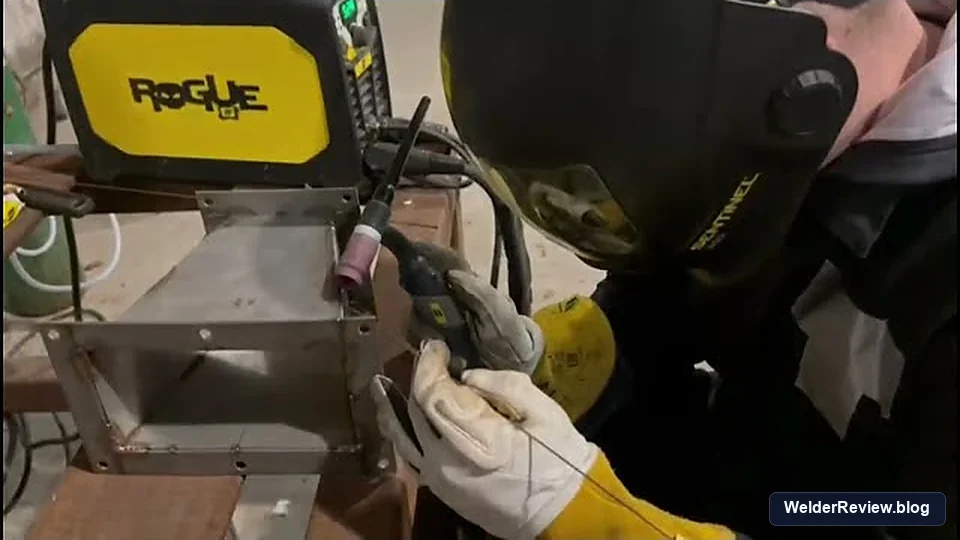
TIG equipment relies on a non-consumable tungsten electrode and manual filler rod feeding. Operators maintain strict arc length control while shielding the weld pool with inert gases like pure argon.
MMA, or stick welding, uses a flux-coated consumable electrode that creates its own gaseous shield upon combustion. This design eliminates pressurized gas bottles entirely, ensuring maximum field portability.
MIG welding relies on continuous wire feed mechanisms. When starting out, choosing machines from our best beginner mig welders roundup ensures reliable arc stability and smooth wire delivery.
TIG welding utilizes a constant current power source with high-frequency arc initiation. The non-consumable tungsten electrode demands precise manual distance control to maintain a stable, highly concentrated thermal arc cone.
MMA stick welding employs a drooping characteristic power source to maintain constant amperage despite arc length fluctuations. Flux-coated electrodes simultaneously provide filler metal, arc shielding gas, and slag protection.
- MIG automates wire delivery for speed.
- TIG requires manual coordination of torch and rod.
- MMA relies on flux coatings for atmospheric protection.
Power Source Topologies
Modern inverter power sources have transformed all three processes by reducing machine weight and improving electrical efficiency. Advanced circuitry enables precise amperage modulation across varied input voltages.
- Inverter technology lowers equipment weight significantly.
- Microprocessors regulate stable arc characteristics instantly.
Real-World Arc Performance and Penetration Dynamics
MIG welding delivers smooth, shallow penetration profiles suited for thin to medium sheet metal applications. Voltage settings and wire speed dictate the heat input and bead contour directly.
TIG welding offers unmatched arc stability and precise heat input control. This allows fabricators to join exotic metals like titanium and aluminum without introducing excessive thermal distortion.
MMA welding burns through heavy rust, paint, and mill scale effortlessly due to its aggressive arc force. Deep penetration characteristics make it the gold standard for structural steel erection.
MIG delivers high deposition rates with broad penetration profiles suited for structural steel fabrication. Shielding gas selection dictates the puddle fluidity, arc stability, and overall wetting action across carbon steel plates.
TIG provides unmatched puddle visibility and pinpoint heat input control. This allows fabricators to achieve deep, narrow fusion zones ideal for root passes on critical pressure vessels and thin-wall aerospace alloys.
Stick welding excels in outdoor environments where wind disrupts shielding gases. The burning flux creates a deep slag blanket, producing robust penetration through heavy mill scale, rust, and contaminated structural joints.
- MIG excels on clean, thin gauge steels.
- TIG provides microscopic control over weld puddle geometry.
- MMA cuts through contaminated surfaces without failing.
Shielding Gas and Atmospheric Protection
Shielding gases protect molten metal from contamination during advanced processes. For versatile fabrication setups, many shops evaluate options listed in our best mig tig plasma combo guide before purchasing equipment.
- Argon and carbon dioxide blends dominate MIG setups.
- Pure argon is mandatory for quality TIG welding.
Usability, Setup Complexity, and Operator Ergonomics
MIG systems feature the shortest learning curve for novice operators entering the metal fabrication industry. Proper parameter selection relies on straightforward voltage and wire feed speed charts.
TIG welding demands high manual dexterity, requiring both hands to manipulate the torch and filler rod. Hand-eye coordination must be exceptionally refined to maintain tight arc gaps.
MMA welding requires striking an arc like a match while managing electrode burn-off rates. Operators must constantly adjust torch angles to prevent sticky electrode freezing scenarios.
MIG systems offer a manageable learning curve for novices. Selecting affordable options featured in our best budget mig welder review helps hobbyists master foundational wire feed control techniques.
TIG demands exceptional hand-eye coordination and ambidextrous dexterity. Operators must simultaneously manage a foot pedal for amperage, a torch in one hand, and filler rod feeding in the other hand.
Stick welding requires minimal initial setup beyond electrode selection and amperage tuning. Ergonomic challenges stem from heavy cables, frequent electrode changes, and managing slag removal after every completed weld pass.
- MIG allows fast onboarding for entry-level technicians.
- TIG requires ambidextrous motor skill development.
- MMA demands patience during initial arc ignition.
Workspace Preparation Demands
Surface preparation varies drastically between these three distinct welding processes in commercial settings. MIG and TIG require pristine base metal conditions, whereas MMA tolerates imperfect joint surfaces.
- Grinding mill scale is mandatory for quality TIG joints.
- Stick welding burns through minor surface contaminants reliably.
Duty Cycles, Thermal Management, and Power Efficiency
Duty cycle ratings dictate how long a machine can operate continuously before requiring mandatory thermal cool-down periods. High-amperage industrial MIG units routinely offer exceptional 60 percent duty cycles.
TIG machines generate high heat, requiring robust cooling systems for extended operations. Models highlighted in our best aluminium tig welder list provide exceptional thermal stability for fabrication work.
MMA power sources prioritize robust internal transformers designed to withstand harsh jobsite environments. Efficient thermal overload protection safeguards internal components against excessive ambient temperatures.
Modern inverter-based MIG machines optimize electrical efficiency through advanced transformer designs. High duty cycles at rated amperages require robust internal cooling fans and oversized aluminum heat sinks to prevent thermal overloads.
TIG welding units generate substantial internal heat during high-frequency aluminum AC operations. Water-cooled torches are mandatory for sustained industrial production, preventing cable degradation and operator fatigue during long operational shifts.
MMA power sources experience varying thermal loads depending on electrode diameter and duty cycle demands. Simple circuitry ensures high reliability, though extended heavy-gauge rod burning requires industrial-grade internal thermal protection switches.
- Industrial units feature higher continuous operating thresholds.
- Water cooling protects high-amperage TIG torch bodies.
- Transformer designs ensure long-term jobsite reliability.
Electrical Consumption and Input Requirements
Current draw fluctuates based on the chosen welding process and output amperage demands. Multi-voltage machines provide flexibility by operating seamlessly on standard household or industrial circuits.
- Dual-voltage capability expands operational jobsite placement.
- Power factor correction optimizes total electrical grid efficiency.
Maintenance Protocols, Consumables, and Long-Term Durability
MIG guns require regular inspection of contact tips, nozzles, and internal drive rolls to prevent wire feeding issues. Replacing worn liners ensures consistent wire delivery over extended operational periods.
TIG torches demand careful maintenance of tungsten electrodes, gas lenses, and ceramic cups. Proper grinding techniques prevent tungsten contamination and maintain focused arc columns.
MMA equipment requires minimal routine maintenance outside of electrode storage and holder replacement. Keeping flux-coated rods dry prevents moisture-induced porosity within completed welds.
MIG maintenance focuses on regular contact tip replacement, nozzle cleaning, and liner inspections. Accumulated copper shavings inside the drive assembly can cause erratic wire feeding and unstable electrical arc characteristics.
TIG torches require careful handling of tungsten electrodes, collets, and gas lenses. Regular sharpening of tungsten points prevents arc wander, while inspecting water lines prevents catastrophic torch head overheating failures.
Stick welders boast exceptional durability due to minimal moving parts and rugged housing construction. Routine maintenance involves blowing out conductive dust from internal transformers and inspecting heavy-duty twist-lock cable connections.
- MIG liners and tips need frequent routine replacement.
- Tungsten electrodes require precise longitudinal tip grinding.
- Stick electrodes demand moisture-free storage environments.
Consumable Lifecycle Management
Managing consumable inventory directly impacts overall shop operating expenses across all three welding methods. Sourcing OEM replacement parts guarantees reliable arc performance and equipment longevity.
- Stocking standard contact tips reduces operational downtime.
- Quality tungsten rods minimize unexpected arc wandering.
Material Compatibility and Joint Configuration Limits
MIG welding excels on carbon steel, stainless steel, and aluminum across diverse joint configurations. However, very thin sheet metal requires specialized spool guns for reliable aluminum feeding.
TIG welding represents the gold standard for joining exotic alloys, stainless steel, and ultra-thin materials. Precision heat input prevents burn-through on delicate aerospace and automotive components.
MMA welding handles thick structural steel, cast iron repairs, and heavy pipe joints with ease. Specialized electrode coatings allow dissimilar metal joining in demanding industrial repair environments.
MIG excels on carbon steels, stainless steel, and aluminum when paired with appropriate shielding gases. Joint configurations are typically limited to lap, tee, and butt joints on plate thicknesses exceeding 0.024 inches.
TIG remains the gold standard for welding reactive metals like titanium, magnesium, and aluminum. It accommodates intricate joint designs, delicate sheet metal, and precision tubing without risking excessive thermal distortion or spatter.
MMA handles heavy structural steels, cast iron repair, and hardfacing applications with ease. Joint geometry is somewhat restricted compared to TIG, but stick excels in field repair welds on thick structural sections.
- MIG handles standard structural carbon steel efficiently.
- TIG dominates thin-gauge exotic alloy fabrication work.
- MMA conquers heavy plate and cast iron repairs.
Positional Welding Capabilities
Welding position dictates process selection when working on complex structures or installed pipelines. Technicians must evaluate gravity effects on the molten puddle before selecting equipment.
- Vertical and overhead positions require specialized skill sets.
- Gravity heavily influences molten metal fluidity and control.
Selecting the Optimal Process for Your Shop
Choosing between MIG, TIG, and MMA depends on your primary material types and project scope. High-volume fabrication shops benefit immensely from the rapid deposition rates of MIG systems.
Custom fabrication and restoration shops require the immaculate finish and precision control offered by TIG equipment. Outdoor construction crews rely heavily on MMA units for rugged dependability.
Evaluating your workspace infrastructure helps determine whether gas cylinders or portable stick leads fit your operational model. Balancing initial equipment investment with long-term productivity ensures optimal value.
Choose MIG when high production speed and minimal post-weld cleanup are your primary operational goals. It maximizes output in automotive repair shops, structural fabrication yards, and general sheet metal manufacturing facilities.
Select TIG for projects requiring absolute metallurgical purity, exceptional cosmetic bead appearance, and precise control over thin cross-sections. It dominates aerospace manufacturing, custom motorsport fabrication, and critical piping system installations.
Opt for stick welding when working outdoors, repairing heavy machinery, or tackling maintenance tasks on dirty metals. Its independence from external gas cylinders makes it indispensable for field construction and remote structural repairs.
- Match the process to your primary material thickness.
- Consider indoor shop versus outdoor jobsite environments.
- Balance equipment costs with expected production volume.
Future-Proofing Your Welding Investment
Investing in multi-process machines allows fabricators to switch between MIG, TIG, and MMA effortlessly. This versatility future-proofs your shop against changing client demands and project requirements.
- Multi-process units maximize workshop floor space efficiency.
- Versatile machines accommodate expanding commercial project scopes.
Frequently Asked Questions
Which welding process is easiest for absolute beginners to learn?
MIG welding features the lowest learning curve due to automated wire feed mechanics. This makes it ideal for new fabricators seeking immediate results.
Can I weld aluminum effectively using a standard MIG setup?
Standard MIG guns often experience bird-nesting when pushing soft aluminum wire. Upgrading to a specialized spool gun resolves these feeding issues successfully.
Why is TIG welding considered superior for thin gauge metals?
TIG welding offers precise heat input control and localized arc concentration. This prevents thermal distortion and burn-through on delicate sheet materials.
Is MMA welding suitable for outdoor fabrication projects?
Stick welding requires no external shielding gas bottles, making it highly portable. The flux coating shields the weld puddle against strong winds outdoors.
What maintenance do MIG welders require for optimal performance?
Operators must clean drive rolls and replace worn contact tips regularly. Keeping the internal wire liner clean prevents frustrating feed obstructions.