Mig vs Mag Vs Tig: Concise Verdict
Understanding the distinct mechanics of GMAW, MAG, and GTAW processes ensures optimal weld integrity. Choosing the right technique depends on your specific metal thickness, shielding gas availability, and structural project demands.

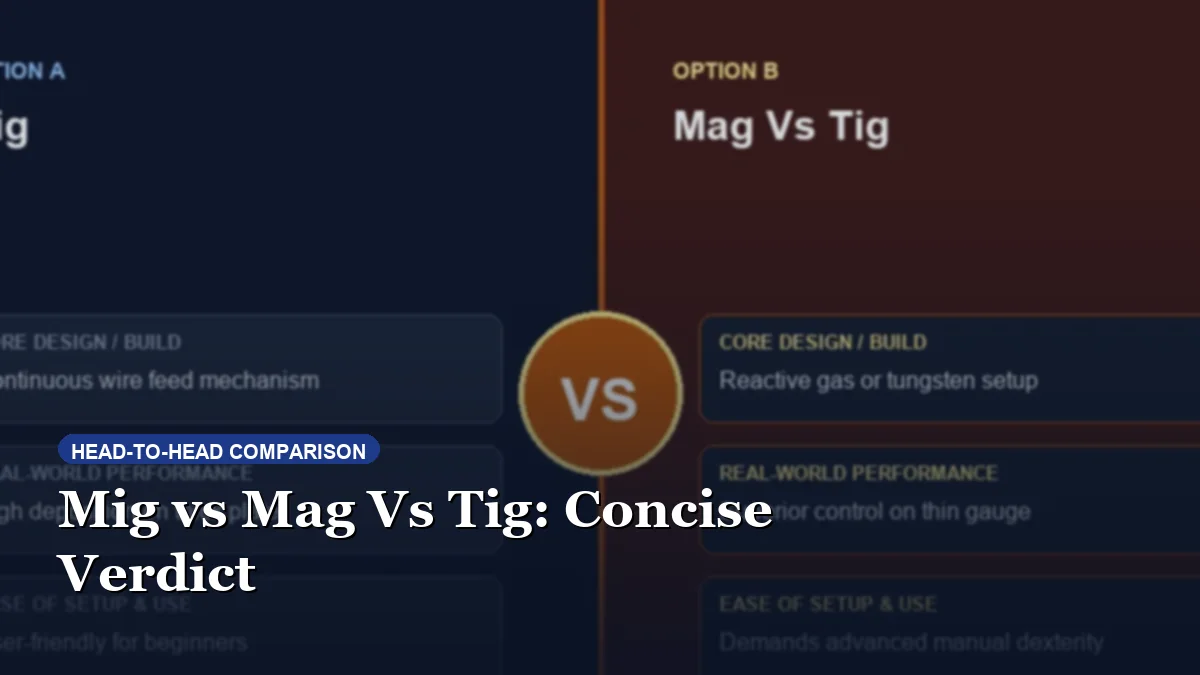
Select MIG for rapid production runs on carbon steel with solid wire electrodes. Choose TIG or specialized MAG workflows when maximum structural penetration or exquisite cosmetic bead geometry is strictly required.
Compare all top models in our Best Welder: Top Home Shop & Jobsite Picks Tested.
Side-by-Side Breakdown
| Criteria | Mig | Mag Vs Tig | Edge |
|---|---|---|---|
| Core Design / Build | Continuous wire feed mechanism | Reactive gas or tungsten setup | Mig |
| Real-World Performance | High deposition on thick plate | Superior control on thin gauge | Mag Vs Tig |
| Ease of Setup & Use | User-friendly for beginners | Demands advanced manual dexterity | Mig |
| Durability & Reliability | Robust industrial wire drives | High-frequency torch longevity | Mag Vs Tig |
| Efficiency / Operating Footprint | Fast travel speeds, high output | Meticulous preparation, slower output | Mig |
| Maintenance Requirements | Regular contact tip replacement | Frequent tungsten tip grinding | Mig |
| Best Ideal Use Case | General fabrication and repairs | Aerospace, motorsport, thin alloys | Mag Vs Tig |
Core Design and Engineering Differences
Metal inert gas welding utilizes a continuously fed wire electrode alongside an inert shielding gas. This continuous feed mechanism drastically increases deposition rates compared to manual arc welding techniques used in standard workshops today.
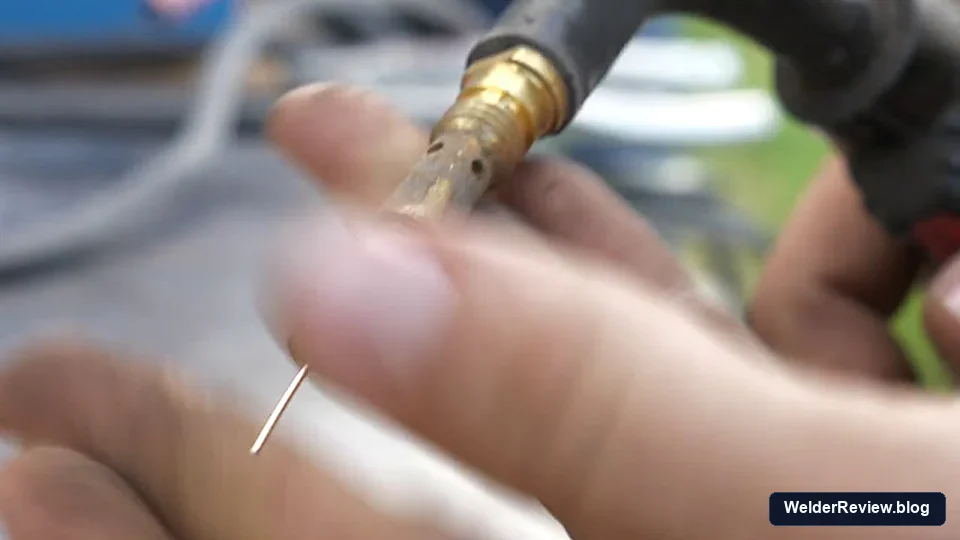
Metal active gas setups introduce reactive gases like carbon dioxide into the shielding stream. New fabricators can review our best beginner mig welders roundup to find reliable equipment for learning core techniques.
Tungsten inert gas configuration relies on a non-consumable electrode and separate filler rod addition. Such precision engineering grants exceptional control over the weld puddle dynamics for thin, critical aerospace components.
- Continuous wire feeding accelerates baseline production.
- Active gas mixes enhance carbon steel penetration.
- Non-consumable tungsten enables precise manual filler control.
Electrode Feed Mechanics
Automated wire delivery systems reduce operator fatigue during long fabrication shifts. Proper tension on the drive rolls prevents bird-nesting and ensures consistent wire feed speeds throughout heavy industrial tasks.
Manual torch handling in tungsten setups requires ambidextrous dexterity and steady hand-eye coordination. Operators must feed filler metal smoothly into the arc without contaminating the delicate, pointed tungsten tip.
- Drive roll tension prevents bird-nesting issues.
- Manual feeding demands advanced operator dexterity.
Power Source Topologies
Modern inverter power sources deliver stable constant voltage profiles for wire processes. These lightweight units adjust arc characteristics automatically to maintain optimal droplet transfer across variable joint gaps.
Constant current output dominates tungsten welding machines to prevent destructive amperage spikes. High-frequency arc starting units initiate the weld cleanly without physically striking the base metal surface.
- Inverter units maintain constant voltage profiles.
- High-frequency starts protect tungsten tips.
Shielding Gas Dynamics and Metallurgy
Selecting appropriate shielding gases prevents atmospheric contamination during high-amperage fabrication cycles. Pure argon works exceptionally well for light metals, and our best aluminium tig welder reviews detail machines handling these delicate materials.
Active shielding gases create a hotter arc by dissociating molecules near the arc column. This thermal enhancement improves fusion profiles on thick carbon steel plates without requiring excessive base metal preheating.
Inert gases protect reactive metals like aluminum and titanium from porosity defects. Maintaining correct gas flow rates ensures complete atmospheric displacement across the entire molten weld pool boundary.
- Argon shields non-ferrous joints against oxidation.
- Active mixes raise core arc temperatures.
- Correct flow rates prevent porosity defects.
Gas Blends for Steel
Argon and carbon dioxide mixtures balance arc stability with deep joint penetration. Higher carbon dioxide percentages increase spatter levels but provide superior weld puddle fluidity on dirty metal.
Regulating flow meters accurately prevents turbulence that draws ambient air into the shielding envelope. Proper regulator calibration safeguards the mechanical properties of structural steel weldments.
- Argon-CO2 blends balance stability and penetration.
- Accurate meters prevent ambient air aspiration.
Inert Purity Requirements
High-purity argon gas is mandatory when joining titanium to avoid embrittlement. Even minor oxygen contamination ruins the corrosion resistance and structural integrity of critical aerospace fabrications.
Purging the backside of welded joints protects root passes from oxidation during critical pipe welding operations. Dedicated trailing shields extend protection until the metal cools safely.
- Titanium requires ultra-pure argon shielding.
- Back purging protects root pass integrity.
Real-World Performance and Arc Stability
Choosing versatile multi-process machines streamlines fabrication tasks across different metal thicknesses. For shop versatility, check out our best mig tig plasma combo picks to handle diverse repair operations easily.
Precision tungsten welding excels when fabricating delicate stainless steel assemblies with minimal distortion. The concentrated arc allows exact heat input control on thin sheet metal joints.
Operators must balance travel speed against heat input to prevent burn-through on thin materials. Modern waveform control technology assists welders in maintaining a stable arc across challenging joint configurations.
- Wire processes maximize structural deposition speed.
- Tungsten arcs minimize thin-gauge distortion.
- Waveform controls improve overall arc stability.
Deposition Efficiency
Continuous wire processes achieve high deposition efficiencies with minimal stub loss. This operational advantage lowers overall consumable costs during extensive production runs on thick steel plates.
Manual filler rod techniques yield lower deposition rates due to intermittent feeding requirements. However, this trade-off is acceptable when supreme metallurgical cleanliness is the primary engineering goal.
- Continuous wire minimizes total stub waste.
- Manual rod feeds sacrifice speed for cleanliness.
Penetration Profiles
Spray transfer modes deliver deep, finger-like penetration profiles on heavy structural steel sections. This high-energy transfer mode requires high voltage settings and dedicated shielding gas mixtures.
Tungsten arcs produce wide, shallow penetration profiles when using pure argon shielding. This characteristic prevents burn-through when joining thin sheet metal components in automotive workshops.
- Spray transfer creates deep structural penetration.
- Tungsten arcs prevent thin-gauge burn-through.
Usability, Setup, and Ergonomics
Ergonomic torch design directly impacts operator comfort and daily productivity levels in fabrication shops. Lightweight torches reduce wrist fatigue during extended overhead and vertical welding positions.
Setup complexity varies significantly between automated wire feeders and manual tungsten systems. Beginners generally achieve acceptable results faster with wire processes due to simplified parameter adjustments.
Proper grounding and cable management prevent electrical resistance losses and erratic arc behavior. Maintaining clean contact points ensures consistent electrical conductivity throughout every welding cycle.
- Ergonomic torches reduce operator fatigue.
- Wire systems offer faster beginner learning curves.
- Clean grounds prevent erratic arc behavior.
Torch Design and Weight
Air-cooled wire guns handle moderate amperage ranges while remaining lightweight and highly maneuverable. Water-cooled setups become necessary for heavy industrial production to prevent operator hand fatigue from heat.
Tungsten torches incorporate flexible necks and gas lenses to improve shielding gas coverage. These design enhancements allow operators to reach difficult joint angles inside tight fabrication assemblies.
- Water-cooled guns manage high industrial heat.
- Flexible torch necks improve joint access.
Parameter Tuning
Synergic control panels simplify voltage and wire feed speed adjustments for inexperienced operators. Digital displays provide accurate feedback on actual amperage and voltage during the welding process.
Manual adjustment of amperage pedals requires exceptional foot-eye coordination during complex tungsten welds. Experienced fabricators rely on pedal modulation to control heat input on tapered joints.
- Synergic panels simplify parameter adjustments.
- Foot pedals offer real-time heat modulation.
Maintenance, Efficiency, and Longevity
Routine maintenance routines extend the operational lifespan of welding machines and peripheral equipment. Cleaning drive rolls and replacing worn contact tips prevents wire feeding jams during production.
Power source longevity depends on regular internal dust removal using compressed air. Protecting delicate circuit boards from metal debris prevents electrical shorts and costly component failures.
Cooling system maintenance prevents overheating during continuous high-amperage industrial fabrication projects. Inspecting coolant fluid levels and pump filters ensures reliable thermal management over time.
- Routine cleaning prevents wire feeding jams.
- Dust removal protects sensitive circuit boards.
- Cooling system checks prevent thermal shutdown.
Consumable Upkeep
Contact tips and nozzles suffer from spatter buildup during high-current wire operations. Replacing damaged tips maintains smooth electrical transfer and prevents erratic arc fluctuations.
Tungsten electrodes require careful grinding parallel to the electrode length to maintain arc focus. Contaminated tungsten tips must be snapped off and reground immediately to ensure quality.
- Contact tip replacement ensures steady arcs.
- Longitudinal grinding preserves tungsten focus.
Preventative Servicing
Scheduled inspections of internal solenoids and gas hoses prevent costly shielding gas leaks. Ensuring airtight connections preserves gas integrity and protects molten weld pools from oxidation.
Testing drive motor gearboxes prevents unexpected mechanical failures on busy production floors. Lubricating moving components reduces mechanical wear and maintains smooth wire feeding performance.
- Hose inspections stop costly gas leaks.
- Gearbox lubrication reduces mechanical wear.
Consumables and Operating Overhead
Consumable expenses accumulate quickly during high-volume industrial welding and fabrication operations. Managing wire spools, contact tips, and shielding gas cylinders efficiently controls overall project overhead.
Shielding gas consumption represents a major ongoing operational cost for busy workshops. Choosing efficient machines from our best budget mig welder guide helps minimize unnecessary gas waste during production.
Tungsten electrodes and specialized filler rods involve higher upfront material costs than bulk wire. However, their superior precision reduces rework and material waste on complex projects.
- Consumable management controls project overhead.
- Optimizing gas flow reduces ongoing expenses.
- Precision rods minimize costly rework cycles.
Wire Spool Economics
Purchasing wire electrodes in large bulk drums lowers per-pound material costs significantly. Large operations benefit from continuous feed setups that minimize spool changeover downtime.
Small wire spools suit mobile repair trucks where portability outweighs bulk purchasing discounts. Proper storage prevents moisture absorption in flux-cored or specialty alloy wires.
- Bulk drums lower per-pound material costs.
- Small spools suit portable repair trucks.
Shielding Gas Management
Installing dual-cylinder racks with automatic switchover regulators prevents work stoppage from empty tanks. Manifold systems streamline gas delivery across multiple welding stations in large facilities.
Using gas saver valves reduces initial surge pressure when striking an arc. This simple modification cuts total shielding gas consumption without compromising weld shield integrity.
- Automatic switchover prevents production halts.
- Gas saver valves reduce surge waste.
Industrial Applications and Ideal Use Cases
Matching the correct welding process to specific industrial applications ensures structural reliability. Heavy manufacturing environments rely heavily on continuous wire methods for structural steel assembly.
Aerospace and motorsport industries demand the precision and cleanliness of tungsten welding processes. These sectors prioritize flawless weld geometry over high-speed production output.
Automotive repair shops utilize versatile wire machines for quick chassis and bodywork modifications. The adaptability of these systems accommodates varied sheet metal thicknesses with minimal downtime.
- Heavy manufacturing utilizes fast wire methods.
- Aerospace demands meticulous tungsten precision.
- Automotive shops rely on versatile wire units.
Structural Fabrication
Building bridges and heavy machinery frames requires deep penetration and high deposition rates. Continuous wire processes deliver the necessary structural integrity to withstand heavy operational loads.
Field erection sites often utilize flux-cored wire to combat windy outdoor conditions. This self-shielded approach eliminates the need for external gas cylinders during outdoor construction.
- Bridge building requires deep penetration.
- Flux-cored wire resists outdoor wind effects.
Precision Engineering
Fabricating stainless steel pressure vessels requires meticulous control over heat input. Tungsten welding prevents carbide precipitation and preserves corrosion resistance in critical chemical processing equipment.
Motorsport exhaust fabrication relies on delicate tungsten beads for aesthetic and structural perfection. The process allows precise manipulation on thin titanium and stainless tubing.
- Pressure vessels demand controlled heat input.
- Motorsport exhaust requires aesthetic perfection.
Frequently Asked Questions
What is the primary difference between MIG and MAG welding?
MIG welding utilizes strictly inert shielding gases like pure argon, whereas MAG welding introduces reactive gases such as carbon dioxide. This chemical difference significantly alters arc stability and penetration depth on heavy structural steel components.
Why choose TIG over MIG for thin sheet metal?
TIG welding provides precise heat input control through a non-consumable electrode and separate filler rod. This exceptional control prevents burn-through and produces superior cosmetic bead geometry on delicate assemblies.
How does shielding gas selection affect weld quality?
Shielding gases protect the molten weld pool from atmospheric contamination and oxidation defects. Selecting the correct gas mixture ensures optimal mechanical properties and prevents costly porosity issues in structural joints.
What maintenance tasks are essential for wire feed welders?
Regular maintenance requires cleaning drive rolls, inspecting contact tips, and removing internal dust accumulations. Performing these routine checks prevents wire feeding jams and ensures consistent electrical arc performance.
When is flux-cored wire preferred over solid wire?
Flux-cored wire is ideal for outdoor fabrication where wind can blow away external shielding gas. The internal flux creates its own protective slag shield, ensuring reliable structural welds in adverse weather conditions.