Mig vs Stick Welding: Complete Technical Comparison
Choosing the right arc process demands balancing metal thickness, environment, and joint design. Our engineering breakdown helps fabricators select the ideal setup.

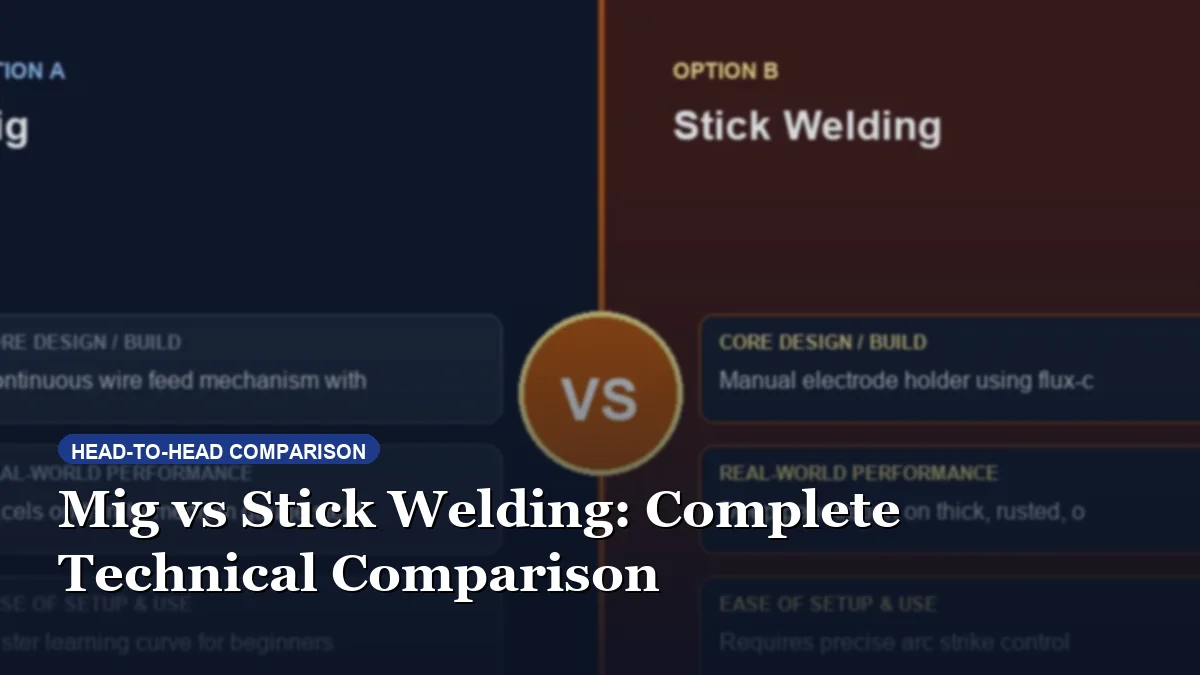
Choose MIG welding for high-speed indoor fabrication on clean sheet metal. Select stick welding when tackling heavy structural repairs outdoors in windy environments.
Compare all top models in our Best Welder: Top Home Shop & Jobsite Picks Tested.
Side-by-Side Breakdown
| Criteria | Mig | Stick Welding | Edge |
|---|---|---|---|
| Core Design / Build | Continuous wire feed mechanism with external gas cylinder. | Manual electrode holder using flux-coated consumable rods. | Mig |
| Real-World Performance | Excels on thin-to-medium gauge steels with minimal spatter. | Deep penetration on thick, rusted, or dirty structural steel. | Stick Welding |
| Ease of Setup & Use | Faster learning curve for beginners with preset voltage charts. | Requires precise arc strike control and slag management. | Mig |
| Durability & Reliability | Contains sensitive electronic circuit boards and drive motors. | Rugged transformer designs withstand harsh jobsite conditions. | Stick Welding |
| Efficiency / Operating Footprint | High deposition rates with continuous wire but restricted mobility. | Slower overall speed due to slag removal and electrode changes. | Mig |
| Maintenance Requirements | Needs regular liner cleaning, contact tip replacements, and roller checks. | Minimal upkeep focused mainly on electrode holder and cable inspections. | Stick Welding |
| Best Ideal Use Case | Automotive body panels, sheet metal fabrication, and indoor shops. | Heavy pipeline construction, farm repairs, and outdoor structural steel. | Tie |
Fundamental Arc Physics and Power Sources
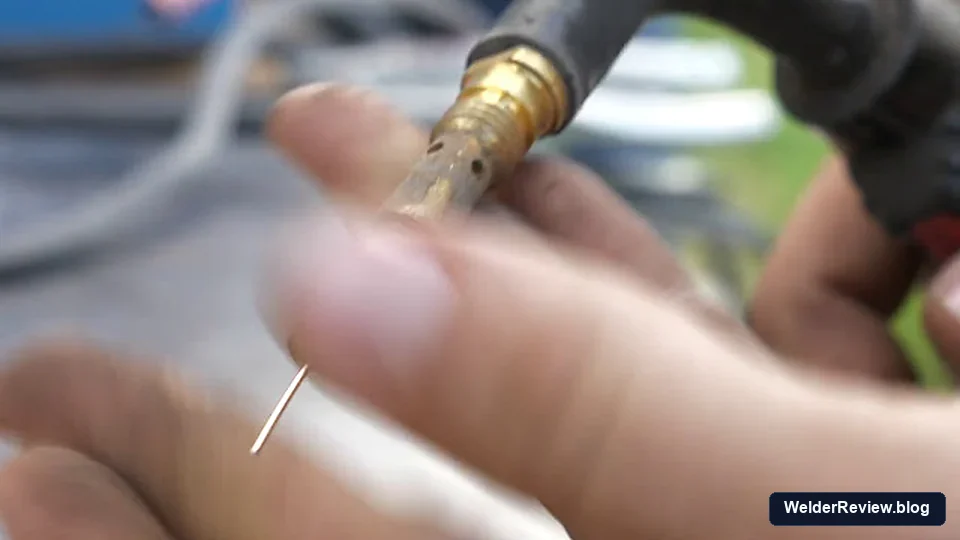
Metal inert gas equipment relies on a continuous wire feed mechanism. This setup uses an external shielding gas cylinder to protect the molten weld pool from atmospheric contamination during fabrication.
Shielded metal arc systems operate via a constant current power source. The manual electrode holder completes an electrical circuit, generating intense heat to melt the flux-coated rod directly into the joint.
MIG welding utilizes a constant voltage power source paired with a wire feed mechanism. Operators also need to consult our mig gas flow rate guide to maintain proper shielding coverage.
Conversely, SMAW relies on a constant current output to maintain steady amperage despite minor arc length variations, ensuring stable heat input when manual operators manipulate heavily coated electrodes during demanding structural assemblies.
- Constant voltage power supplies drive wire feed stability in MIG units.
- Constant current transformers compensate for arc length shifts in stick welders.
- Shielding mechanisms differ entirely between external gases and burning flux coatings.
Power Delivery Mechanics
Understanding electrical output characteristics prevents common arc interruptions. Voltage stability directly dictates bead width and puddle fluidity across different sheet thicknesses.
- Inverter technology reduces overall machine weight significantly.
- Transformer architectures provide heavy-duty thermal endurance on jobsites.
Exploring Every Fabrication Perspective and Joint Angle
Analyzing joint configurations from multiple angles reveals distinct operational advantages. Different weld positions require specific manipulation techniques to maintain adequate penetration and bead profile.
Overhead and vertical upward positions demand precise amperage tuning. Operators must adjust travel speeds to counteract gravitational pull on the molten filler metal.
Positional MIG welding requires careful gun manipulation to prevent molten pool sagging. Alternatively, reviewing our best welding stick for thin metal guide helps fabricators select appropriate consumables for challenging vertical joints.
Stick welding excels in complex spatial orientations because the rapid-freezing slag acts as a physical shelf, supporting the weld puddle during overhead or vertical-up progressions on heavy structural steel elements.
- Fillet welds require consistent gun angles for optimal leg length symmetry.
- Groove welds benefit from multi-pass stringer beads to prevent excessive heat buildup.
- Corner joints demand careful voltage reduction to avoid burn-through on thin plates.
Positional Welding Constraints
Positional limitations dictate which process suits complex structural assemblies. Tight clearances often restrict bulky MIG gun nozzles, favoring slender stick electrodes.
- Access angles dictate consumable selection for restricted joints.
- Overhead clearance issues favor lightweight electrode holders.
Environmental Resilience and Outdoor Performance Factors
Jobsite environmental conditions drastically impact shielding integrity. Wind gusts easily blow away shielding gases, creating porous welds during outdoor MIG operations.
Stick welding thrives in adverse weather because the flux coating generates its own protective gas cloud. This chemical reaction shields the molten puddle even in moderate breezes.
Standard gas metal arc processes struggle outdoors because ambient crosswinds easily displace the shielding gas envelope, causing severe porosity and oxidation within the solidifying weld bead without protective wind barriers.
Shielded metal arc welding dominates field construction sites because the flux coating generates an intrinsic gaseous shield and slag layer, resisting moderate winds without compromising the structural integrity of outdoor joints.
- Wind resistance makes stick welding the top choice for outdoor structural erection.
- Moisture on base metals requires preheating protocols to prevent hydrogen cracking.
- Indoor shops eliminate draft variables, maximizing the efficiency of gas-shielded wires.
Jobsite Weather Adaptation
Managing humidity and ambient temperature prevents costly weld failures. Technicians must store low-hydrogen electrodes in heated ovens to eliminate moisture absorption before use.
- Wind screens protect sensitive gas plumes during field repairs.
- Temperature drops necessitate higher preheat thresholds on thick steel.
Consumable Economics and Operating Footprint Realities
Consumable expenses accumulate differently across both welding methodologies. Wire spools offer high deposition efficiency with minimal stub loss compared to discarded electrode ends.
Stick electrodes generate significant slag waste and short stub ends. However, the initial equipment investment remains lower due to the absence of gas cylinders and regulators.
Operating expenditures for MIG setups involve balancing spool costs with shielding gas cylinder rentals. Selecting the proper best gas for mig welding options ensures clean joints and minimal spatter.
Stick welding eliminates gas cylinder overhead expenses, though frequent electrode changes and stub loss increase material waste and require continuous operator intervention during long fabrication shifts on heavy plates.
- Wire spools reduce material waste during high-volume production runs.
- Electrode stubs create unavoidable material loss on every box consumed.
- Shielding gas rental fees add ongoing overhead costs to MIG operations.
Consumable Lifecycle Management
Proper storage extends consumable shelf life and prevents weld defects. Keeping filler metals dry eliminates porosity issues in high-stress structural applications.
- Hermetic sealing preserves electrode flux integrity over time.
- Drive roll tension adjustments prevent wire deformation and feeding birdnests.
Setup Complexity, Operator Skill, and Ergonomic Demands
Operator ergonomics directly influence daily productivity and weld quality. MIG guns feel balanced and lightweight, reducing wrist fatigue during extended fabrication shifts.
Stick electrode holders require managing heavy leads across large work areas. Beginners must master proper classification codes outlined in our stick welding rod number guide to ensure correct amperage selection.
Initial calibration of a MIG machine demands precise voltage and wire feed speed adjustments, though the actual gun manipulation requires minimal dexterity compared to mastering the intricate electrode angle control.
Stick welding features minimal equipment setup overhead, yet developing the necessary muscle memory to maintain a consistent arc length while consuming the rod presents a steep learning curve for beginners.
- Ergonomic MIG guns minimize operator fatigue during repetitive production tasks.
- Stick stinger weight builds forearm strain over long structural welding shifts.
- Parameter charts on MIG machines simplify voltage and wire speed selection.
Learning Curve Acceleration
Training new fabricators requires structured practice on scrap coupons. Mastering arc length control is the primary hurdle for novice stick welding students.
- Synergic controls automate parameter adjustments for novice operators.
- Manual manipulation practice develops essential muscle memory for stick welding.
Structural Integrity, Penetration Depth, and Metallurgy
Metallurgical soundness depends on proper heat input and cooling rates. Thick structural sections require deep root penetration that heavy-duty stick electrodes deliver effortlessly.
MIG welding provides exceptional cosmetic appeal and fast travel speeds on clean joints. However, lack of fusion defects can occur if voltage settings are too low.
Achieving deep penetration with MIG often requires high amperages and proper bevel preparation, while dirty metals risk lack of fusion defects due to inadequate cleaning before laying down the wire.
Stick electrodes deliver exceptional metallurgical properties through specialized flux formulations, easily penetrating through rust and scale on thick structural steels without inducing catastrophic internal weld discontinuities.
- Deep penetration profiles make stick welding ideal for heavy plate fabrication.
- Clean bead aesthetics reduce post-weld grinding time on architectural projects.
- Heat-affected zones require careful monitoring to prevent brittle grain growth.
Weld Metal Metallurgy
Alloying elements transfer through the arc to match base metal mechanical properties. Selecting the correct electrode classification ensures tensile strength meets project engineering specs.
- Low-hydrogen rods prevent cracking in high-strength carbon steels.
- Gas mixtures influence impact toughness at sub-zero operating temperatures.
Maintenance Protocols and Long-Term Machine Reliability
Routine equipment maintenance guarantees consistent performance across both systems. MIG units require frequent checks of contact tips, liners, and drive rolls to prevent wire feed jams.
Stick welders demand very little mechanical upkeep beyond cleaning dust from internal transformers. Their rugged construction handles harsh jobsite environments with exceptional reliability.
MIG power sources and wire feeders require routine cleaning of drive rolls, contact tips, and liner replacements to ensure smooth wire delivery and prevent erratic arc behavior during long production runs.
Stick welding inverters demand periodic internal dust clearance and inspection of electrode holders to maintain low electrical resistance and ensure reliable arc strikes over years of harsh industrial service.
- Liner replacements eliminate erratic wire feeding during extended MIG sessions.
- Internal dust blowing protects electronic components from short-circuit failures.
- Cable inspection prevents dangerous electrical hazards on worn power leads.
Preventative Servicing Schedules
Establishing a weekly maintenance routine prevents unexpected equipment downtime. Technicians should inspect electrode holders and ground clamps for secure electrical connections.
- Contact tip cleaning prevents erratic arc initiation.
- Ground clamp security ensures stable electrical resistance.
Frequently Asked Questions
Which welding process is easier for complete beginners to learn?
MIG welding is significantly easier for beginners due to continuous wire feed. It allows operators to focus on travel speed rather than complex arc striking.
Can MIG welding be performed outdoors without a shelter?
MIG welding outdoors is extremely difficult without wind barriers. Even mild breezes blow away the shielding gas, resulting in severe weld porosity and weakness.
Why do stick welders require slag chipping after every pass?
Stick welding utilizes flux coatings that melt to protect the molten pool. This burned flux hardens into a protective slag layer that must be removed between passes.
What thickness limitations apply to standard MIG and stick machines?
Standard MIG units excel on sheet metal up to quarter-inch steel. Stick welders easily handle heavy structural plates exceeding one inch with proper multi-pass techniques.
Is gas-less flux-cored wire a good alternative to stick welding?
Flux-cored wire combines MIG automation with internal shielding gas protection. It provides excellent outdoor performance similar to traditional stick welding without requiring gas cylinders.