Lincoln 210 Mp vs Multimatic 215: Technical Showdown
Comparing two flagship multi-process machines for professional and serious hobbyist fabrication workshops. We examine engineering specs, duty cycles, and real-world weld output.

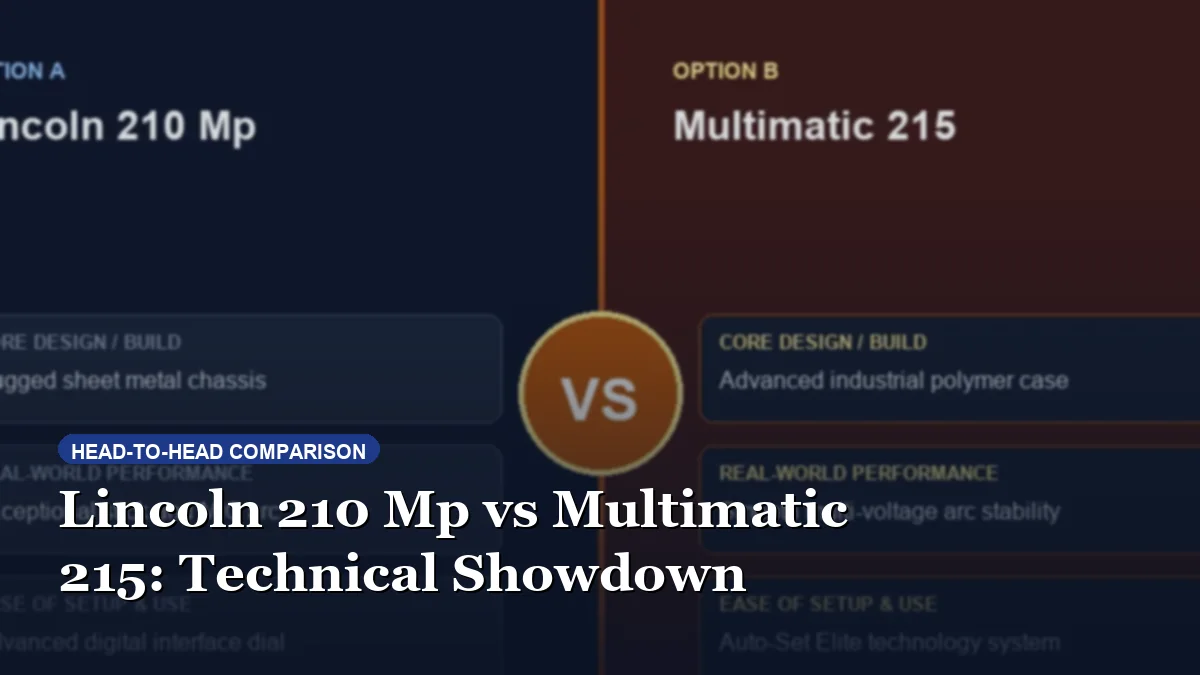
Choose the Lincoln 210 MP for heavy industrial build quality and robust duty cycles, or pick the Multimatic 215 for superior multi-voltage flexibility and intuitive digital setup.
Compare all top models in our Best Welder: Top Home Shop & Jobsite Picks Tested.
Side-by-Side Breakdown
| Criteria | Lincoln 210 Mp | Multimatic 215 | Edge |
|---|---|---|---|
| Core Design / Build | Rugged sheet metal chassis | Advanced industrial polymer case | Lincoln 210 Mp |
| Real-World Performance | Exceptional stick and MIG arc | Smooth multi-voltage arc stability | Multimatic 215 |
| Ease of Setup & Use | Advanced digital interface dial | Auto-Set Elite technology system | Multimatic 215 |
| Durability & Reliability | Heavy-duty internal components | Precision-engineered inverter boards | Lincoln 210 Mp |
| Efficiency / Operating Footprint | Compact dual-voltage profile | Multi-voltage plug adaptability | Multimatic 215 |
| Maintenance Requirements | Standard drive roll cleaning | Quick-change wire drive system | Multimatic 215 |
| Best Ideal Use Case | Structural steel fabrication | Mobile repair and maintenance | Multimatic 215 |
Core Design and Engineering Architecture
Engineering multi-process welding machines requires balancing physical weight with electrical output. Both units utilize advanced inverter topologies to drop transformer bulk while maintaining robust arc stability.
The Lincoln unit relies on a traditional steel-heavy structural layout designed for tough shop environments. Our detailed multimatic 215 review highlights how Miller opts for a lighter composite framework prioritizing portability.
Both multi-process welders utilize heavy-duty internal frameworks, yet their chassis configurations differ significantly. The Lincoln unit relies on a steel unibody envelope, whereas Miller integrates an aluminum structural frame to optimize overall shop portability.
Internal cooling architecture also dictates duty cycle reliability during heavy fabrication tasks. Dual-ball bearing brushless fans push sustained airflow across insulated copper transformer windings, preventing thermal overload under maximum amperage loads.
- Chassis material differs between steel and industrial polymers.
- Internal cooling fan placements affect dust ingestion rates.
- Transformerless designs reduce overall weight significantly.
Chassis Construction and Weight Distribution
Heavy shop environments demand physical ruggedness. The Lincoln enclosure uses reinforced steel panels to withstand bumps against heavy steel plates during daily fabrication work.
Portability seekers will notice the Miller frame features molded handles and a balanced center of gravity, making one-handed carrying across uneven job sites much easier.
- Lincoln emphasizes structural steel shielding.
- Miller uses lightweight impact-resistant composites.
Real-World Arc Performance and Deposition
Arc characteristics dictate weld pool control and spatter levels across different base metals. Both machines deliver exceptional short-circuit MIG performance on thin carbon steel plates.
Pushing these welders toward their upper amperage limits reveals distinct tuning philosophies. Lincoln prioritizes a stiff, driving arc, whereas Miller maintains a softer, more fluid puddle.
Achieving stable metal transfer requires precise voltage tuning during short-circuit MIG welding operations. You can evaluate the lincoln electric power mig 210 mp review to see how proprietary wave control algorithms minimize spatter efficiently.
When transitioning to TIG processes, high-frequency arc starting becomes critical for tungsten preservation. Both machines deliver consistent DC output, but operator feedback highlights the Miller foot pedal responsiveness during intricate root pass welding applications.
- MIG arc stability remains crisp on both platforms.
- Stick welding performance varies with cellulose electrodes.
- TIG capability requires external gas valve setups.
MIG, Stick, and TIG Output Comparisons
Carbon steel fabrication demands reliable short-circuit transfer. The Lincoln arc bites quickly into thick joints with minimal prep work required on standard mill scale.
Aluminum MIG welding requires optional spool gun integration. The Miller system excels here through smoother wire feeding dynamics and precise voltage adjustments.
- Both machines handle 0.030-inch solid wire effortlessly.
- Spool gun connections require dedicated control pins.
Power Delivery and Electrical Efficiency
Input power flexibility is critical for mobile contractors moving between residential and industrial sites. Multi-voltage plugs allow seamless transitions from standard household circuits to heavy shop outlets.
Duty cycle ratings determine how long you can weld before thermal overload protection triggers. Understanding these electrical thresholds prevents premature equipment wear during production runs.
Dual-voltage input flexibility allows these units to operate seamlessly on standard household circuits or heavy industrial lines. Automatic voltage switching technology detects incoming power instantly, protecting internal circuits from harmful voltage spikes.
Power factor correction circuitry ensures maximum electrical efficiency, drawing fewer amps under heavy loads. This capability prevents nuisance breaker trips, allowing fabricators to weld continuously at rated output capacities without electrical grid strain.
- Dual-voltage input handles 120V and 230V lines.
- Duty cycles drop rapidly at maximum amperage output.
- Inverter efficiency reduces total power consumption.
Input Voltage Compatibility and Duty Cycles
Running these units on 120V household power limits maximum output to roughly 140 amps. Upgrading to 230V input unlocks the full 200-plus amp capacity for thicker structural sections.
Thermal protection circuits monitor internal transformer temperatures continuously. The built-in cooling fan cycles intelligently to expel trapped heat during extended fillet welding tasks.
- 120V circuits restrict maximum plate thickness.
- 230V lines deliver full rated amperage output.
Interface Design and User Control Systems
Digital interfaces have transformed compact welders from basic transformer boxes into computerized power sources. Clear screen layouts reduce setup errors for apprentice fabricators.
Parameter selection methods differ notably between these two industry competitors. One relies on a traditional manual dial system, while the other introduces automated presets.
Digital interface panels must balance advanced customization with glove-friendly operational simplicity. Check out our miller multimatic 215 with tig kit review to explore how the monochrome LCD screen provides intuitive graphical menus.
Saving custom welding schedules improves workflow efficiency in high-production fabrication environments. Memory preset capabilities allow operators to store preferred voltage and wire feed speeds, ensuring repeatable quality across varying material thicknesses.
- High-contrast digital screens improve readability in bright shops.
- Preset menus simplify wire speed and voltage pairing.
- Manual override controls satisfy experienced professional welders.
Digital Displays vs Automated Preset Menus
Precision control appeals to veteran fabricators who prefer dialing exact wire feed speeds. The Lincoln interface uses a single control knob for fast parameter adjustments.
Beginners benefit immensely from automated setup menus. The Miller Auto-Set feature configures voltage and wire speed instantly based on material thickness inputs.
- Manual mode gives fabricators absolute process control.
- Automated presets accelerate job site startup times.
Maintenance, Cleaning, and Long-Term Longevity
Routine maintenance extends equipment lifespan and ensures consistent arc starts over years of heavy use. Dust accumulation inside inverter cabinets poses the greatest threat to electronic components.
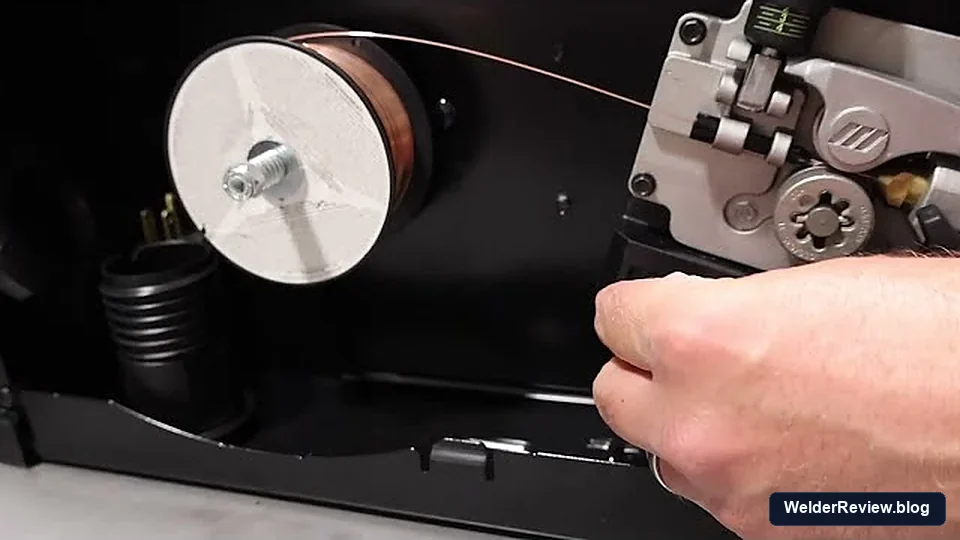
Accessing internal drive roll assemblies should be tool-free and straightforward. Quick-release tension arms prevent frustrating wire snags during high-volume production shifts.
Regular internal cleaning removes conductive metallic dust that accumulates during routine shop fabrication cycles. Using dry compressed air to clear the wire drive compartment prevents premature motor wear and maintains stable wire feed tension.
Inspecting internal gas solenoid valves and electrical terminal connections prevents shielding gas leaks and voltage drops. Routine preventative maintenance ensures these multi-process systems deliver reliable performance over extended operational lifespans.
- Compressed air cleaning clears metallic dust deposits.
- Drive roll grooves require periodic sizing checks.
- Torch liners need regular cleaning to prevent birdnesting.
Drive Mechanism Reliability and Servicing
Wire feed consistency depends entirely on robust drive roll assemblies. The cast aluminum mechanism inside the Miller unit resists warping under high tension loads.
Lincoln utilizes a dependable geared drive system that maintains steady pressure. Regular inspection of the knurled drive rolls prevents feeding slips with flux-cored wires.
- Cast drive assemblies ensure long-term alignment.
- Tool-free roll changes save valuable shop time.
Consumables Availability and Torch Ergonomics
Torch comfort directly impacts weld quality during long overhead or out-of-position fabrication tasks. Heavy cables cause hand fatigue if the grip design lacks proper contouring.
Consumable costs accumulate quickly in busy fabrication shops. Standardized contact tips and nozzles ensure local welding supply stores always keep necessary replacements in stock.
Consumable compatibility directly impacts ongoing operational expenses for professional metal fabrication shops. Both machines utilize standard Bernard or Tweco front-end parts, ensuring easy access to contact tips and nozzles through local welding distributors.
Torch handle ergonomics reduce operator fatigue during extended positional welding sessions. Flexible cable assemblies and over-molded trigger switches enhance grip security, minimizing wrist strain while manipulating the welding gun at awkward angles.
- Ergonomic handle grips reduce operator fatigue.
- Standard consumable compatibility lowers ongoing operating costs.
- Flexible torch leads improve out-of-position maneuverability.
Guns, Liners, and Replacement Part Costs
Gun quality varies across entry-level multi-process packages. The included Tweco-style gun on the Lincoln model offers exceptional trigger feedback and durable strain relief.
Miller pairs its machine with an equally reliable Bernard-style MIG gun. Finding replacement contact tips locally remains hassle-free for both equipment brands.
- Tweco compatibility ensures wide parts availability.
- Bernard guns offer robust front-end consumable life.
Determining the Ideal Machine for Your Shop
Selecting the correct welder requires honest evaluation of your typical projects and electrical infrastructure. Structural steel fabricators have different priorities than automotive restoration hobbyists.
Budget allocations should account for shielding gas cylinders, safety gear, and dedicated electrical outlet installations. Investing in the right machine initially prevents costly upgrades later.
Selecting the correct multi-process welder depends heavily on your specific fabrication workload and power requirements. Assess whether you prioritize heavy structural steel capability or lightweight portability for mobile repair service trucks.
Reviewing your primary welding processes will ultimately dictate the best investment for your shop. Evaluate duty cycle ratings against your typical duty requirements to guarantee long-term productivity and uncompromised weld quality.
- Evaluate your primary base metal thicknesses carefully.
- Confirm available workshop circuit breaker amperages.
- Consider future portability and mobile repair needs.
Professional Shop vs Mobile Contractor Fit
Heavy structural fabrication demands maximum duty cycle endurance. The Lincoln 210 MP shines inside permanent workshops tackling thick steel weldments daily.
Field service technicians require lightweight versatility above all else. Read our miller multimatic 215 review to understand how this machine provides superior multi-voltage adaptability for demanding on-site maintenance calls.
- Shop fabricators prefer high duty cycle limits.
- Field contractors value lightweight multi-voltage capability.
Frequently Asked Questions
Can both welders run aluminum MIG processes?
Yes, both machines support aluminum MIG welding when paired with an optional spool gun. You must use pure argon gas and specialized U-groove drive rolls for reliable feeding.
What input power is required for maximum output?
Achieving maximum amperage output requires a dedicated 230V input circuit. Running these units on standard 120V household power restricts total output to lower amperage ranges.
Do these welders include TIG torches in the box?
Basic packages typically exclude TIG torches and gas regulators. Buyers must purchase a scratch-start or lift-arc kit separately to perform DC TIG welding operations.
How do their duty cycles compare at 150 amps?
At 150 amps on 230V power, both units offer competitive duty cycles suitable for moderate shop fabrication. Always monitor thermal overload indicators during extended continuous welding passes.
Which machine is easier for absolute beginners?
The Miller Multimatic 215 is generally easier for beginners due to its automated setup menus. Utilizing Auto-Set technology eliminates guesswork regarding voltage and wire feed speed selections.