Lincoln 180 vs Miller 211: Heavy-Duty Mig Comparison
Choosing between these two dedicated multi-process MIG systems requires weighing electrical demands against daily fabrication output. We examine their core engineering, duty cycles, and shop efficiency.

Choose the Lincoln 180 for reliable dedicated 230V shop fabrication, or select the Miller 211 for superior multi-voltage flexibility and higher amperage output.
Compare all top models in our Best Welder: Top Home Shop & Jobsite Picks Tested.
Side-by-Side Breakdown
| Criteria | Lincoln 180 | Miller 211 | Edge |
|---|---|---|---|
| Core Design / Build | Steel chassis with internal fan | Aluminum cast drive with smart tech | Miller 211 |
| Real-World Performance | Stable arc on thin carbon steel | Higher threshold for 3/8-inch plate | Miller 211 |
| Ease of Setup & Use | Traditional tapped voltage settings | Auto-Set technology for instant dialing | Miller 211 |
| Durability & Reliability | Rugged industrial heritage design | Advanced thermal overload protection | Tie |
| Efficiency / Operating Footprint | Standard transformer-based draw | Inverter technology with lower draw | Miller 211 |
| Maintenance Requirements | Simple drive roll cleaning schedule | Regular inverter dust clearance needed | Lincoln 180 |
| Best Ideal Use Case | Dedicated garage fabrication tasks | Mobile repair and diverse plate work | Miller 211 |
Core Design and Engineering Differences
Engineering foundations dictate how these machines handle daily shop abuse and thermal stress. The Lincoln 180 relies on a rugged transformer-based architecture built for longevity.
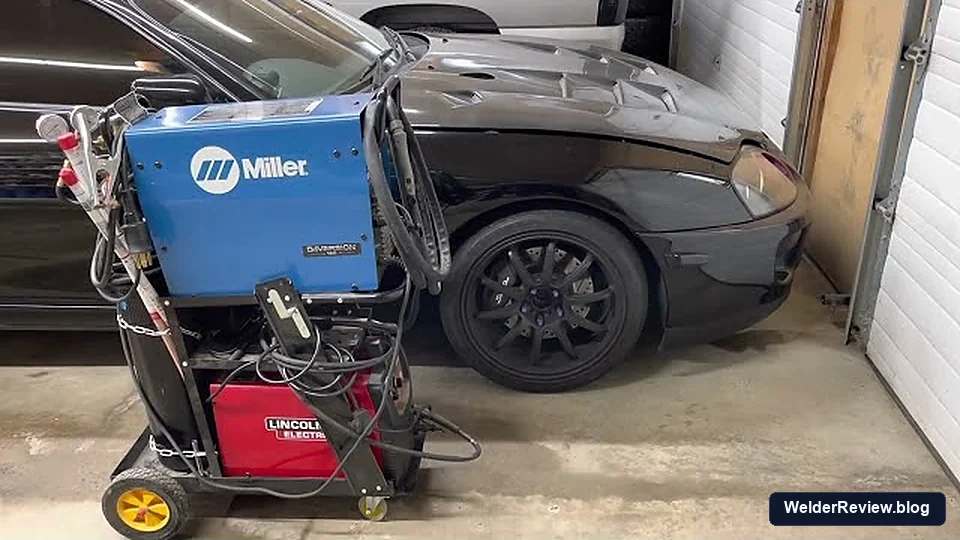
Conversely, the competitor utilizes a modern inverter power source to drastically reduce overall physical weight. Both units integrate stamped steel internal frames to protect delicate circuit boards.
Choosing between heavy copper windings and advanced solid-state electronics shapes your daily maintenance routine. Welders must evaluate how transport frequency impacts their choice of mechanical housing.
The Lincoln 180 relies on a traditional heavy transformer architecture, providing robust durability in rugged fabrication shops. Alternatively, you can read our Miller Diversion 180 review to evaluate compact welding machines.
Internal component layout differs significantly between these two units. Lincoln organizes heavy-duty copper windings vertically, while Miller integrates surface-mount circuit boards within a compact, airflow-optimized chassis designed to protect sensitive electronics.
Structural housing materials also reflect contrasting engineering philosophies. Lincoln uses stamped heavy-gauge steel panels with baked powder coating, whereas Miller incorporates a high-impact composite front bezel paired with galvanized steel side panels.
- Lincoln utilizes a heavy traditional transformer design for proven reliability.
- Miller incorporates an advanced inverter architecture to shed excess weight.
- Both systems feature durable outer steel cabinets with powder-coated finishes.
Internal Component Layout
Internal wiring routing dictates how effectively cooling fans dissipate heat during long fabrication runs. The Lincoln 180 separates its drive assembly cleanly from electrical components.
Meanwhile, the Miller 211 packs its inverter board tightly alongside a cast aluminum dual-groove drive roll system. Proper airflow management prevents premature thermal shutdowns during heavy production.
- Clean separation of electrical boards protects against conductive grinding dust.
- Cast aluminum drive mechanisms prevent wire slippage under high tension.
Power Input and Electrical Architecture
Electrical flexibility remains a major deciding factor for mobile fabricators working across different job sites. The Lincoln 180 generally requires dedicated two-hundred-thirty-volt input power.
On the other hand, the Miller machine features multi-voltage plug technology allowing seamless transitions. This capability lets operators plug into standard household circuits or heavy industrial lines.
Understanding your available shop amperage prevents nuisance breaker trips during peak welding performance output. Voltage drop over long extension cords also affects these systems differently.
Operating on standard single-phase power, the Lincoln 180 requires a dedicated 230V input line for maximum output. It lacks dual-voltage flexibility, meaning operators must hardwire or adapt strictly to high-voltage receptacles.
The Miller 211 features multi-voltage plug technology, allowing seamless switching between 120V and 230V circuits without manual rewiring. This dynamic architecture automatically senses incoming voltage and adjusts internal parameters accordingly.
Electrical efficiency ratings diverge heavily due to their underlying designs. Miller operates at a higher power factor, drawing fewer amps under load, while Lincoln consumes more current to deliver equivalent arc energy output.
- Miller includes multi-voltage plug capability for standard household outlets.
- Lincoln focuses primarily on optimized performance using twenty-three volts.
- Inverter architecture offers superior electrical efficiency under heavy loads.
Duty Cycle Performance Metrics
Duty cycle ratings determine how long you can weld continuously before requiring mandatory cool-down periods. For additional details, explore our Miller 180 Tig review covering thermal performance limits.
Operating near maximum output pushes transformer machines to thermal limits much faster than inverters. Always match your typical joint thickness against published manufacturer duty cycle charts.
- Miller 211 provides stronger output at higher operational duty cycles.
- Lincoln 180 maintains stable characteristics within its rated amperage band.
Real-World Performance and Arc Stability
Arc characteristics define bead profile consistency, spatter generation, and overall puddle control during critical passes. The Lincoln 180 produces a buttery smooth arc on sheet metal.
When transitioning to thicker structural plates, the arc remains deeply penetrating without excessive cleanup required. Welders appreciate the predictable puddle behavior when manipulating the torch angle.
The competing inverter model adjusts arc response automatically to compensate for tip-to-work distance fluctuations. This dynamic capability helps less experienced fabricators lay down professional-looking structural welds.
When depositing metal on thick steel plates, the Miller 211 maintains exceptional arc stability via its advanced auto-set algorithms. These microprocessors constantly monitor voltage drops to prevent stubbing during short-circuit transfers.
The Lincoln 180 delivers a traditional, forgiving arc that handles rusty or contaminated farm equipment exceptionally well. Its conventional tapped-voltage control provides discrete output steps for reliable, predictable penetration depths.
Duty cycle performance heavily favors the inverter platform during extended welding sessions. Read our detailed Miller Diversion 180 TIG review to analyze sustained operational loads and thermal limits.
- Lincoln provides exceptional puddle control on thin automotive sheet metal.
- Miller adjusts arc behavior dynamically to reduce spatter and cleanup time.
- Both machines handle self-shielded flux-cored wire with impressive arc stability.
Puddle Manipulation on Steel
Carbon steel fabrication demands precise heat input to prevent warping and excessive burn-through. The Lincoln machine lets operators dial in specific voltage taps for exact penetration.
Miller utilizes infinite voltage control paired with proprietary software to smooth out arc starts. Evaluating your preferred tuning method ensures optimal productivity on custom metal projects.
- Fixed voltage taps offer repeatable settings for standard shop procedures.
- Infinite voltage control allows fine-tuning for unique joint configurations.
Usability, Controls, and Setup Mechanics
User interfaces dictate how quickly operators can transition between different wire diameters and shielding gases. Traditional knobs on the Lincoln unit provide tactile feedback for adjustments.
Advanced digital displays on the alternative machine feature automated parameter selection based on material thickness. This technology significantly reduces trial-and-error waste during production runs.
Ergonomic torch handles and smooth wire feeding mechanisms further enhance the overall user experience daily. Selecting an intuitive control panel saves valuable hours on complex multi-material jobs.
Setting up the Lincoln 180 involves manually adjusting wire feed speed and selecting voltage taps based on physical charts. This hands-on approach appeals to seasoned fabricators who prefer complete manual control over parameters.
The Miller 211 streamlines operation through its digital interface, featuring a centralized Infinite/Auto-Set knob. Operators simply input material thickness and wire diameter, letting the machine calculate optimal wire speeds automatically.
Drive roll mechanisms also exhibit distinct functional differences in daily use. Lincoln employs a rugged cast aluminum dual-drive system, while Miller utilizes a quick-release angled tension arm for smooth wire feeding.
- Traditional analog dials offer reliable, glove-friendly operation in cold shops.
- Auto-Set technology simplifies wire speed and voltage selection instantly.
- Clear internal charts guide users through recommended shielding gas flow rates.
Drive Roll Maintenance and Tension
Reliable wire feeding prevents bird-nesting and erratic arc interruptions during long welding sessions. The drive mechanisms in both units require periodic cleaning to remove metal shavings.
Tool-less quick-change rolls make swapping between solid steel and flux-cored wires straightforward. Proper tension adjustment ensures consistent wire pressure without deforming softer aluminum filler metals.
- Tool-less drive rolls speed up multi-process wire diameter changes.
- Correct tension prevents wire crushing and maintains smooth feeding.
Maintenance, Efficiency, and Longevity
Long-term equipment ownership hinges on routine maintenance accessibility and component durability over the years. Transformer welders generally feature fewer complex electronic boards susceptible to dust damage.
Inverter systems require clean operating environments to prevent conductive debris from bridging sensitive circuit components. Regular compressed air blow-outs extend the lifespan of internal cooling fans.
Understanding preventative upkeep schedules helps fabricators avoid unexpected downtime during critical project delivery deadlines.
Routine maintenance for the Lincoln 180 primarily involves clearing dust from heavy copper coils using compressed air. Its simpler analog circuitry rarely requires professional diagnostic software during troubleshooting procedures.
The Miller 211 requires careful inspection of its internal cooling fan and printed circuit board dust seals. Protecting these delicate electronics ensures long-term reliability in environments prone to conductive metal shavings.
Component longevity depends heavily on operating conditions and duty cycle management. Both units offer robust thermal overload protection, shutting down safely before internal transformers or inverter bridge transistors overheat permanently.
- Transformer architecture minimizes vulnerability to airborne metal dust.
- Inverters demand routine internal cleaning to protect electronic boards.
- Quality consumables availability ensures long-term operational cost control.
Consumable Wear and Replacement
Contact tips, nozzles, and gas diffusers undergo severe thermal stress during daily MIG welding operations. Keeping a well-stocked supply of matching replacement consumables prevents costly arc instability.
Standard gun connections on both machines accept universally available aftermarket replacement torch components.
- Universal gun connections simplify sourcing replacement welding torches.
- Regular contact tip inspection prevents erratic wire delivery issues.
Portability and Physical Footprint
Shop space optimization and transport weight matter significantly for mobile contractors and hobbyists alike. Heavy transformer units require sturdy carts and dedicated physical footprints in crowded workshops.
Lighter inverter-based systems easily maneuver around large fabrication projects or inside service truck beds. Carrying handles must offer secure grips when wearing heavy leather welding gloves.
Balancing raw power output against physical weight dictates your ultimate choice for site work.
Weighing significantly more than its competitor, the Lincoln 180 demands steady lifting and a dedicated cart for workshop mobility. Its traditional footprint takes up valuable floor space in crowded fabrication bays.
The Miller 211 boasts a remarkably lightweight chassis that easily fits into small service truck compartments. This compact physical footprint makes it ideal for mobile welding contractors requiring rapid site deployment.
Ergonomic handle placement further defines how easily each machine transports across uneven terrain. Miller balances its center of gravity directly beneath the grip, whereas Lincoln feels slightly offset during transit.
- Inverter designs reduce total weight for effortless job site transport.
- Compact footprints fit easily beneath standard workbench storage shelves.
- Sturdy handles accommodate gloved hands for safe equipment relocation.
Cart Integration and Storage
Mounting these welders onto dedicated rolling carts improves mobility and secures shielding gas cylinders safely. Ensure your chosen cart accommodates both the machine footprint and secondary accessories.
Secure cylinder chains protect pressurized gas tanks from tipping over during transport.
- Rolling carts keep gas cylinders secure and prevent hose tangles.
- Onboard storage racks organize spare tips, pliers, and chipping hammers.
Which Option Fits Your Shop Setup
Determining the ideal machine depends entirely on your specific power availability and fabrication scope. Shops with dedicated electrical lines benefit greatly from the robust transformer construction.
Mobile contractors needing multi-voltage adaptability lean toward advanced inverter systems for universal plug options. Assessing your typical material thicknesses ensures you never outgrow your investment.
Reviewing your budget, space constraints, and project demands leads to the ultimate purchase decision.
Choosing the Lincoln 180 makes economic sense if your shop possesses dedicated 230V outlets and prioritizes old-school transformer durability. It suits farm repair work where harsh environmental conditions demand rugged simplicity.
Selecting the Miller 211 benefits operations requiring ultimate versatility across fluctuating job-site power sources. Read our comprehensive Miller Millermatic 211 review to assess its dynamic custom fabrication capabilities.
Evaluate your primary material thickness ranges before making a final purchasing decision. Both machines excel within light to medium fabrication brackets, provided your facility matches their electrical infrastructure requirements.
- Match machine amperage output to your heaviest daily fabrication tasks.
- Verify local shop electrical service before committing to high-draw units.
- Prioritize user interface complexity based on operator experience levels.
Making the Final Choice
Both machines represent the pinnacle of entry-to-mid-level MIG welding engineering and reliability. Test driving each unit at a local distributor showroom clarifies tactile preferences.
Select the tool that integrates seamlessly into your daily workflow and maintenance habits.
- Hands-on testing reveals subtle differences in arc feel and control.
- Prioritize long-term reliability and manufacturer support networks.
Frequently Asked Questions
Can the Lincoln 180 weld aluminum effectively?
Yes, but it requires a spool gun attachment for reliable feeding. Soft aluminum wire jams easily through standard long torch liners.
Does the Miller 211 run on standard household outlets?
It features multi-voltage plugs allowing connection to standard circuits. However, maximum output requires a dedicated two-hundred-thirty-volt power supply.
Which welder is better for thick steel fabrication?
The Miller 211 provides higher amperage output for heavier plates. This extra power ensures deeper penetration on structural projects.
Are consumables interchangeable between these two brands?
Contact tips and nozzles depend on the specific torch brand installed. Many aftermarket guns accept universal consumables for easy sourcing.
How often should internal components undergo cleaning?
Blow out accumulated metal dust with dry compressed air every six months. Inverter models demand more frequent cleaning to protect circuit boards.