Lift TIG vs High Frequency TIG Welding
Understanding arc initiation differences helps fabricators choose the ideal setup for clean, precise metal joints. Selecting the right start mode impacts electrode wear and weld purity.

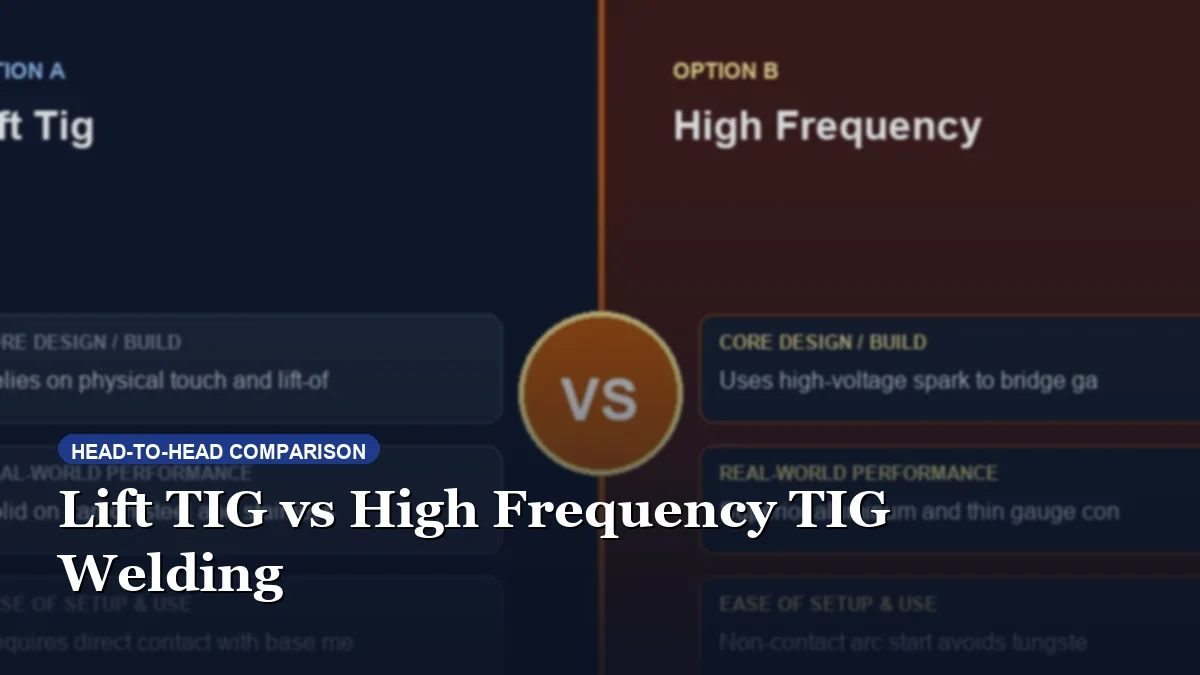
Choose Lift TIG for budget portability and rugged field repairs, but select High Frequency for pristine contamination-free aerospace aluminum welding and high-production runs.
Compare all top models in our Best Welder: Top Home Shop & Jobsite Picks Tested.
Side-by-Side Breakdown
| Criteria | Lift Tig | High Frequency | Edge |
|---|---|---|---|
| Core Design / Build | Relies on physical touch and lift-off | Uses high-voltage spark to bridge gap | High Frequency |
| Real-World Performance | Solid on carbon steel and stainless steel | Superior aluminum and thin gauge control | High Frequency |
| Ease of Setup & Use | Requires direct contact with base metal | Non-contact arc start avoids tungsten fouling | High Frequency |
| Durability & Reliability | Simpler circuitry reduces internal component failure | Complex points and capacitors need occasional tuning | Lift Tig |
| Efficiency / Operating Footprint | Lower power draw and compact machine size | Requires heavier duty-cycle industrial architecture | Lift Tig |
| Maintenance Requirements | Minimal maintenance outside regular torch upkeep | Spark gap adjustments and electrical shielding checks | Lift Tig |
| Best Ideal Use Case | Mobile structural steel fabrication outdoors | Stationary precision sheet metal fabrication | High Frequency |
Core Design & Engineering Differences
Welding machine engineering dictates how an electrical arc bridges the gap between your tungsten electrode and the workpiece. Lift TIG architecture relies on a low-amperage sensing circuit during physical contact.
Conversely, high-frequency technology superimposes a high-voltage, low-amperage spark over the main welding circuit. This ionization ionizes shielding gas instantly without ever touching the base metal surface.
- Low voltage sensing circuit for Lift TIG
- High voltage capacitor discharge for High Frequency
- Physical contact requirement versus non-contact gap bridging
Electrical Circuitry and Components
Internal transformer layouts differ significantly between these ignition methodologies. Reviewing options like our best aluminium tig welder choices helps clarify how lift TIG requires minimal extra hardware.
High frequency systems incorporate specialized points, spark gaps, and heavy-duty output inductors. These extra components demand careful grounding to protect sensitive shop electronics.
- Solid-state inverter simplicity
- Specialized spark gap assemblies
Core Design & Engineering Differences
Engineering modern TIG welding power sources requires balancing heavy-duty transformer architecture with lightweight inverter topologies. These internal topologies dictate how efficiently electrical current transforms into a stable, usable welding arc for diverse fabrication projects.
Lift TIG systems rely on a straightforward contact-start circuit that introduces a low amperage sensing current. When the tungsten contacts the metal, system resistance safely manages the short circuit before operator separation establishes the primary welding arc.
Arc Initiation Mechanisms Explained
Mastering arc starts is critical for passing rigorous weld inspections and avoiding costly rework, especially when using the best tig welder for aluminum. Lift TIG forces operators to touch the tungsten to the steel plate gently.
Lifting the torch breaks the circuit, safely ramping up power to establish a stable welding arc. High frequency completely eliminates physical contact to protect your tungsten tip.
- Gentle scratch-free touch start sequence
- Instantaneous non-contact gas ionization spark
- Precise tungsten tip preservation methods
Tungsten Contamination Risks
Tungsten inclusion remains a major defect category in structural and pressure vessel welding codes. Lift TIG carries a slight risk of sticking if technique is poor.
High frequency units prevent tungsten transfer entirely by initiating the arc through ionized argon gas. This guarantees zero metallic inclusion during critical root passes.
- Potential tungsten sticking hazards
- Pristine non-contact arc stabilization
Arc Initiation Mechanisms Explained
High frequency arc initiation uses a specialized capacitor discharge circuit to generate a high voltage spark. This high voltage bridges the air gap between tungsten and workpiece without requiring any physical contact whatsoever.
Conversely, lift TIG requires mechanical touch, dropping the open circuit voltage down to a safe level. Once lifted, the machine ramps up amperage rapidly, relying on solid-state controls to prevent tungsten sticking during initial ignition sequences.
Real-World Performance Comparison
Job site conditions often dictate which arc ignition method delivers superior daily productivity and reliability. Lift TIG excels on remote construction sites lacking heavy electrical drops.
Workshop environments favoring high frequency performance benefit from rapid, repeatable arc starts on complex stainless assemblies. Production speed increases noticeably when eliminating manual touches.
- Field portability for remote structural fabrication
- High-speed repeatability in stationary production shops
- Consistent arc stability across varying joint geometries
Behavior on Thin Materials
Welding thin gauge sheet metal demands absolute control over heat input and arc placement. Lift TIG can occasionally leave minor surface marks upon initial contact.
High frequency delivers immaculate starts directly over delicate edges without blowing away base material. This makes it mandatory for aerospace and automotive restoration tasks.
- Delicate sheet metal edge control
- Zero burn-through initiation techniques
Real-World Performance Comparison
Evaluating real-world performance reveals significant differences in startup reliability and bead presentation. High frequency setup excels in repetitive production environments by eliminating tungsten contamination completely, preserving exact electrode geometry across hundreds of consecutive weld starts.
Lift TIG demands precise operator technique to avoid transferring base metal impurities onto the tungsten tip. When mastered, this method delivers exceptional arc stability on carbon steel fabrication without generating harmful electromagnetic interference nearby.
Material Compatibility and Joint Integrity
Base metal metallurgy responds differently to varying arc initiation transients and cleaning actions. Carbon steels tolerate lift-start methods exceptionally well without metallurgical degradation.
Aluminum fabrication requires high frequency alternating current to continuously clean stubborn surface oxides. Attempting aluminum with basic lift start systems leads to immediate tungsten destruction.
- Carbon steel and stainless compatibility
- Aluminum oxide cleaning requirements
- Metallurgical joint integrity standards
Stainless Steel and Exotic Alloys
Exotic alloys like titanium and Inconel demand absolute shielding gas coverage before arc initiation. High frequency allows pre-flow gas timers to purge the zone cleanly.
Lift TIG operators must position the cold tungsten precisely before triggering the shielding gas solenoid sequence. Proper technique prevents premature oxidation of expensive nickel alloys.
- Titanium shielding gas optimization
- Inconel root pass purity control
Material Compatibility and Joint Integrity
Material compatibility remains a decisive factor when selecting your welding process parameters. Aerospace alloys and thin aluminum components demand pristine starting conditions, making high frequency initiation nearly mandatory to prevent micro-fissuring and inclusions.
For general structural steel and heavy-wall piping, lift TIG provides sufficient joint integrity without risking weld pool contamination. Welders achieve deep fusion penetration by maintaining tight arc lengths throughout the entire weld pass.
Maintenance, Efficiency & Longevity
Equipment uptime directly impacts operational profitability in commercial fabrication and manufacturing facilities. Lift TIG machines offer exceptional longevity due to their streamlined internal circuitry.
High frequency units require periodic cleaning of points and spark gap calibration to maintain performance. Neglecting these maintenance intervals leads to weak arc starts and erratic behavior.
- Streamlined inverter circuit longevity
- Periodic spark gap calibration needs
- Reduced electrical component failure rates
Troubleshooting Common Ignition Faults
Diagnosing starting issues saves valuable shop time and prevents unnecessary technician service calls. Lift TIG starting failures usually stem from poor work clamp grounding.
High frequency starting problems often indicate pitted spark gap points or moisture in lines. Cleaning the gaps with fine emery cloth restores factory arc initiation.
- Work clamp grounding checks
- Spark gap point restoration
Maintenance, Efficiency & Longevity
Equipment maintenance schedules vary based on the complexity of internal electronic components. High frequency units contain delicate spark gap points that require periodic cleaning and gap adjustment to maintain reliable arc starting performance over time.
Lift TIG machines experience fewer mechanical failures because they lack high voltage points. This simplified internal architecture translates into extended machine longevity and lower overall service costs for mobile repair technicians operating in harsh environments.
Electrical Safety and Shop Ergonomics
Operator safety standards govern equipment selection in professional industrial manufacturing and training institutions. High frequency generates high-voltage electromagnetic interference that can disrupt computers.
Proper machine grounding is mandatory when operating the best high frequency tig welder models near sensitive CNC machinery. Lift TIG systems produce minimal electromagnetic noise, making them safer for shared electronics.
- Electromagnetic interference management
- Industrial facility grounding protocols
- Shared electronic equipment protection
Operator Comfort and Torch Handling
Ergonomic torch design impacts welder fatigue during long, continuous fabrication shifts. Lift TIG setups utilize standard power blocks without heavy high-voltage insulation shielding.
High frequency torches require robust insulation to prevent accidental operator shock from high voltage spikes. Modern valves and switches improve overall handling safety significantly.
- Torch insulation requirements
- Operator fatigue reduction strategies
Electrical Safety and Shop Ergonomics
Electrical safety considerations demand careful evaluation of your immediate working environment. High frequency arcs emit strong electromagnetic fields that can disrupt sensitive medical devices, requiring proper equipment grounding to protect operators and nearby personnel alike.
Shop ergonomics also influence operator fatigue during extended production runs. Lift TIG requires controlled physical contact, which some fabricators find tedious, while others appreciate the absence of high frequency interference affecting their shop's digital tools.
Which Option Fits Your Setup
Choosing between these technologies depends entirely on your primary materials and working environment. Mobile contractors prioritizing lightweight gear will find lift TIG systems unbeatable.
Stationary fabrication shops tackling aluminum, thin stainless, and high-volume production require high frequency capability. Evaluate your budget, materials, and workspace before purchasing equipment.
- Mobile contractor workflow assessment
- Stationary production shop requirements
- Budget and material alignment strategy
Making Your Final Equipment Choice
Investing in multi-process welding machines often provides the best long-term value for growing businesses. Many modern inverters include both lift modes and high frequency starts.
Review your welding codes and customer quality specifications to ensure compliance before starting projects. Selecting the correct arc start prevents costly quality defects down the road.
- Multi-process inverter evaluation
- Welding code compliance checks
Which Option Fits Your Setup
Choosing the correct option depends on your primary materials and workshop infrastructure. If you weld aluminum regularly or demand flawless starting, investing in a high frequency machine remains the most practical path forward for professional results.
Conversely, field service technicians and budget-conscious fabricators can browse our cheapest ac dc tig welder guide for affordable steel-focused options. These machines deliver exceptional value through reliable arc performance without complicated tuning.
Frequently Asked Questions
Can I weld aluminum using a lift TIG machine?
Welding aluminum with lift TIG is extremely difficult because it lacks the necessary oxide cleaning action. You should always use high frequency AC for quality aluminum welds.
Does lift TIG ruin tungsten electrodes over time?
Lift TIG causes minor tungsten wear if the operator scrapes the metal too aggressively. Using a proper gentle touch technique preserves the sharp electrode point effectively.
Why does high frequency interfere with shop computers?
High frequency arcs emit electromagnetic radiation that disrupts unshielded digital logic circuits. Proper machine earth grounding eliminates this unwanted electrical interference completely.
Is lift TIG acceptable for certified aerospace welding?
Aerospace codes typically mandate high frequency or advanced pulse starts to prevent tungsten inclusions. High frequency technology guarantees the absolute cleanliness required for aerospace.
Do I need special torches for high frequency TIG?
High frequency systems require heavily insulated power cables to handle high voltage safely. Always inspect your torch hoses for cracks to prevent electrical shock hazards.