Lift Start vs Scratch Start Tig: Concise Verdict
Understanding arc initiation differences transforms your tungsten inert gas welding efficiency. Choosing the right ignition method protects your base metals from severe tungsten inclusion defects.

Choose lift start for cleaner joints without tungsten sticking. Opt for scratch start tig when running budget stick machines without built-in voltage reduction.
Compare all top models in our Best Welder: Top Home Shop & Jobsite Picks Tested.
Side-by-Side Breakdown
| Criteria | Lift Start | Scratch Start Tig | Edge |
|---|---|---|---|
| Core Design / Build | Utilizes low open-circuit voltage for safe tungsten contact | Relies on direct short-circuit friction against base metal | Lift Start |
| Real-World Performance | Minimizes tungsten electrode degradation during every arc strike | Frequently causes electrode splintering and weld contamination | Lift Start |
| Ease of Setup & Use | Requires dedicated TIG mode and specialized circuitry | Works on basic stick welders using simple valve torches | Scratch Start Tig |
| Durability & Reliability | Protects inverter electronics through controlled low-current sensing | Demands strict operator discipline to prevent power surges | Lift Start |
| Efficiency / Operating Footprint | Reduces prep time by eliminating frequent grinding sessions | Increases downtime due to constant electrode reshaping needs | Lift Start |
| Maintenance Requirements | Lowers consumable waste with extended tungsten service life | Consumes more grinding disks and tungsten tips rapidly | Lift Start |
| Best Ideal Use Case | Precision fabrication on sensitive aerospace or automotive alloys | Field repairs using legacy equipment and portable generators | Lift Start |
Fundamental Arc Initiation Mechanics
Mastering the physics behind arc ignition dictates overall weld quality and joint integrity. Both techniques eliminate high-frequency interference, yet their internal electrical behaviors diverge significantly during initial contact.
Engineers designed lift start technology to sense low amperage contact before ramping up power. This prevents the violent thermal shock associated with older ignition styles found in traditional workshops.
Scratch start relies on physical contact between the tungsten electrode and the workpiece to complete the low-amperage circuit, dragging the tip like a matchstick to establish a stable welding arc.
Conversely, lift start limits output current to a safe low-amperage state upon initial contact, allowing operators to touch the tungsten directly to the metal before lifting cleanly without sticking.
- Lift start applies safe sensing voltage before arc ignition.
- Scratch start creates a direct electrical short circuit manually.
- Both methods avoid high-frequency arc starter interference issues.
Electrical Behavior Analysis
The internal circuitry of a lift start machine delivers minimal amperage upon tungsten touch. Once lifted away, the inverter seamlessly establishes a stable welding plasma stream.
Scratch start forces full amperage through the tungsten tip the moment it scrapes metal. This aggressive approach accelerates tip degradation and creates unwanted arc blow.
- Low-voltage sensing protects delicate electronic components.
- Full open-circuit voltage surges during scratch friction.
Tungsten Contamination and Weld Purity
Maintaining a pristine tungsten tip remains vital for achieving sound structural welds. Contamination weakens the weld pool and introduces brittle inclusions that fail under mechanical stress testing.
Lift start technology drastically reduces tungsten sticking incidents during daily shop operations. Operators enjoy cleaner weld starts without constantly stopping to grind contaminated electrode tips.
Physical scraping during scratch initiation invariably transfers microscopic tungsten particles into the molten weld pool, severely compromising structural integrity and causing premature weld failure under heavy mechanical loads.
Lift start mitigates this inclusion risk by maintaining a controlled touch voltage, preserving the sharp electrode tip geometry and ensuring radiographically clean welds for critical stainless applications.
- Tungsten inclusions compromise structural weld integrity.
- Lift start prevents metallic bonding during initial electrode contact.
- Scratch start frequently transfers copper or steel to the tungsten.
Mitigating Inclusion Risks
When a tungsten electrode fuses to the workpiece, contamination spreads instantly. Welders must halt production, snap off the ruined tip, and reshape the geometry entirely.
Advanced machines utilize smart sensing to abort current if the tungsten remains stuck. This engineering marvel saves countless hours of tedious grinding and consumable replacement.
- Stuck electrodes ruin joint cleanliness immediately.
- Smart current abortion protects tungsten geometry.
Equipment Compatibility and Setup Demands
Selecting the appropriate welding machine dictates which starting technique you can deploy. Modern multi-process inverters natively support lift start while older buzzboxes rely strictly on scratch methods.
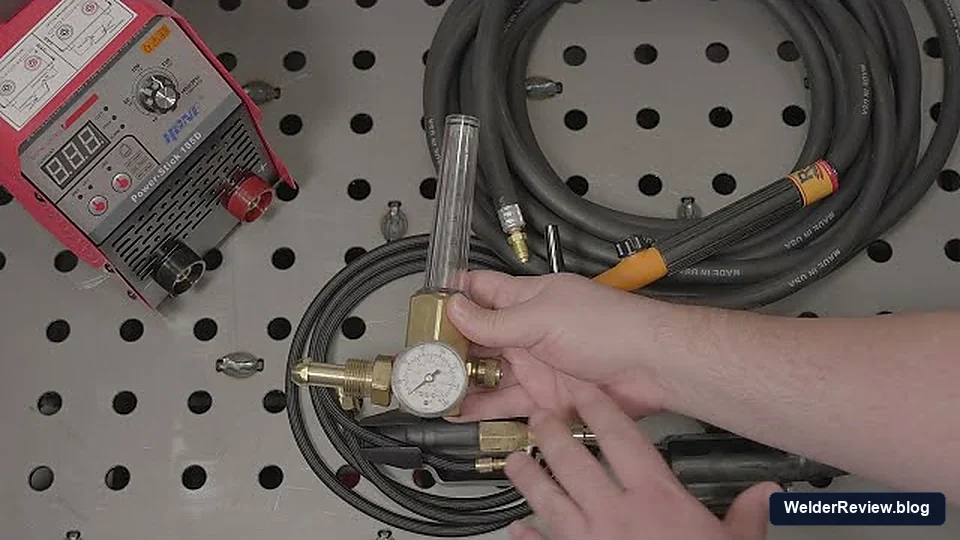
Configuring your gas delivery system requires precise regulator adjustments regardless of ignition style. Shielding gas must flow continuously before the arc strikes to prevent immediate oxidation.
Traditional scratch start functions on virtually any constant current power source, requiring only a basic gas valve torch and an independent shielding gas cylinder managed manually.
Modern lift start technology demands specialized circuitry built into advanced inverter power sources, incorporating solid-state controls to safely regulate output parameters during the critical touch phase.
- Modern multi-process inverters feature native lift start modes.
- Legacy stick welders only support scratch start configurations.
- External gas valves control shielding flow on scratch setups.
Torch and Hose Configurations
Scratch start setups typically utilize a valve-in-head torch connected directly to the gas cylinder. You manually open the valve before welding and close it afterward.
Lift start configurations integrate gas solenoid valves directly into the machine housing. This automates post-flow and pre-flow shielding gas delivery for superior weld protection.
- Valve torches require manual gas management by operators.
- Machine-controlled solenoids automate shielding gas delivery cycles.
Operator Skill Curve and Precision Control
Developing muscle memory for arc ignition takes patience and deliberate hands-on practice. Beginners often struggle with scratch start techniques because excessive pressure causes severe tungsten breakage.
Lift start simplifies the learning curve by removing the frantic scratching motion entirely. Welders simply touch the metal lightly and lift smoothly to establish the welding arc.
Mastering scratch start requires exceptional neuromuscular coordination, as novice welders frequently struggle with electrode sticking and erratic arc gaps that damage the delicate tungsten profile.
Lift start dramatically flattens the learning curve by eliminating the aggressive striking motion, enabling precise arc placement directly over joint roots without risking base metal gouging.
- Scratch start demands precise hand-eye coordination under pressure.
- Lift start mimics a gentle sweeping motion for beginners.
- Precision control prevents weld pool disruption during starts.
Minimizing User Fatigue
Repetitive physical strain from aggressive scratching fatigues hand muscles during long shifts. Streamlining the ignition process keeps operators comfortable and productive throughout the day.
Ergonomic torch handles combined with smart arc starting reduce overall physical stress. Fabricators finish complex joints without experiencing premature hand cramps or operational fatigue.
- Aggressive scratching causes hand fatigue during long shifts.
- Ergonomic designs improve overall daily fabrication comfort.
Consumable Wear and Maintenance Overhead
Managing consumable expenses impacts the profitability of any metal fabrication workshop. Frequent tungsten grinding wastes expensive rare-earth electrodes and consumes valuable production time daily.
Switching to a controlled arc initiation method preserves your tungsten inventory significantly. You spend less time at the bench reshaping tips and more time laying down quality welds.
Scratch start methods accelerate collet body wear and demand frequent electrode reshaping using dedicated diamond grinding wheels to remove contamination and restore proper tip geometry.
Equipment utilizing modern lift start technology experiences significantly reduced consumable degradation, lowering long-term operating costs and minimizing the downtime associated with frequent torch maintenance routines.
- Frequent grinding accelerates expensive tungsten electrode consumption.
- Controlled ignition extends overall consumable lifespan drastically.
- Reduced maintenance overhead boosts daily workshop profitability.
Optimizing Grinding Protocols
Dedicated diamond grinding wheels are essential for shaping tungsten electrodes properly. Contaminated tips ruined by scratch starts require deep grinding to remove impurities.
Preserving tip geometry through advanced arc starting prevents longitudinal scratches. Clean tips focus the welding arc tightly for superior penetration on thin metals.
- Diamond wheels ensure correct directional tungsten grinding marks.
- Preserved geometries focus arcs for deep joint penetration.
Workshop Safety and Electrical Standards
Adhering to strict electrical safety protocols protects fabricators from hazardous shock incidents. Open-circuit voltages demand respect, especially in damp environments or confined fabrication spaces.
Lift start technology enhances workplace safety by lowering idle circuit voltage levels. This engineering safeguard prevents accidental shocks when handling torches in cramped assembly areas.
Both initiation methods must comply with strict OSHA safety guidelines and national electrical codes regarding open-circuit voltage limitations in damp fabrication environments or confined spaces.
Advanced lift start units incorporate built-in voltage reduction devices to protect fabricators from hazardous electrical shocks while working on conductive steel structures or grounded worktables.
- Electrical safety standards dictate strict open-circuit voltage limits.
- Damp workshop environments increase potential shock hazards.
- Low idle voltages protect operators in tight spaces.
Managing Workspace Hazards
High open-circuit voltages present risks when changing consumables with live equipment. Ensuring your machine features proper safety certifications prevents catastrophic electrical failures onsite.
Grounding integrity remains paramount regardless of your chosen arc initiation technique. Secure work clamps eliminate stray currents and ensure safe electrical return paths.
- Live equipment requires caution during consumable replacement steps.
- Secure work clamps eliminate dangerous stray electrical currents.
Industrial Applications and Project Suitability
Matching your ignition method to specific project requirements ensures optimal structural results. Aerospace and pressure vessel codes frequently mandate advanced starting methods to eliminate flaws.
Field repair work often forces technicians to utilize rugged scratch start systems. Portable engine-driven welders without advanced electronics rely on this reliable backup technique.
Scratch start remains a reliable field-expedient option for remote structural repairs where complex electronics might fail due to excessive vibration, dust, or extreme temperatures.
Modern precision industrial manufacturing environments overwhelmingly favor advanced lift start capabilities for critical high-purity piping systems, aerospace components, and intricate thin-gauge sheet metal assemblies.
- Aerospace fabrication codes prohibit tungsten inclusion defects strictly.
- Field repair technicians rely on rugged portable generators.
- Project specifications dictate acceptable arc ignition methodologies.
Evaluating Field Versus Shop Needs
Shop environments benefit greatly from stationary inverters featuring lift start capabilities. Precision control allows fabricators to weld thin stainless steel tubing without burning through.
Remote construction sites demand durable equipment that withstands harsh weather conditions. Scratch start setups provide unmatched mechanical reliability when electronics fail.
- Stationary shop inverters maximize precision on thin tubing.
- Remote construction sites require durable, failure-proof equipment.
Frequently Asked Questions
What makes lift start better than scratch start?
Lift start prevents tungsten contamination by applying low voltage before ignition. This smart design protects your base metal from costly inclusions.
Can I use scratch start on aluminum joints?
Scratching aluminum is extremely difficult and usually ruins the tungsten tip instantly. Always use high-frequency AC machines for aluminum fabrication.
Does scratch start damage standard welding machines?
Basic stick welders handle scratch start easily without internal electronic damage. However, you must maintain steady hand control to avoid sticking.
Why does my tungsten stick during lift start?
Sticking usually happens when you lift the electrode too slowly away. Practice a crisp snapping motion to establish the arc cleanly.
Do I need a gas solenoid for scratch start?
Standard scratch setups require a manual valve right on the torch handle. This lets you control gas flow before striking the arc.