Inverter Welder vs Transformer Welder: Engineering Face-Off
Choosing between modern semiconductor conversion and heavy copper windings defines your shop capability. We analyze internal engineering, power efficiency, and real-world arc performance.

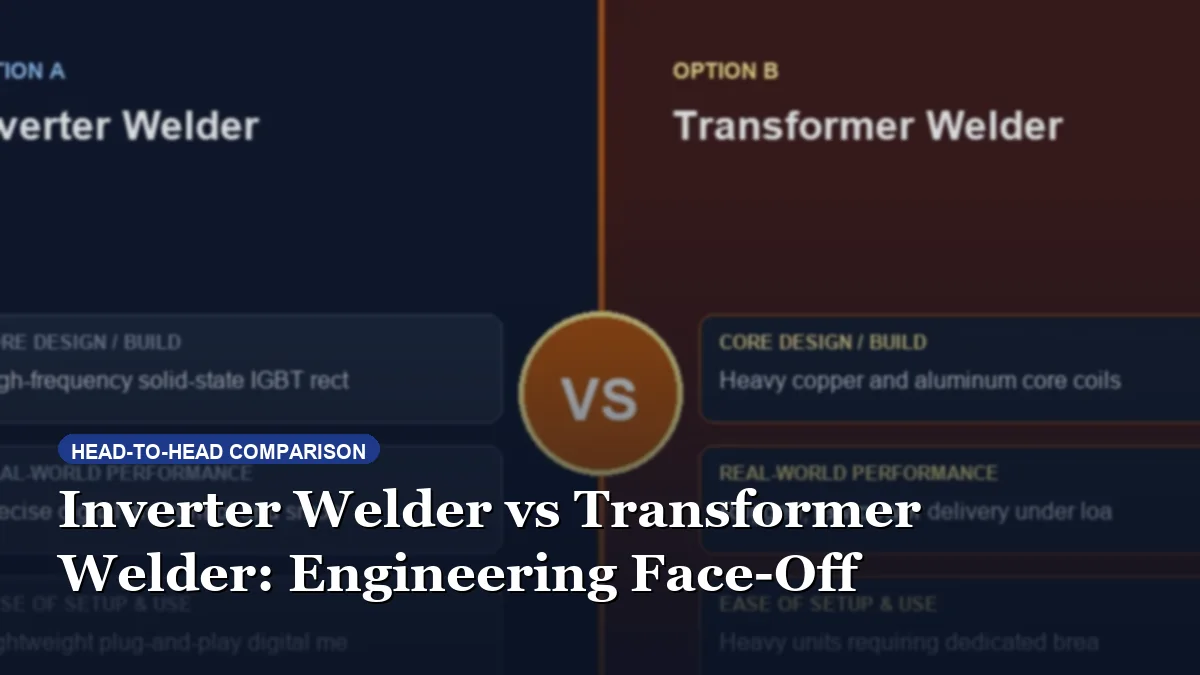
Choose the inverter welder for portability, multi-process versatility, and low power draw in mobile repair. Select the transformer welder for heavy industrial gouging and decades of maintenance-free abuse.
Compare all top models in our Best Welder: Top Home Shop & Jobsite Picks Tested.
Side-by-Side Breakdown
| Criteria | Inverter Welder | Transformer Welder | Edge |
|---|---|---|---|
| Core Design / Build | High-frequency solid-state IGBT rectifiers | Heavy copper and aluminum core coils | Inverter |
| Real-World Performance | Precise digital arc control and smoothing | Rugged, raw power delivery under loads | Transformer |
| Ease of Setup & Use | Lightweight plug-and-play digital menus | Heavy units requiring dedicated breaker lines | Inverter |
| Durability & Reliability | Sensitive circuit boards prone to dust | Virtually indestructible mechanical construction | Transformer |
| Efficiency / Operating Footprint | High efficiency exceeding 85 percent | Lower efficiency with high idle draw | Inverter |
| Maintenance Requirements | Cooling fan checks and clean circuit bays | Basic terminal tightening and dusting | Transformer |
| Best Ideal Use Case | Mobile fabrication, field service, and sheet metal | Structural steel shops and heavy pipeline work | Tie |
Core Engineering Principles and Design Architecture
Modern welding machines operate on fundamentally different electrical conversion philosophies. Understanding these core architectures helps technicians match the right machine to their specific fabrication demands.
Solid-state machines utilize high-speed microprocessors to step up incoming line frequencies. This electronic manipulation drastically reduces physical weight while offering superior control over the output waveform.
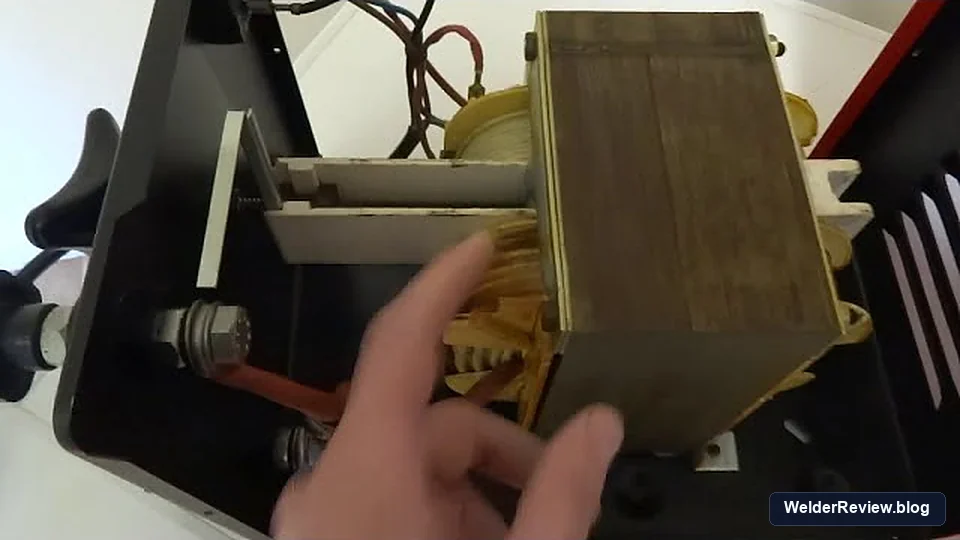
Transformer machines rely on heavy copper or aluminum coil windings to step down line voltage at 60 Hz frequency. This brute-force electromagnetic design results in significant thermal mass and substantial physical weight.
Many fabricators evaluate options found in our best inverter stick welder guide when upgrading. These modern units utilize solid-state switches and high-frequency transformers operating above 20 kHz.
- Inverters operate at high frequencies up to 100 kHz using transformers.
- Traditional units step down standard line frequency directly via heavy copper coils.
- Semiconductor switches regulate current millions of times faster than mechanical systems.
- Transformer units utilize foundational copper coils operating on standard line frequency.
- Inverter circuits rectify incoming AC to DC before high-frequency chopping.
Semiconductor Rectification Mechanics
Advanced semiconductor switching components allow modern power sources to manipulate voltage instantly. This rapid response yields precise arc stability across varying metal thicknesses.
Engineers rely on insulated gate bipolar transistors to handle massive electrical currents efficiently inside compact chassis housings.
- IGBT modules require sophisticated thermal management and heat sinks.
- Digital microprocessors monitor arc parameters thousands of times per second.
Real-World Arc Stability and Performance Dynamics
Selecting a model from our best inverter arc welder reviews helps operators master weld pool dynamics, dictating bead profile quality, penetration depth, and spatter levels across demanding field applications.
Traditional copper coils deliver raw, uncompromised amperage that resists arc blow effectively. Meanwhile, digital systems dynamically adjust voltage drops to prevent electrode sticking during fine work.
Heavy-duty transformer power sources deliver a naturally forgiving arc due to inherent inductance. This steady voltage drop helps stabilize manual stick welding electrodes, particularly when dealing with long arc lengths on dirty steel.
Inverters employ advanced digital signal processors to regulate arc characteristics in microseconds. This rapid feedback loop optimizes short-circuit current during MIG welding and maintains a precise droplet transfer for superior bead aesthetics.
- Digital waveform shaping eliminates micro-interruptions during metal transfer phases.
- Copper windings absorb transient voltage spikes naturally without digital intervention.
- Low-amperage starting proves vastly superior on modern solid-state electronics.
- Inductance in legacy transformers smooths out current fluctuations naturally.
- Microprocessors in inverters dynamically adjust voltage to prevent electrode sticking.
Transient Voltage Response Rates
When arc length fluctuates during manual manipulation, fast-reacting circuits compensate instantly. This responsiveness minimizes annoying spatter and maintains consistent heat input.
Heavy electromagnetic coils rely on inherent inductance to smooth out current fluctuations naturally during manual welding passes.
- Inductive smoothing prevents violent arc extinctions on rusty steel.
- Microchip feedback loops correct voltage droop within microseconds.
Electrical Efficiency and Power Consumption Profiles
Facility managers monitor utility bills closely when running heavy industrial fabrication equipment. Modern semiconductor units draw significantly fewer amperes from standard building circuits.
Older copper-wound units waste considerable electrical energy as ambient heat during extended idling periods. This thermal dissipation increases shop cooling costs during hot summer months.
Standard transformer welders suffer from continuous core losses and lower power factors, often operating around 50 to 60 percent efficiency. This energy waste generates substantial heat and increases long-term utility overhead during heavy fabrication.
Professional shops reviewing options from our best budget inverter welder lineup note that these advanced systems achieve conversion efficiencies exceeding 85 percent, sharply reducing long-term electrical overhead.
- Power factor correction technology maximizes energy transfer efficiency significantly.
- Idle power draw remains remarkably low on modern digital welding units.
- Traditional heavy coils generate substantial resistive heat losses continuously.
- Transformer core losses contribute to high no-load power consumption.
- Inverter topology optimizes power factor correction for maximum electrical efficiency.
Utility Load and Breaker Sizing
Operating heavy equipment requires careful evaluation of available workshop electrical service. Solid-state machines often operate safely on standard residential or light commercial breakers.
Conventional units demand heavy-duty electrical service drops to handle high initial inrush currents safely without nuisance tripping.
- Inrush currents can easily pop standard thermal-magnetic household breakers.
- High electrical efficiency reduces overall utility operational overhead.
Physical Ergonomics, Weight, and Portability Factors
Field service technicians prioritize lightweight equipment that fits easily into service truck toolboxes. Traditional heavy machinery requires dedicated carts, cranes, or permanent shop floor placement.
Eliminating massive iron core components drops overall machine weight by up to seventy percent. This dramatic reduction transforms how fabricators approach remote jobsite maintenance tasks.
Traditional transformer welders frequently exceed one hundred pounds, requiring dedicated carts or stationary shop positioning. Moving these massive steel-cased units demands significant physical effort and introduces potential lifting injury hazards.
Finding a suitable unit in our best inverter welder for 6010 guide reveals compact designs weighing under thirty pounds, enabling effortless transport and access to elevated platforms without straining ergonomic limits.
- Carrying a lightweight chassis prevents severe lower back strain.
- Compact footprints optimize precious workspace inside crowded fabrication bays.
- Wheels become optional rather than mandatory for daily shop mobility.
- Heavy transformers require reinforced shop carts and specialized material handling.
- Lightweight inverters feature integrated shoulder straps for rapid vertical mobility.
Jobsite Mobility and Handling
Climbing scaffolding with a heavy power source creates dangerous working conditions for technicians. Portable semiconductor units sling over a shoulder securely for elevated structural repairs.
Heavy iron-core systems remain anchored securely to dedicated workshop floors due to their sheer physical bulk and mass.
- Shoulder straps allow effortless transport across uneven terrain.
- Compact enclosures slip easily under standard workbench storage shelves.
Long-Term Durability and Maintenance Realities
Harsh workshop environments filled with conductive metal dust test equipment longevity. Mechanical copper coils shrug off severe abuse that would easily destroy delicate circuit boards.
Routine maintenance schedules differ dramatically based on internal machine architecture and cooling design requirements.
Transformer machines feature rugged electromechanical components with very few delicate circuit boards. Their robust physical construction withstands harsh outdoor job-site environments, moisture, and extreme mechanical shock far better than electronics.
Inverter welders house sensitive printed circuit boards that demand regular dust removal using compressed air. While highly efficient, these complex electronic assemblies remain vulnerable to voltage spikes and moisture ingress failures.
- Solid-state circuit boards demand regular internal cleaning with compressed air.
- Copper windings withstand extreme vibration and thermal shock cycles indefinitely.
- Cooling fans pull airborne contaminants directly across sensitive electronic components.
- Copper windings offer exceptional resistance to airborne metallic dust.
- Circuit boards require conformal coating to survive corrosive industrial atmospheres.
Component Vulnerability and Lifespan
Microprocessors and delicate capacitors suffer degradation when exposed to severe voltage spikes or moisture. Traditional copper coils operate reliably for decades with minimal component degradation.
Replacing a fried circuit board often costs nearly as much as purchasing a brand new machine.
- Surge protectors safeguard sensitive digital components from dirty power.
- Iron and copper systems survive catastrophic drops with minor cosmetic damage.
Workshop Integration and Electrical Infrastructure
Integrating a new welding machine into an existing workshop demands careful infrastructure planning. Facilities must verify phase compatibility, voltage availability, and total amp draw limits.
Modern solid-state units frequently offer multi-voltage automatic sensing capabilities for ultimate convenience.
Transformer power sources typically demand heavy-duty electrical service with high amperage ratings. Operating these legacy machines often requires dedicated 240V breaker installations and thick copper wiring to handle massive initial draw.
Advanced inverters often feature multi-voltage capabilities, operating efficiently on standard household or light industrial circuits. This flexibility simplifies shop integration and eliminates the immediate need for costly electrical upgrades.
- Auto-sensing technology switches seamlessly between single and three-phase power.
- Dedicated plug adapters accommodate various jobsite electrical outlet configurations.
- Legacy machines require permanent hardwiring to heavy-duty disconnect switches.
- High inrush current of transformers necessitates slow-blow circuit breakers.
- Auto-line technology allows inverters to adjust seamlessly to varying input voltages.
Generator Compatibility and Power Quality
Field operations often rely on portable engine-driven generators to supply electricity. Advanced electronics require clean power output to prevent internal rectifier board damage.
Traditional magnetic coils tolerate dirty generator power without suffering catastrophic semiconductor failures.
- Inverter units need clean sine wave generator outputs.
- Heavy copper coils handle erratic generator frequencies effortlessly.
Final Verdict: Selecting the Right Power Source
Choosing between these technologies depends entirely on your primary operational environment. Mobile fabricators and sheet metal specialists benefit immensely from lightweight, multi-process digital capabilities.
Structural steel yards and heavy repair facilities relying on carbon arc gouging still prefer bulletproof copper iron-core reliability.
Select a reliable transformer welder if you manage a fixed heavy fabrication shop tackling brutal daily workloads. Their proven mechanical simplicity ensures decades of service under unforgiving industrial conditions.
Choose an efficient inverter machine when portability, multi-process versatility, and precise digital control matter most. Modern electronic advancements make them the definitive standard for mobile repair technicians and production facilities alike.
- Evaluate your typical material thickness and mobility requirements first.
- Consider local electrical infrastructure limitations before purchasing heavy equipment.
- Balance initial machine cost against anticipated long-term maintenance realities.
- Transformers suit high-amperage carbon arc gouging and structural steel fabrication.
- Inverters excel in multi-process TIG, MIG, and stick configurations.
Making Your Final Investment Choice
Investing in quality welding equipment ensures years of trouble-free fabrication productivity. Match your selection to your daily workflow intensity and shop electrical limits.
Consult experienced local technical reps to test drive both machine types before committing funds.
- Test arc characteristics on your specific metal coupons.
- Verify warranty coverage terms for electronic versus mechanical parts.
Frequently Asked Questions
Why do inverter welders weigh so much less than traditional transformer models?
They operate at much higher frequencies, allowing engineers to shrink internal magnetic components dramatically. This solid-state design delivers maximum portability for mobile repair technicians.
Can transformer welders run safely on standard household electrical outlets?
Most traditional units demand heavy-duty industrial circuits due to their high amp draw. Trying to run them on standard breakers will cause frequent tripping immediately.
Which welding power source lasts longer in extremely dusty fabrication shops?
Traditional copper units typically outlast modern electronics in harsh environments. Their rugged mechanical build suffers far less from conductive dust buildup than sensitive circuit boards.
Do inverter machines provide better arc stability for beginner welders?
Yes, their microprocessors constantly monitor and adjust output parameters to prevent sticking. This advanced digital control ensures a smooth arc during critical welding passes.
Are transformer welders completely obsolete in modern metal fabrication?
Not at all, because heavy structural shops still rely on their raw, indestructible power. They remain unmatched for heavy gouging and continuous high-amperage industrial production.