Hobart Handler 140 vs Lincoln Weld Pak 140: Concise Verdict
Choosing between these compact 115V wire feed welders requires examining internal drive assemblies, duty cycles, and real-world shop utility.

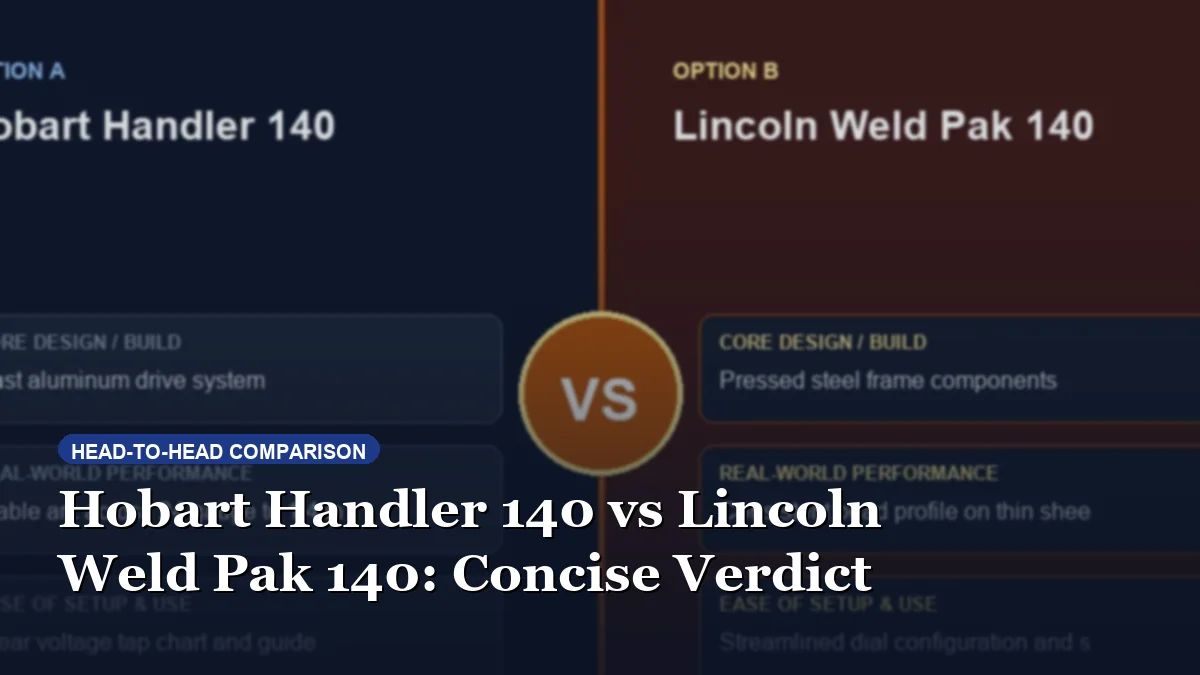
Choose the Hobart Handler 140 for heavy-duty industrial gearing and robust durability, or select the Lincoln Weld Pak 140 for lightweight portability and intuitive operator controls.
Compare all top models in our Best Welder: Top Home Shop & Jobsite Picks Tested.
Side-by-Side Breakdown
| Criteria | Hobart Handler 140 | Lincoln Weld Pak 140 | Edge |
|---|---|---|---|
| Core Design / Build | Cast aluminum drive system | Pressed steel frame components | Hobart Handler 140 |
| Real-World Performance | Stable arc across 24 gauge to 1/4 inch | Consistent bead profile on thin sheet metal | Tie |
| Ease of Setup & Use | Clear voltage tap chart and guide | Streamlined dial configuration and setup | Lincoln Weld Pak 140 |
| Durability & Reliability | Industrial grade internal transformer design | Standard commercial duty construction | Hobart Handler 140 |
| Efficiency / Operating Footprint | Standard 115V household power draw | Optimized power factor correction circuit | Lincoln Weld Pak 140 |
| Maintenance Requirements | Straightforward roller cleaning and tip changes | Standard wire feed maintenance schedule | Tie |
| Best Ideal Use Case | Auto body repair and farm fabrication | Light home DIY and mobile maintenance | Hobart Handler 140 |
Technical Architecture and Core Design Comparison
Evaluating the structural integrity of entry-level mig welders reveals stark differences in manufacturing philosophies between these two industry giants. Both units operate on standard 115V household current while delivering maximum outputs near 140 amps.
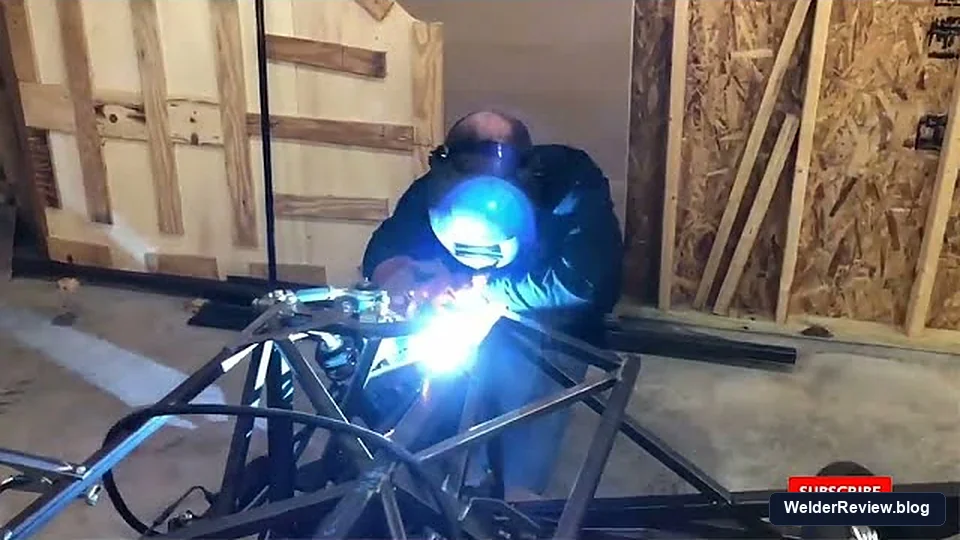
Internal engineering dictates long-term reliability under demanding shop conditions. Experienced fabricators inspect drive mechanisms closely before making any permanent equipment purchasing decisions for their workspaces.
The Hobart Handler 140 utilizes a cast aluminum drive assembly with a gear-driven mechanism that ensures consistent wire feeding during high-demand fabrication tasks. This design minimizes slipping and bird-nesting issues on soft aluminum wires.
Conversely, our Lincoln Weld-Pak 140 HD review highlights a similar industrial wire drive system incorporating a tool-less quick-change drive roll setup that optimizes shop efficiency during filler material changes.
- Hobart Handler 140 utilizes an industrial cast aluminum drive assembly.
- Lincoln Weld Pak 140 employs stamped steel components to reduce overall machine weight.
- Both models feature dual-groove drive rolls for quick wire size changes.
Drive Mechanism Engineering
Drive roll tensioners directly impact wire feeding smoothness during extended fabrication sessions. A dependable gear-driven system prevents annoying bird-nesting issues when running thinner mild steel wire.
Heavy-duty cast housings absorb vibration much better than lightweight stamped alternatives over years of heavy service.
- Precision-cut brass gears ensure consistent wire feeding torque.
- Adjustable tension levers allow fine-tuning for different wire diameters.
Welding Performance Across Common Gauges
As evaluated in our Hobart Handler 140 review, arc stability remains the ultimate test for compact MIG machines. Welders must maintain a clean puddle across varying thicknesses without excessive spattering.
Voltage tap selectors on both machines offer multiple heat settings to dial in the perfect parameters for sheet metal or thicker structural joints.
When joining 24-gauge sheet metal, both 115V machines deliver stable arcs down to 30 amps, but the Hobart unit provides a slightly softer arc characteristic that reduces burn-through risks on ultra-thin auto body panels.
Pushing up to quarter-inch structural steel requires maximum output tapping. The Lincoln model sustains a robust arc at its top-end voltage, ensuring adequate penetration depth for heavy brackets, trailer repairs, and farm equipment fabrication.
- Hobart Handler 140 delivers deep penetration on quarter-inch steel plate.
- Lincoln Weld Pak 140 excels at controlling heat input on thin automotive panels.
- Both units support flux-cored welding straight out of the box.
Voltage Control and Arc Quality
Fine-tuning voltage steps allows fabricators to minimize burn-through risks on delicate sheet metal projects. Proper inductance tuning creates a softer arc with minimal cleanup required afterward.
Consistent wire feed speed tracking ensures the arc stays stable even when torch angles shift slightly during operation.
- Multi-step voltage switches offer precise heat adjustment.
- Smooth arc starts eliminate frustrating initial wire stubbing.
Digital Integration and Operator Training Resources
According to our Lincoln 140HD Weld-Pak review, modern welding equipment increasingly incorporates digital reference charts to assist novice operators. Understanding machine parameters accelerates the learning curve for beginners entering trades.
Comprehensive setup guides printed inside the cabinet doors save valuable time during quick job transitions in busy fabrication shops.
Neither machine relies on complex digital microprocessors, relying instead on dependable analog voltage selectors and traditional wire speed dials. This analog simplicity drastically reduces troubleshooting time and simplifies overall equipment maintenance for apprentices.
Comprehensive setup charts are mounted directly inside the wire compartment doors of both welders. These reference guides give operators clear parameters for shielding gas flow rates and voltage taps across various material thicknesses.
- Digital resources provide instant access to recommended settings and troubleshooting guides.
- Operator orientation courses help new users master fundamental gun manipulation techniques.
- Clear parameter charts eliminate guesswork regarding wire speed and voltage.
Digital Platform Accessibility
Accessing digital operation manuals via smartphone scanning streamlines maintenance workflows for modern technicians. Manufacturers now host extensive video tutorials covering routine upkeep and consumable replacements.
Interactive community forums enable users to share custom parameter logs for specialty alloys and unique joint configurations.
- QR codes on machine panels link directly to digital user manuals.
- Online troubleshooting databases reduce equipment downtime significantly.
Ergonomics, Portability, and Shop Footprint
Portability heavily influences which machine a mobile repair technician chooses for field service calls. Heavy steel transformers add weight but contribute immensely to overall structural durability.
Ergonomic handle placement and balanced internal component distribution make carrying these compact units across job sites much safer and easier.
Weighing roughly sixty pounds, both compact wire-feed welders feature sturdy top-mounted handles. They allow safe transport around crowded fabrication shops or into residential job sites using standard 120V household circuits without breaker trips.
The physical footprint remains small enough to sit on standard workbench shelves. However, the Hobart chassis feels slightly more rigidly reinforced against impacts from dropping tools or harsh transport conditions in mobile service trucks.
- Hobart Handler 140 weighs slightly more due to its heavier transformer winding.
- Lincoln Weld Pak 140 features an optimized lightweight frame for effortless carrying.
- Both welders fit easily beneath standard workbench storage shelves.
Handling and Transport Efficiency
Carrying a welding machine across rough terrain requires sturdy handles and secure cabinet latches. Molded polymer outer shells resist impacts while protecting sensitive internal electronic circuit boards.
Compact dimensions allow convenient trunk storage for mobile contractors working on remote residential repair assignments.
- Ergonomic top handles distribute weight evenly during transport.
- Secure door latches prevent accidental opening while moving.
Maintenance Protocols and Consumable Longevity
Routine upkeep extends the operational lifespan of any wire feed welding system considerably. Operators should inspect contact tips, drive rolls, and gas nozzles regularly for signs of wear.
Keeping internal drive compartments free from metallic dust prevents premature motor burnout and erratic wire feeding behavior during long projects.
Routine maintenance requires regular inspection of the contact tips, nozzles, and gas diffusers. Using standard MIG gun consumables ensures affordable replacement costs and wide availability across local welding supply stores and online distributors.
Operators should periodically blow out accumulated metal dust from the internal transformer coils using compressed air. This prevents electrical shorts and extends the service life expectancy of both internal diode assemblies and cooling fans.
- Contact tips require frequent inspection to prevent erratic arc wandering.
- Drive rolls must match the specific wire diameter being utilized.
- Regular compressed air blowouts keep internal cooling fans functioning efficiently.
Preventative Upkeep Schedules
Establishing a weekly maintenance routine prevents unexpected equipment failures right in the middle of critical fabrication tasks. Lubricating drive hinges and checking ground clamp connections ensures optimal electrical conductivity.
Replacing worn gun liners promptly eliminates friction that causes inconsistent wire delivery speeds.
- Check ground clamp braided cable connections for looseness.
- Inspect welding gun liners for accumulated debris or kinking.
Value Assessment and Ideal Buyer Profiles
Selecting the right equipment depends heavily on your specific project demands and expected frequency of use. Professional contractors often prioritize maximum build quality over initial purchase savings.
Hobbyists working on weekend automotive restoration projects might prefer user-friendly controls and lightweight portability above all other mechanical considerations.
As detailed in our Hobart Handler 140 MIG welder review, this machine targets DIY fabricators demanding exceptional duty cycles and reliable wire feed consistency for sheet metal work and garage hobby projects.
Meanwhile, the Lincoln Weld-Pak 140 suits mobile contractors and maintenance workers needing dependable arc characteristics and a durable wire drive capable of handling rugged job site environments and structural steel repairs effortlessly.
- Professional fabricators benefit most from the rugged Hobart industrial build.
- DIY enthusiasts appreciate the straightforward Lincoln setup and operation.
- Matching machine capacity to typical material thicknesses ensures long-term satisfaction.
Matching Machine to Application
Analyzing your typical metal thickness requirements prevents buying an underpowered machine for structural steel tasks. Investing in proven equipment saves money by avoiding premature upgrades later.
Consider whether shielding gas capability or flux-cored versatility matters more for your specific working environment.
- Assess maximum material thickness before making your final selection.
- Verify electrical circuit amperage availability in your workspace.
Frequently Asked Questions
Can both of these welders run on standard household electrical outlets?
Yes, both units operate efficiently on standard 115V household circuits with appropriate breaker ratings. Proper circuit capacity ensures peak performance during extended welding sessions.
Do these machines support aluminum wire feeding out of the box?
Neither machine includes a spool gun standard, but both can weld aluminum when equipped with an optional spool gun attachment. Using a dedicated spool gun prevents troublesome bird-nesting.
Which welder offers better durability for heavy farm fabrication?
The Hobart Handler 140 features a more robust cast aluminum drive system. This industrial construction handles harsh agricultural environments exceptionally well over time.
What is the maximum steel thickness each welder can penetrate properly?
Both machines are rated to weld up to quarter-inch mild steel in a single pass using flux-cored wire. Multiple passes or beveling is recommended for structural integrity on thicker stock.
Are replacement consumables easy to source for both brands?
Standard consumables like contact tips and nozzles are universally available at most local welding supply stores. Standardizing on common sizes makes maintenance straightforward and inexpensive.