Hobart 210 MVP vs Miller 211: Head-to-Head Comparison
Two industry-standard multi-voltage MIG welders go head-to-head. We evaluate their core engineering and real-world shop performance.

Choose the Hobart 210 MVP for robust, budget-friendly shop utility. Select the Miller 211 for advanced inverter efficiency and maximum portability.
Compare all top models in our Best Welder: Top Home Shop & Jobsite Picks Tested.
Side-by-Side Breakdown
| Criteria | Hobart 210 Mvp | Miller 211 | Edge |
|---|---|---|---|
| Core Design / Build | Transformer-based heavy steel chassis | Advanced inverter lightweight aluminum frame | Miller 211 |
| Real-World Performance | Stable arc on thick steel plates | Smooth arc across varied sheet metals | Miller 211 |
| Ease of Setup & Use | Standard manual voltage tap settings | Auto-Set Elite digital parameter selection | Miller 211 |
| Durability & Reliability | Industrial grade industrial components | Robust circuit boards with fan-on-demand | Hobart 210 Mvp |
| Efficiency / Operating Footprint | Higher draw transformer architecture | Power Factor Correction energy saver | Miller 211 |
| Maintenance Requirements | Simple mechanical drive roll checks | Inverter dust cleaning and board checks | Hobart 210 Mvp |
| Best Ideal Use Case | Fixed agricultural and farm fabrication | Mobile automotive and light fabrication | Miller 211 |
Core Architecture and Machine Foundations
Understanding how these two machines generate welding power reveals fundamental engineering differences. The Hobart 210 MVP relies on a traditional transformer design, prioritizing raw durability over weight reduction.
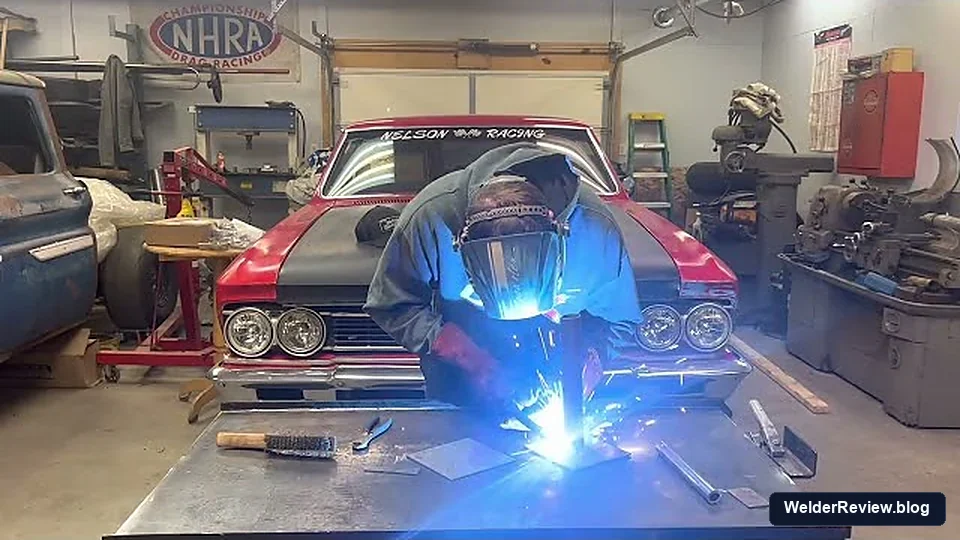
Conversely, the Miller competitor utilizes modern inverter technology. This distinct internal architecture drastically reduces overall physical weight while changing how the machine handles input current variations.
When evaluating transformer versus inverter topologies, our Hobart Handler 210 MVP review details its robust multi-voltage transformer design. This adds overall dead weight while increasing resistance against harsh shop environments.
Conversely, the Miller 211 utilizes an advanced inverter power source. This drastically reduces physical weight while improving electrical efficiency during continuous low-voltage aluminum MIG welding operations.
- Transformer architecture offers proven long-term reliability under harsh workshop conditions.
- Inverter technology optimizes electrical efficiency during heavy continuous welding tasks.
- Chassis weight differs by nearly twenty pounds between these two specific models.
- Hobart transformer weight profile reaches approximately seventy-nine pounds.
- Miller inverter chassis cuts total mass down to thirty-eight pounds.
Transformer Versus Inverter Power Delivery
Transformer machines deliver a very forgiving arc profile when fitting up imperfect joints. They absorb line voltage fluctuations naturally without complex electronic compensation circuits failing.
Inverter units provide precise digital control over the welding arc parameters. Operators experience less spatter and cleaner puddle control on thin gauge materials.
- Traditional taps provide discrete voltage steps for predictable output settings.
- Inverter control boards allow infinitely variable fine-tuning of voltage.
Digital Footprints and Technological Integration
Modern welding equipment integrates digital monitoring to track operational metrics and optimize performance. A digital footprint in this context refers to how internal processors manage power draw and thermal cycles.
The Miller unit features advanced digital displays that actively track wire feed speed and voltage parameters. Hobart keeps things strictly analog, utilizing mechanical switches for maximum simplicity.
Modern fabrication requires precise parameter control, making interface design critical for daily throughput. The Miller 211 integrates Auto-Set Elite technology, allowing operators to dial in exact material thicknesses effortlessly.
Meanwhile, as highlighted in our Hobart Handler 210 MVP review, the machine maintains a traditional analog infinitely adjustable voltage control panel. This setup demands manual chart referencing but offers tactile reliability.
- Digital microprocessors enhance arc start reliability on aluminum setups.
- Analog controls eliminate vulnerable circuit boards exposed to heavy metal dust.
- Software integration simplifies parameter selection for less experienced operators.
- Digital microprocessors manage arc stability during rapid voltage fluctuations.
- Analog potentiometers resist dust accumulation inside heavy industrial settings.
Evaluating Control Interface Complexity
Complex digital interfaces require careful handling in dirty fabrication environments. Fine electronic components demand cleaner workspaces to prevent premature failure from conductive debris.
Simple rotary dials and mechanical tap switches offer rugged reliability on job sites. Welders working outdoors prefer mechanical simplicity over digital screens.
- Rotary switches resist moisture and metal dust ingress effectively.
- Digital screens provide precise numerical feedback during critical welds.
Active and Passive Cooling Components
Thermal management dictates how long a machine can weld before hitting duty cycle limits. Active cooling systems utilize thermostatically controlled fans that run only when internal temperatures demand airflow.
Passive and semi-active configurations manage heat dissipation through heavy aluminum heat sinks and continuous cabinet venting. Both machines protect internal transformers from thermal overload during extended fabrication sessions.
Thermal management directly dictates duty cycle endurance under heavy workshop loads. As detailed in our Hobart 210 mig welder review, the unit depends on a large internal cooling fan paired with massive aluminum heat sinks.
The Miller counterpart deploys Fan-On-Demand technology, which activates only when internal temperatures require forced airflow. This significantly minimizes the ingestion of grinding dust and metal shavings.
- Fan-on-demand technology reduces internal dust accumulation inside the cabinet.
- Continuous airflow designs prevent localized hot spots during heavy output.
- Continuous airflow prevents premature transformer insulation breakdown during extended welding passes.
- Reduced dust ingestion extends overall circuit board lifespan in dirty fabrication shops.
Thermal Duty Cycle Management
Operating these units near their maximum amperage requires careful duty cycle awareness. Exceeding rated thresholds triggers internal thermal protection breakers instantly.
Adequate cooling ensures consistent wire feed performance and prevents premature motor wear inside the drive compartment.
- Thermal switches automatically reset after the unit cools down safely.
- Continuous high-output welding demands proper ambient shop ventilation.
Physical Dimensions and Shop Footprint Formations
Shop floor space remains a premium commodity for professional fabrication businesses and hobbyists alike. The machine footprint determines how easily you can maneuver the welder around tight workspaces.
Compact inverter housings save valuable bench space and fit easily beneath standard welding carts. Heavier transformer models demand dedicated floor space and sturdier transport wheels.
Floor space and benchtop real estate dictate daily workflow efficiency in cramped mobile service trucks. Measuring compact dimensions, the Miller 211 optimizes tight workspace integration without sacrificing internal component accessibility.
The Hobart 210 MVP demands a slightly larger footprint due to its heavy-duty copper winding assemblies. Welders must reinforce mounting surfaces to safely support the concentrated static load.
- Lighter chassis designs improve transportability for mobile repair technicians.
- Balanced carrying handles reduce fatigue when loading equipment into service trucks.
- Compact cabinet designs fit easily beneath standard welding cart shelves.
- Robust structural framing absorbs severe road vibration during mobile repair transit.
Optimizing Mobile Workshop Layouts
Mobile service vehicles benefit greatly from lightweight, space-saving welding equipment configurations. Securing a heavy transformer requires heavy-duty tie-down points to prevent transit damage.
Compact footprints allow technicians to pack additional gas cylinders and toolboxes securely inside service van compartments.
- Compact units integrate seamlessly onto standard dual-cylinder utility carts.
- Reduced weight minimizes suspension wear on dedicated mobile repair vehicles.
Inspection Protocols and Footprint Minimization
Routine maintenance ensures consistent wire feed performance and stable electrical conductivity over years of service. Establishing clear inspection protocols prevents unexpected equipment downtime during critical project deadlines.
Operators should regularly inspect drive rolls, contact tips, and liner conditions for wear. Minimizing electrical resistance through clean connections preserves peak output efficiency.
Preventative maintenance schedules ensure compliance with OSHA electrical safety mandates across commercial facilities. Technicians must regularly inspect internal drive rolls for excessive groove wear using precision calipers.
Minimizing operational footprints also involves organizing torch leads and ground cables securely. Proper cable management prevents accidental insulation cuts and dangerous short-circuit hazard conditions.
- Clean drive rolls prevent wire slippage and erratic arc behavior.
- Inspect power cords monthly for cuts, abrasions, and terminal corrosion.
- Blow out internal dust deposits using compressed air periodically.
- Calibrate wire feed tension quarterly to prevent bird-nesting malfunctions.
- Clean copper contact tips routinely to maintain optimal arc transfer.
Preventative Maintenance Checklists
Implementing structured maintenance schedules extends the operating lifespan of valuable shop equipment significantly. Check gas solenoids and torch trigger switches for reliable mechanical operation.
Lubricate drive gear assemblies according to manufacturer specifications to ensure smooth wire feeding performance.
- Replace worn contact tips before arc instability ruins your weld puddle.
- Check ground clamp connections to eliminate intermittent arc dropouts.
Real-World Fabrication Performance Trade-Offs
Comparing real-world welding capabilities highlights distinct advantages for different types of fabrication projects. The arc stability on thin sheet metal differs noticeably between these two machines.
Thick plate fabrication demands deep penetration profiles that challenge standard portable power sources. Both units handle general repair tasks effectively when matched with correct shielding gases.
Choosing between these units involves balancing initial capital layout against long-term production demands. The Hobart delivers exceptional durability when tackling thick structural steel repairs on agricultural equipment.
Alternatively, as noted in our Miller Syncrowave 210 review, the brand excels when executing fine automotive sheet metal fabrication using 0.023-inch wire. Its smooth arc characteristics virtually eliminate burn-through issues on thin panels.
- Multi-voltage plugs allow seamless switching between household and industrial circuits.
- Aluminum spool gun compatibility expands versatility for marine repair tasks.
- Flux-cored wire performance excels in windy outdoor installation environments.
- Transformer designs endure high-amperage spikes during heavy plate fabrication.
- Inverter circuits provide superior arc control for thin gauge metals.
Material Thickness and Joint Fit-Up
Welding thick steel requires proper bevel preparation and multi-pass techniques regardless of machine selection. These units excel on standard material thicknesses found in typical fabrication shops.
Precise voltage control prevents burn-through when joining thin automotive body panels during restoration work.
- Multi-pass welding ensures structural integrity on heavy plate joints.
- Proper wire selection dictates overall weld bead appearance and strength.
Comprehensive Buyer Fit and Final Selection
Selecting the ideal welding machine depends on your specific workshop environment and project requirements. Budget considerations and portability needs often tip the scale toward one specific model.
Assess your typical material thicknesses and power supply availability before making a final purchasing decision. Both options deliver exceptional value within their respective design categories.
Selecting the correct multi-voltage mig welder depends heavily on your specific mobile or stationary fabrication requirements. Professional contractors prioritizing portability will appreciate the lightweight inverter engineering found exclusively in the Miller.
Conversely, fabrication shops seeking bulletproof transformer simplicity will find exceptional value within the Hobart ecosystem. Evaluate your daily duty cycle needs against available shop power before finalizing any purchase.
- Choose heavy-duty transformer designs for stationary farm and ranch repairs.
- Select advanced inverter units for mobile fabrication and delicate sheet metal work.
- Evaluate local service center availability for long-term ownership peace of mind.
- Assess maximum material thickness requirements before choosing your ideal power source.
- Verify input breaker amperages to ensure safe dual-voltage operation.
Making Your Ultimate Shop Investment
Investing in quality welding equipment pays dividends through years of reliable, trouble-free operation. Match your machine selection directly to your most frequent fabrication challenges.
Consult experienced fabricators and review technical specification sheets to confirm your choice meets all safety and performance standards.
- Prioritize arc performance for your specific primary material types.
- Ensure adequate input power availability in your primary workspace.
Frequently Asked Questions
Can both welders operate on standard household electrical circuits?
Yes, both machines feature multi-voltage plug systems that switch easily between standard household outlets and industrial power sources. This allows convenient operation in residential workshops and remote job sites.
Which model is better suited for mobile repair technicians?
The Miller 211 is better suited for mobile work due to its significantly lighter inverter chassis. Transporting the unit inside service vehicles requires less effort and saves valuable payload capacity.
Do these MIG welders support spool gun attachments for aluminum?
Both welding machines offer direct plug-in compatibility for optional spool gun attachments. This capability allows operators to weld aluminum sheet metal without experiencing wire feeding birdnests.
How do their duty cycles compare during extended fabrication sessions?
Both units offer comparable duty cycles suitable for light to medium fabrication work. However, the inverter model maintains slightly better efficiency during maximum output operations.
Which machine offers easier setup for beginner fabricators?
The Miller 211 provides easier setup via digital auto-set features that recommend parameters. Beginners can achieve optimal settings quickly without guessing correct voltage and wire speed combinations.