Hobart 140 vs Lincoln 140: Technical Showdown
When evaluating entry-level 120V MIG welders, comparing internal build quality and wire drive systems reveals distinct operational advantages. Both machines dominate light fabrication tasks using standard household circuits.

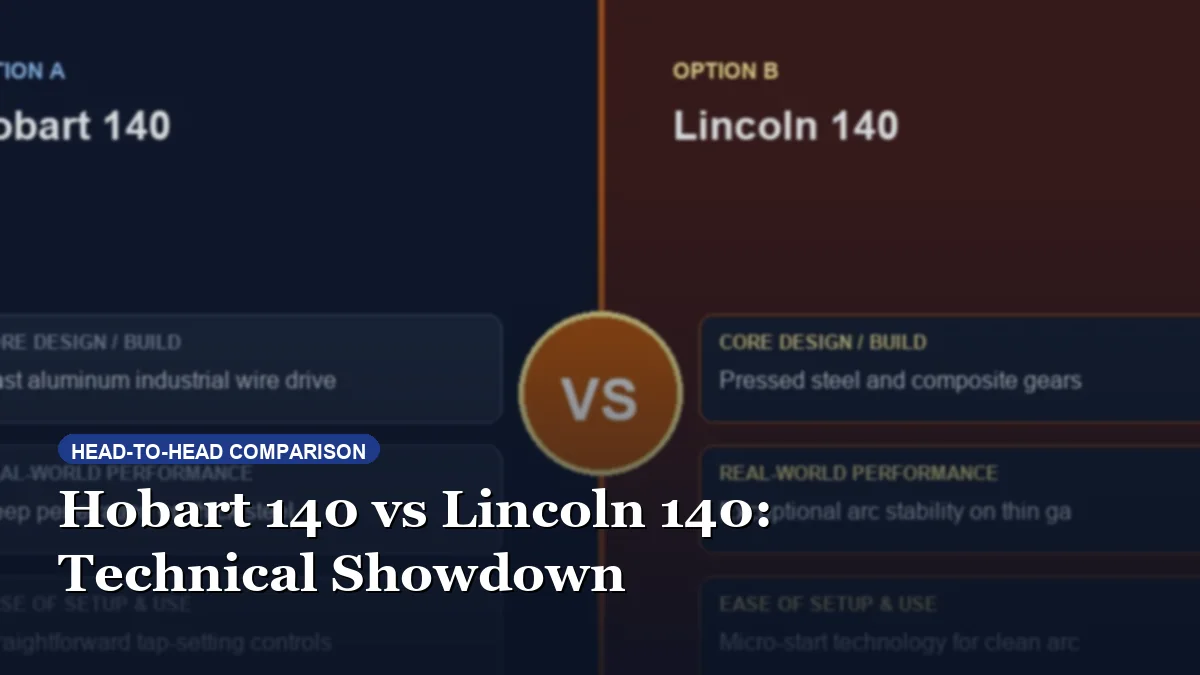
Choose the Hobart 140 for its rugged cast aluminum drive assembly and industrial heritage. Select the Lincoln 140 if you prioritize fine voltage tuning and smoother arc starts on thin sheet metal.
Compare all top models in our Best Welder: Top Home Shop & Jobsite Picks Tested.
Side-by-Side Breakdown
| Criteria | Hobart 140 | Lincoln 140 | Edge |
|---|---|---|---|
| Core Design / Build | Cast aluminum industrial wire drive | Pressed steel and composite gears | Hobart 140 |
| Real-World Performance | Deep penetration on thick steel | Exceptional arc stability on thin gauge | Split |
| Ease of Setup & Use | Straightforward tap-setting controls | Micro-start technology for clean arcs | Lincoln 140 |
| Durability & Reliability | Heavy-duty internal transformer winding | Robust thermal overload protection | Hobart 140 |
| Efficiency / Operating Footprint | Standard 20A 120V input draw | Optimized power factor correction | Lincoln 140 |
| Maintenance Requirements | Accessible drive rolls and standard tips | Readily available replacement liners | Tie |
| Best Ideal Use Case | Automotive bodywork and farm repairs | Sheet metal fabrication and hobbyists | Hobart 140 |
Core Design and Engineering Differences
When choosing a reliable 120V MIG welder for your shop, both competing models offer exceptional performance. Each machine operates on standard household power circuits while delivering dependable arc stability across common carbon steel joints.
Professional fabricators frequently debate these two industry heavyweights for light fabrication tasks. Understanding their internal mechanisms, wire feed systems, and duty cycles ensures you invest in the correct welding equipment for your workspace.
Engineering philosophies differ noticeably between these manufacturers regarding housing durability and electrical component selection. Examining structural housing materials reveals distinct approaches to heavy-duty workshop environments and mobile repair applications.
Examining internal architectures reveals distinct transformer designs built for standard 120V input power. Both units utilize robust copper and aluminum windings engineered to handle fluctuating residential line voltages during demanding fabrication sessions.
Structural housing construction relies on stamped steel panels protecting internal rectifiers. Check details inside our lincoln weld pak 140 hd review highlighting the compact, portable footprint and frame.
Cooling efficiency depends heavily on internal fan placement and louver positioning. Engineers implemented continuous-run fans in both machines to actively pull ambient air across critical diode bridges, preventing premature thermal overload shutdown.
- Heavy-gauge steel cabinet construction protects internal transformers.
- Optimized cooling fan placement prevents premature thermal shutdown.
- Isolated wire compartment keeps shielding gas lines secure.
Transformer and Power Distribution
Internal copper windings dictate how efficiently each machine converts incoming alternating current into usable direct current. Robust transformer design ensures consistent bead profiles even during voltage drops on long extension cords.
Selecting appropriate input breakers prevents nuisance tripping during extended welding sessions at maximum output settings. Always verify your shop circuit supports the maximum amperage draw specified by the manufacturer.
- Direct current output minimizes spatter on carbon steel.
- Balanced inductance delivers a crisp, controlled arc.
Real-World Performance and Arc Quality
Evaluating actual welding output requires testing bead tie-ins, penetration depth, and puddle wet-out on varying thicknesses. Both units excel on quarter-inch plate when properly prepped, but subtle differences emerge during delicate sheet metal fabrication.
Arc initiation characteristics dictate how easily operators establish a stable puddle without excessive stubbing or burn-through. Fine-tuning voltage increments allows fabricators to dial in parameters for optimal puddle control instantly.
Spatter levels remain remarkably low on both platforms when utilizing proper shielding gas mixtures like argon and carbon dioxide blends. Maintaining proper contact tip distance further enhances overall weld bead appearance and structural integrity.
Arc stability at lower amperage taps determines how well these 140-amp welders handle thin automotive sheet metal. Voltage tuning steps allow precise heat input adjustments to prevent burn-through on 24-gauge steel panels.
When transferring metal in short-circuit MIG mode, bead profiles rely on smooth inductance tuning. You can read our hobart handler 140 mig welder review to see how its softer, buttery arc performs.
Operating on standard household circuits limits maximum output, making arc ignition reliability paramount. Both machines strike consistently when paired with clean parent material and properly sized 0.030-inch solid wire.
- Smooth arc characteristics reduce post-weld cleanup time.
- Consistent voltage output prevents erratic wire stubbing.
- Reliable puddle wet-out ensures strong structural fusion.
Thin Gauge Sheet Metal Behavior
Welding automotive body panels demands precise heat input management to prevent destructive warping and burn-through. Lower voltage taps allow fabricators to bridge gaps effortlessly on rusted or mismatched sheet metal joints.
Using smaller diameter solid wire paired with 100 percent shielding gas creates a flatter bead profile. This technique minimizes grinding requirements during final autobody restoration and panel replacement projects.
- Low-end amperage control prevents sheet metal distortion.
- Stable short-circuit transfer mode minimizes spatter.
Wire Drive Systems and Feeding Precision
A dependable wire drive mechanism prevents bird-nesting and ensures consistent wire delivery through the welding gun liner. Industrial-grade drive rolls feature dual-groove designs that accommodate multiple wire diameters without frequent component swaps.
Tension adjustment knobs must apply even pressure against the drive roll to prevent crushing soft aluminum or flux-cored wires. Proper tension calibration directly impacts arc stability and eliminates erratic wire feed stutter.
Quick-release mechanisms simplify spool changes, saving valuable time in production environments where efficiency dictates profitability. Inspecting drive gears regularly prevents premature wear and maintains consistent wire feed speed.
Consistent wire delivery directly impacts weld bead uniformity and prevents frustrating bird-nesting issues. Each welder features an enclosed cast-aluminum drive mechanism equipped with a knurled tension arm for precise pressure adjustments.
Drive roll interchangeability allows operators to switch seamlessly between solid shielding-gas wires and flux-cored alternatives. Reversible lower drive rolls feature dual-sized grooves designed for 0.023 to 0.035-inch diameters.
Maintaining proper tension prevents wire deformation as filler material passes through the torch liner. Operators should regularly inspect the brass inlet guides and drive gear teeth to ensure smooth wire feeding.
- Cast aluminum housings resist impact damage in busy shops.
- Dual-groove drive rolls simplify wire size transitions.
- Adjustable spring tension prevents wire crushing.
Gun Liner Maintenance and Compatibility
Standard MIG guns utilize replaceable liners that guide the electrode from the drive assembly to the contact tip. Keeping liners clean of debris prevents friction buildup and ensures smooth wire feeding during long runs.
Upgrading to high-performance liners reduces drag when pushing aluminum or stainless steel wires. Read our detailed hobart 140 review explaining how routine tip inspections guarantee uninterrupted shielding gas coverage.
- Standard consumable compatibility lowers operating costs.
- Quick-connect guns allow rapid maintenance turnaround.
Duty Cycle and Thermal Protection Limits
Duty cycle ratings determine how long you can weld continuously before the internal transformer requires a cooling period. Operating these compact machines beyond their rated threshold triggers automatic thermal overload switches for component safety.
Ambient shop temperatures significantly influence effective duty cycle performance during heavy fabrication projects involving thick steel plates. Adequate ventilation around cooling louvers prevents heat buildup inside the primary cabinet enclosure.
Monitoring thermal indicators prevents catastrophic component failure and extends the operational lifespan of rectifier diodes. Professional operators always respect specified duty cycle limitations to maintain reliable equipment longevity.
Operating at a standard 20% duty cycle means the machine welds continuously for two minutes before requiring eight minutes of cooling. Pushing past this threshold triggers automatic thermal breakers to protect internal transformers.
Ambient shop temperatures significantly influence how quickly these compact welders reach their maximum thermal capacity. Working in hot environments demands frequent pauses to maintain safe operating temperatures for the internal rectifier diodes.
Monitoring your welding pace prevents unexpected work stoppages during large fabrication projects. Respecting manufacturer duty cycle limits preserves equipment longevity and ensures consistent weld penetration on structural steel joints.
- Automatic reset switches protect internal rectifiers safely.
- Forced-air cooling fans dissipate internal transformer heat.
- Clear thermal indicators warn operators of overheating.
Managing Heat Buildup in Small Shops
Confined workspaces restrict airflow and trap ambient heat near welding equipment during intensive fabrication schedules. Positioning portable fans around your workstation helps maintain safe operating temperatures for continuous output.
Splitting large fabrication tasks into manageable segments naturally accommodates restrictive duty cycle boundaries without sacrificing overall structural quality or weld penetration depth.
- Strategic work pacing avoids thermal shutdowns.
- External cooling fans improve machine efficiency.
Setup, Usability, and Ergonomic Controls
Intuitive control panels reduce learning curves for novice fabricators stepping up to professional-grade welding equipment. Clearly labeled voltage selectors and wire speed dials allow rapid parameter adjustments based on material thickness charts.
Polarity changeover stations located inside the wire compartment simplify switching between gas-shielded MIG and flux-cored welding processes. Secure terminal connections prevent voltage drops and electrical resistance during high-amperage draws.
Ergonomic gun handles reduce operator fatigue during extended overhead or out-of-position fabrication tasks. Balanced weight distribution makes moving these portable machines around the shop floor effortless and safe.
Control panel layouts utilize straightforward polarity changeover points secured behind the main wire compartment door. Clear parameter charts guide users toward optimal voltage settings based on metal thickness measurements.
Gun ergonomics play a vital role in reducing operator fatigue during prolonged overhead or vertical welding passes. Lightweight gun assemblies feature flexible coaxial cables and comfortable contoured handle grips.
Ground clamp quality often dictates electrical circuit efficiency and arc starting reliability. Upgrading to heavy-duty cast brass clamps ensures a secure connection to dirty or painted work surfaces.
- Color-coded parameter charts speed up joint setup.
- Internal polarity changes require no specialized tools.
- Ergonomic torch handles minimize wrist fatigue.
Parameter Tuning and Voltage Taps
Stepped voltage control knobs provide distinct, repeatable settings that eliminate guesswork when duplicating successful weld procedures. This fixed-tap approach ensures electrical stability across all available power output ranges.
Matching wire feed speed precisely to selected voltage taps creates the ideal crisp frying-bacon sound characteristic of proper short-circuit transfer.
- Repeatable tap settings ensure consistent results.
- Simplified controls prevent accidental parameter drift.
Maintenance Requirements and Consumables
Routine upkeep preserves optimal machine performance and prevents unexpected downtime in commercial or hobby workshops. Cleaning spatter accumulation from gas nozzles and contact tips maintains proper shielding gas flow patterns.
Inspecting drive roll grooves for metal shavings prevents wire slippage and erratic feeding during critical welding operations. Keeping internal components free of abrasive grinding dust extends the operating life of electronic switches.
Replacing worn contact tips promptly ensures electrical continuity and prevents erratic arc initiation problems. Stocking common replacement consumables locally minimizes costly delays during active fabrication projects.
Routine upkeep involves blowing out accumulated metal dust from internal components using compressed air. Keeping the cooling paths clear prevents localized overheating and extends the lifespan of the main power transformer.
Consumable inspection should focus on contact tips, gas diffusers, and nozzles for excessive spatter buildup. Replacing worn contact tips maintains proper electrical pickup and prevents erratic wire arc wandering.
Liner maintenance requires periodic cleaning with solvent and compressed air to remove copper shavings. A clean liner reduces friction and guarantees uninterrupted wire feeding during long welding sessions.
- Removable nozzles simplify daily spatter cleaning.
- Standardized consumables reduce inventory costs.
- Protected circuit boards resist conductive dust.
Preventative Care for Long-Term Reliability
Blowing out internal cabinet dust with compressed air every few months prevents electrical tracking across transformer windings. Storing welding machines in dry, temperature-controlled environments protects sensitive internal electronics from corrosive moisture.
Checking ground clamp connections and work cables regularly eliminates high-resistance hotspots that can damage internal terminals.
- Compressed air clears insulating dust deposits.
- Dry storage protects transformers from corrosion.
Choosing the Right Machine for Your Shop
Selecting between these two legendary 120V MIG welders depends on your fabrication priorities. Explore our hobart handler 140 review to evaluate engineering differences and decide which machine suits your budget.
Evaluate your typical material thicknesses, daily usage frequency, and workspace constraints before making a final purchasing decision. Investing in the correct machine ensures years of trouble-free service for all your welding projects.
Consulting peer reviews and hands-on testing guides helps validate your choice against real-world shop conditions and performance expectations. Prioritize build quality and local support when finalizing your workshop equipment upgrade.
Selecting between these two prominent entry-level welders depends heavily on your primary fabrication applications. Automotive restoration specialists often prioritize fine voltage control, while general fix-it shops value maximum penetration depth.
Evaluate your typical workspace power availability before finalizing a purchase decision for home garage use. Dedicated 20-amp household circuits provide enough headroom to operate these machines at their rated maximum output.
Balancing build quality, arc performance, and your specific project demands ensures long-term satisfaction with your investment. Investing time in proper machine setup yields professional results on every welded joint.
- Match machine output to your heaviest common materials.
- Consider portability needs for mobile repair work.
- Verify local warranty support availability.
Final Purchasing Checklist
Confirm your workshop electrical service provides adequate amperage before plugging in high-output 120V MIG systems. Assess whether you need a dedicated shielding gas cylinder setup or plan to run self-shielding flux-cored wire.
Review included accessories like regulators and starter wire spools to calculate your total immediate setup costs accurately.
- Verify household circuit breaker amperage ratings.
- Determine shielding gas requirements for your projects.
Frequently Asked Questions
Can these 120V MIG welders operate on standard household wall outlets?
Yes, both machines plug directly into standard 120V circuits while providing dependable arc stability for everyday workshop fabrication tasks.
What is the maximum steel thickness these compact machines can weld?
Both units handle up to quarter-inch steel plate in single passes when utilizing proper joint preparation and multi-pass techniques.
Do these welders support aluminum wire feeding out of the box?
Out of the box they require spool gun upgrades or specialized liners to feed soft aluminum wire without persistent bird-nesting issues.
How do stepped voltage controls affect daily welding performance?
Stepped voltage taps provide repeatable, fixed settings that eliminate parameter guesswork and ensure consistent electrical output across every job.
Which machine offers better durability for mobile repair work?
Both feature robust steel cabinets, but models featuring heavy-duty cast aluminum drive assemblies offer superior long-term mechanical reliability.