Gasless MIG vs Stick Welders: Head-to-Head Comparison
Choosing between flux-cored wire and shielded metal arc equipment dictates your daily workflow. Understanding operational boundaries ensures you select the optimal process for your specific fabrication tasks.

Choose gasless MIG for rapid sheet metal fabrication and utility projects requiring minimal slag cleanup. Select stick welding for structural steel assembly and outdoor tasks battling heavy wind conditions.
Compare all top models in our Best Welder: Top Home Shop & Jobsite Picks Tested.
Side-by-Side Breakdown
| Criteria | Gasless Mig | Stick | Edge |
|---|---|---|---|
| Core Design / Build | Wire feed mechanism with internal flux compounds | Electrode holder clamping coated metal rods | Gasless Mig |
| Real-World Performance | Excels on thinner carbon steel and quick repairs | Dominates heavy structural joints and dirty metal | Stick |
| Ease of Setup & Use | Requires tension adjustment and tip maintenance | Simple electrode insertion and immediate striking | Stick |
| Durability & Reliability | Internal drive rolls demand periodic cleaning | Rugged transformer designs withstand harsh sites | Stick |
| Efficiency / Operating Footprint | Continuous wire feed minimizes starting stops | Frequent electrode changes reduce overall duty cycle | Gasless Mig |
| Maintenance Requirements | Regular liner replacements and contact tip swaps | Minimal upkeep beyond stinger jaw replacements | Stick |
| Best Ideal Use Case | Farm repairs and automotive sheet metal work | Heavy equipment repair and construction framing | Stick |
Core Engineering Principles and Arc Mechanics
Gasless MIG relies on a continuous tubular wire containing internal flux compounds. This self-shielded process generates its own gaseous envelope to protect the molten weld pool from atmospheric contamination during fabrication.
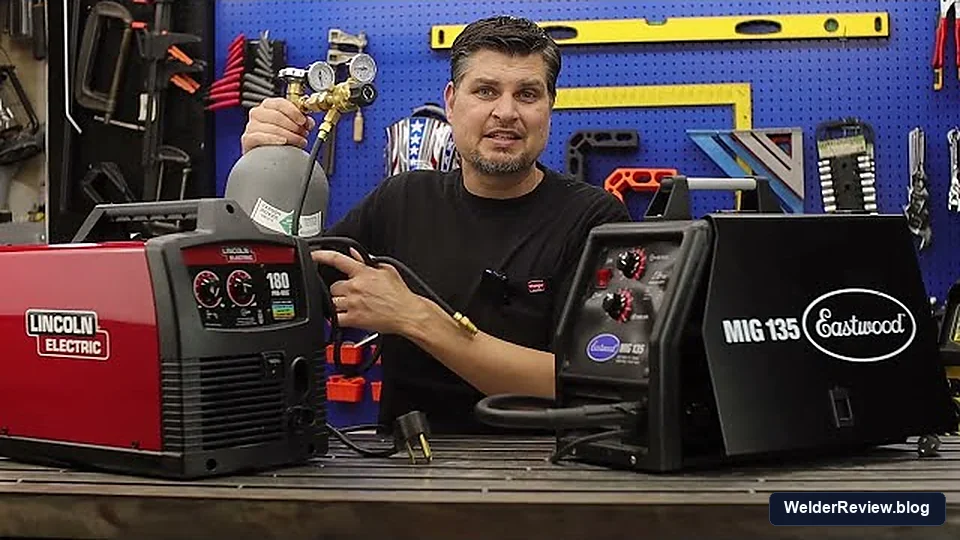
Stick welding utilizes a consumable electrode coated in flux materials. An electric arc creates intense heat, melting both the metal core and the flux coating to produce a protective slag layer.
Engineering differences dictate how each machine handles joint preparation, heat input, and penetration profiles across standard carbon steel plates used in everyday workshop environments and remote job sites.
- Self-shielded flux-cored wire eliminates external gas cylinders entirely.
- Coated stick electrodes generate heavy protective slag coverings.
- Both processes require direct current electrode positive polarity configurations.
Voltage and Amperage Dynamics
Operating parameters dictate penetration depth and bead profile stability across varying metal thicknesses. Selecting the right consumable from our best wire for gasless mig welder lineup ensures optimal bead profile stability.
Stick welders provide higher open-circuit voltages necessary to initiate and maintain stable arcs across rusty surfaces. This electrical characteristic ensures reliable fusion on thick structural steel components.
- Constant voltage power sources govern wire feed systems.
- Drooping characteristics define reliable stick welding power units.
Setup Procedures and Initial Workflow Ergonomics
Preparing equipment like the models found in our best beginner mig welders guide involves loading spools, adjusting drive roll tension, and feeding wire smoothly to prevent bird-nesting during operation.
Stick welding setup requires minimal preparation beyond inserting a chosen electrode into the stinger clamp. Operators simply strike an arc against the workpiece like lighting a match.
Ergonomic factors influence fatigue levels during extended fabrication sessions, making quick adjustments essential for maintaining consistent weld quality across demanding industrial production schedules.
- Drive tension adjustments prevent wire feeding jams.
- Electrode changes take seconds during continuous fabrication.
- Torch weight influences wrist fatigue over long hours.
Consumable Handling and Storage
Flux-cored wire spools must be stored in dry environments to prevent moisture absorption within the internal flux powder. Wet wire causes excessive spatter and porous weld beads.
Stick electrodes demand strict moisture control, often requiring specialized rod ovens to eliminate humidity. Damp low-hydrogen electrodes cause severe cracking in structural weldments.
- Moisture absorption ruins flux-cored wire integrity.
- Coated electrodes need dry storage container upkeep.
Material Compatibility and Joint Penetration
Gasless MIG excels on light to medium gauge carbon steel projects found in automotive repair and farm maintenance. The concentrated arc delivers adequate penetration without blowing through thin sheets.
Stick welding dominates heavy plate fabrication where deep root penetration is mandatory for structural integrity. It easily bridges gaps caused by poor fit-up or distorted metal edges.
Choosing the correct process depends heavily on base metal thickness and joint design requirements specified by structural engineering blueprints and standard welding codes.
- Thin sheet metal favors flux-cored wire setups.
- Heavy structural plates require robust stick electrodes.
- Gap bridging ability favors shielded metal arc methods.
Handling Contaminated and Rusty Surfaces
Welding outdoors or on rusty farm equipment presents unique surface contamination challenges. Stick welding handles mill scale and rust far better than gasless MIG processes.
Flux-cored wire requires relatively clean joint surfaces to avoid excessive porosity and poor arc stability, making preliminary angle grinding an essential preparatory step.
- Rust tolerance is exceptionally high with stick electrodes.
- Surface preparation remains critical for gasless wire.
Environmental Adaptability and Site Conditions
Windy outdoor environments quickly blow away shielding gases used in standard MIG, but self-shielded flux-cored wire resists breezes moderately well due to its internal gas generation.
Stick welding remains the undisputed king of field repairs in extreme weather, unaffected by moderate winds because the heavy slag and gas shield protect the molten puddle.
Job site conditions dictate equipment portability and weather resistance, requiring operators to evaluate ambient temperature, moisture exposure, and available power sources before starting work.
- Self-shielded wire tolerates mild outdoor breezes.
- Stick welding ignores severe wind interference completely.
- Weather extremes demand rugged inverter power sources.
Portability and Generator Power Requirements
Both machine types offer portable options running on standard engine-driven generators. Gasless MIG setups require stable voltage regulation to prevent erratic wire feed speeds.
Stick welders tolerate fluctuating generator outputs much better due to their tolerant drooping arc characteristics, ensuring reliable performance in remote field locations.
- Generator compatibility favors robust stick machines.
- Inverter technology reduces overall equipment weight.
Post-Weld Cleanup and Finishing Operations
Finishing time significantly impacts overall project efficiency in professional fabrication shops. Gasless MIG produces a light powdery slag layer that brushes away easily.
Stick welding leaves a heavy, hardened slag coating that requires aggressive chipping hammer strikes and wire brushing to reveal the underlying weld bead.
Minimizing cleanup hours allows fabricators to increase daily output, making process selection a crucial factor in project turnaround times and labor cost management.
- Powdery flux residue simplifies gasless MIG cleanup.
- Heavy slag removal demands dedicated chipping tools.
- Spatter levels require mechanical grinding in both processes.
Spatter Control and Surface Appearance
Flux-cored welding naturally generates more spatter than gas-shielded processes, requiring anti-spatter spray to protect surrounding base metal surfaces from stubborn adherence.
Stick welding also produces spatter, but expert rod angle control and proper arc length keep cleanup manageable on finished architectural components.
- Anti-spatter sprays protect adjacent metal surfaces.
- Proper arc length reduces molten droplet expulsion.
Maintenance Protocols and Long-Term Durability
Keeping welding equipment in peak operating condition prevents costly downtime on active job sites. Gasless MIG machines require regular inspection of drive rolls, contact tips, and torch liners.
Stick welders feature fewer moving parts, resulting in exceptional long-term reliability with minimal maintenance beyond occasional internal dust removal and cable inspections.
Evaluating routine upkeep requirements helps workshops budget time and replacement parts effectively, ensuring uninterrupted service life from capital equipment investments.
- Drive rolls need periodic wire debris cleaning.
- Torch liners prevent erratic wire feeding issues.
- Stinger cables require secure mechanical connections.
Consumable Wear and Replacement Costs
Contact tips and nozzles wear out frequently during high-amperage sessions using models featured in our best gasless mig welder guide, demanding constant inventory management by shop supervisors.
Stick electrode holders and ground clamps experience mechanical wear, but the electrodes themselves are entirely consumed during normal operation.
- Contact tips require frequent operational inspection.
- Electrode holders endure heavy job site abuse.
Operator Skill Curve and Training Investment
Mastering either welding process requires dedicated practice and understanding of metal metallurgy. Options highlighted in our best gasless mig welder for beginners review offer a shorter learning curve due to trigger-controlled wire feeds.
Stick welding demands precise hand-eye coordination to maintain exact arc length as the electrode burns down, making proper technique crucial for sound joint fusion.
Training personnel efficiently ensures high production standards and reduces the frequency of weld defects on critical structural fabrication projects.
- Trigger control simplifies gasless MIG learning.
- Arc length maintenance challenges stick welding novices.
- Proper travel speed prevents lack of fusion.
Safety Standards and Personal Protection
Welding safety remains paramount across all fabrication environments. Operators must wear auto-darkening helmets, leather gloves, and flame-resistant jackets to prevent ultraviolet burns.
Proper ventilation is mandatory when burning flux-cored wire or coated electrodes to avoid inhaling hazardous metal fumes produced during the welding arc reaction.
- Fume extraction protects welder respiratory health.
- Leather protective gear prevents severe UV burns.
Frequently Asked Questions
Can gasless MIG weld outdoors in windy weather?
Yes, self-shielded flux-cored wire resists moderate wind interference successfully. This capability makes gasless MIG a reliable choice for field repairs.
Is stick welding better for thick rusty steel?
Stick welding penetrates heavy rust and mill scale exceptionally well. The powerful arc and flux coating make stick machines ideal for old repairs.
Which process requires less post-weld cleanup?
Gasless MIG produces a lighter slag that brushes away easily. This leaves cleaner surfaces with significantly less chipping hammer effort required.
Do I need shielding gas for flux-cored wire?
No external gas cylinder is required for gasless setups. The tubular wire contains internal flux compounds that create their own protective shield.
Which welder is easier for absolute beginners to learn?
Gasless MIG offers a much shorter learning curve for new operators. Trigger-controlled wire feed helps novice welders achieve consistent results quickly.