Flux Core vs Stick For Beginner: Concise Verdict
Choosing between wire feed systems and shielded metal arc welding requires analyzing your workspace. Beginners must balance arc stability against operational complexity for clean structural welds.


Select flux core if you prioritize continuous wire feed and minimal slag cleanup in garage settings. Choose stick welding when tackling rusty outdoor metals that demand deep structural penetration.
Compare all top models in our Best Welder: Top Home Shop & Jobsite Picks Tested.
Side-by-Side Breakdown
| Criteria | Flux Core | Stick For Beginner | Edge |
|---|---|---|---|
| Core Design / Build | Motorized drive roll continuous wire feed | Manual electrode holder with flux-coated rods | Flux Core |
| Real-World Performance | Smooth indoor beads with minor spatter | Aggressive penetration on thick, dirty steel | Stick For Beginner |
| Ease of Setup & Use | Simple wire tension and speed adjustments | Requires mastering arc striking techniques | Flux Core |
| Durability & Reliability | Sensitive to drive roll wear over time | Robust internal transformers endure harsh conditions | Stick For Beginner |
| Efficiency / Operating Footprint | Compact units ideal for small home shops | Heavy-duty machines needing solid electrical supply | Flux Core |
| Maintenance Requirements | Regular contact tip and liner cleaning needed | Moisture-controlled rod storage and cable checks | Flux Core |
| Best Ideal Use Case | Automotive sheet metal and garage projects | Outdoor farm repairs and heavy structural steel | Stick For Beginner |
Consumer Profiles and Help Topics
New operators often browse help topics to understand basic machine requirements before making a purchase. Evaluating your project scope ensures you choose a process matching your exact power supply limits.
Everyday consumers need approachable equipment that minimizes setup friction during initial assembly. Understanding foundational differences prevents costly mistakes when selecting your first welding machine for home garage projects.
Establishing clear operational expectations prevents frustration when learning complex fabrication techniques. Reviewing manufacturer manuals thoroughly gives beginners a solid technical foundation before striking their very first arc.
- Reviewing manufacturer documentation thoroughly.
- Checking local electrical panel ratings.
- Assessing workspace ventilation requirements.
Identifying Your Skill Level
Selecting the appropriate flux core wire for beginners helps stabilize the arc during initial practice sessions. New operators frequently struggle with travel speed control until they log sufficient practice hours.
Matching your equipment to anticipated metal thicknesses guarantees safe operational boundaries. Always verify duty cycle percentages before running continuous beads on heavy structural steel plates.
- Monitoring hand stability during passes.
- Practicing scrap metal joint fit-ups.
Enterprise Standards and Developer Workflows
Industrial enterprises demand rigorous testing protocols to verify structural weld integrity across large fabrication floors. Equipment manufacturers provide specialized documentation for engineering teams overseeing heavy manufacturing operations.
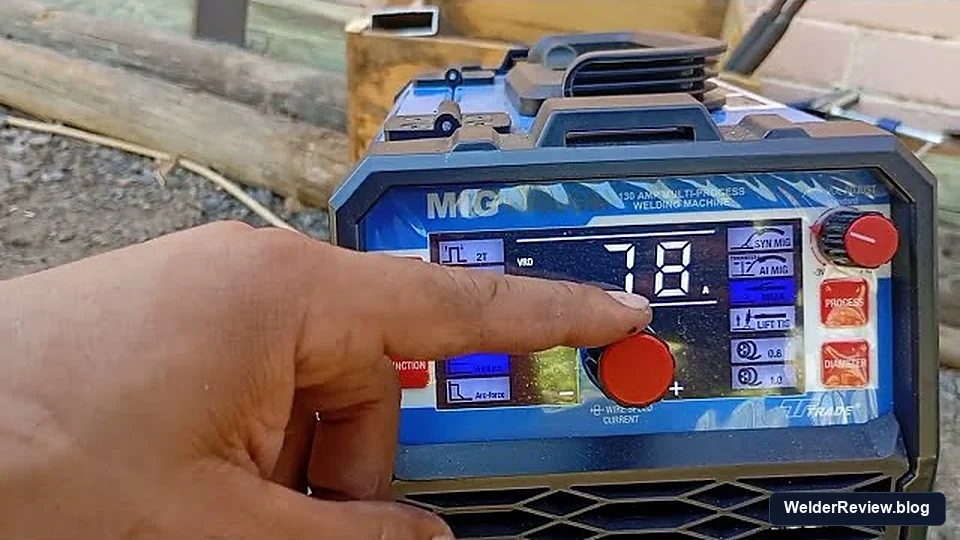
Software developers designing modern smart welding machines integrate digital displays for precise parameter control. These advanced interfaces allow operators to adjust voltage and wire speed with extreme precision.
Standardizing equipment settings across multiple workstations ensures consistent product quality in commercial fabrication facilities. Operators rely on intuitive digital menus to reduce setup errors during production shifts.
- Standardizing digital parameter presets.
- Reviewing enterprise safety compliance guidelines.
- Tracking machine utilization metrics daily.
Integrating Smart Diagnostics
Modern welding power sources feature built-in microprocessors that monitor arc stability in real time. Smart diagnostic tools alert operators immediately if internal components experience thermal overload during extended shifts.
Engineering managers utilize digital logging features to track machine utilization rates across multiple job sites. This data optimizes maintenance schedules and reduces unexpected equipment downtime in commercial environments.
- Real-time voltage drop monitoring.
- Automated firmware update procedures.
Core Feed Mechanics Versus Manual Electrodes
Flux core systems rely on a motorized drive roll mechanism to feed wire smoothly. Novices often start with a reliable beginner flux core welder to master continuous wire feeding techniques.
Stick welding requires maintaining a precise arc length while the coated rod steadily burns down. Beginners often find striking and holding an arc frustrating until muscle memory develops fully.
Controlling feed speed requires understanding how electrical resistance affects the melting rate of the wire. Operators must balance wire feed speed against voltage output to achieve optimal penetration profiles.
- Calibrating drive roll pressure settings.
- Selecting correct contact tip sizes.
- Inspecting welding gun liner integrity.
Understanding Wire Drive Tension
Proper tension on the drive rolls prevents bird-nesting without deforming the tubular flux wire. Operators must inspect drive rolls regularly to ensure smooth, uninterrupted wire feeding during long sessions.
Electrode holders demand secure clamping to prevent electrical resistance heating during high amperage welding. Checking jaw tightness safeguards your equipment from premature thermal wear and operational failure.
- Adjusting tension knobs incrementally.
- Cleaning drive grooves of metallic debris.
Troubleshooting Account Configurations and Diagnostics
Users sometimes wonder what happens when your account is disabled on cloud-connected welding software. Platform access restrictions can temporarily pause access to specialized profile settings and custom parameter libraries.
If access is restricted, you should ask us to restore your account through official support channels. Administrators verify user credentials to ensure that machine configurations remain secure across authorized enterprise networks.
Maintaining active credentials prevents operational lockouts during critical manufacturing deadlines and routine equipment updates. Secure user verification protocols protect proprietary welding procedures from unauthorized industrial access.
- Submitting verification tickets online.
- Updating organizational security credentials.
- Backing up custom welding profiles.
Diagnostic Recovery Steps
To find out why errors occur, review system error codes displayed on the machine interface. Diagnostic logs help technicians pinpoint communication faults between the power source and peripheral devices.
Resolving software glitches quickly minimizes costly fabrication delays on active commercial construction projects. Regular system audits ensure all networked welding units operate at peak diagnostic efficiency.
- Checking network connection status.
- Resetting factory default parameters safely.
Selecting the Right Product Line For Your Shop
When choosing a welding product line, evaluate your primary material types and thickness requirements carefully. Multi-process machines offer incredible versatility for hobbyists expanding their fabrication capabilities over time.
Assessing transformer durability helps you avoid purchasing underpowered equipment that struggles with thicker plate steel. Investing in robust internal components guarantees reliable arc performance across demanding workshop environments.
Matching machine duty cycles to your anticipated workload prevents unexpected thermal shutdowns during critical fabrication runs. Careful equipment selection saves money and enhances long-term workshop productivity significantly.
- Comparing transformer insulation classes.
- Evaluating cooling fan efficiency ratings.
- Checking warranty coverage terms thoroughly.
Power Supply Compatibility
Dual-voltage input capability allows machines to operate on standard household circuits or heavy industrial lines. Finding a reliable flux core welder for home use prevents tripped breakers during extended fabrication sessions.
Dedicated 240V machines deliver deeper penetration for structural projects without overheating internal transformer windings. Match your electrical infrastructure requirements before purchasing any high-amperage welding equipment.
- Verifying plug adapter specifications.
- Calculating total circuit load limits.
Real-World Joint Performance and Duty Cycle Limits
Flux core welding generates a robust arc that easily cuts through mill scale on hot-rolled steel. Choosing a proper beginner flux core welder ensures reliable arc stability and easy slag removal.
Stick welding excels outdoors because the flux coating creates an effective gaseous shield against wind interference. This makes shielded metal arc welding the preferred choice for remote field repairs.
Evaluating joint configuration ensures you select the correct welding process for maximum structural strength. Proper preparation guarantees sound weld metal deposition across challenging carbon steel applications.
- Preparing beveled edge joint grooves.
- Removing heavy mill scale beforehand.
- Cleaning interpass slag thoroughly.
Managing Duty Cycle Restrictions
Duty cycle ratings dictate how many minutes out of ten a machine can weld continuously. Exceeding these thermal limits triggers internal thermal breakers, forcing temporary operational shutdowns for cooling.
Beginners must respect duty cycle boundaries to preserve transformer lifespan and prevent costly internal component failures. Planning breaks between long passes keeps your machine operating at peak thermal efficiency.
- Monitoring transformer temperature indicators.
- Allowing adequate cool-down intervals.
Maintenance Protocols and Consumable Lifespan
Regular maintenance prevents premature equipment failure and ensures consistent arc characteristics during fabrication projects. Cleaning contact tips and nozzle interiors removes spatter buildup that disrupts smooth shielding gas flow.
Stick electrode storage requires climate-controlled environments to prevent moisture absorption in the flux coating. Damp electrodes cause porosity, unstable arcs, and weak structural welds that fail under load testing.
Establishing a routine maintenance checklist keeps your welding equipment operating safely through demanding fabrication cycles. Preventive care protects your financial investment and guarantees dependable workshop performance.
- Inspecting welding cable insulation daily.
- Storing electrodes in heated cabinets.
- Replacing worn contact tips promptly.
Consumable Inspection Routines
Inspecting electrode holders and ground clamps for secure connections minimizes electrical resistance heating. Worn jaws must be replaced immediately to maintain stable current transfer throughout your welding sessions.
Establishing a routine cleaning schedule extends the operational lifespan of your welding machine significantly. Preventive care safeguards your investment and guarantees reliable performance for all future fabrication tasks.
- Checking cable insulation for cracks.
- Tightening internal bus bar connections.
Frequently Asked Questions
Is flux core easier to learn than stick welding for total beginners?
Flux core is generally considered much easier for absolute beginners because it utilizes a continuous motorized wire feed mechanism that completely eliminates the frustrating arc-striking learning curve associated with traditional manual stick electrodes.
Mastering your travel speed becomes your absolute primary focus when establishing clean structural welds without demanding complex manual manipulation techniques.
Can I use flux core welding outdoors on windy job sites?
While flux core wire includes internal shielding agents, heavy wind gusts can still blow away protective gases and cause porous weld defects during outdoor fabrication projects.
For reliable outdoor repairs in windy environments, stick welding remains superior due to its heavy slag coating reliably protecting the hot molten pool.
What electrical requirements do I need for a beginner welder?
Most beginner flux core and stick welders operate efficiently on standard household 120V electrical circuits while handling thin to medium metal thicknesses effortlessly.
If you plan on tackling heavy structural steel plates, upgrading to a dedicated 240V circuit guarantees adequate penetration depth and reliable thermal stability during long sessions.
How do I prevent electrode sticking when learning stick welding?
Preventing electrode sticking requires maintaining a proper arc gap and adjusting your welding machine amperage high enough to sustain continuous combustion.
Beginners should practice striking the metal like a match while keeping consistent hand pressure to completely avoid freezing the rod to your workpiece.
Do I need shielding gas for flux core welding?
Self-shielding flux core wire contains internal chemical compounds that vaporize during the welding process to create a protective gaseous shield.
This means you can weld outdoors without cumbersome gas cylinders, making it a convenient portable option for garage hobbyists and busy field service technicians working everywhere.