Everlast PowerTIG 200DV vs AHP AlphaTIG 200X Comparison
Comparing two leading portable TIG machines reveals distinct advantages for mobile fabrication. Fabricators must weigh dual-voltage flexibility against raw control capabilities.

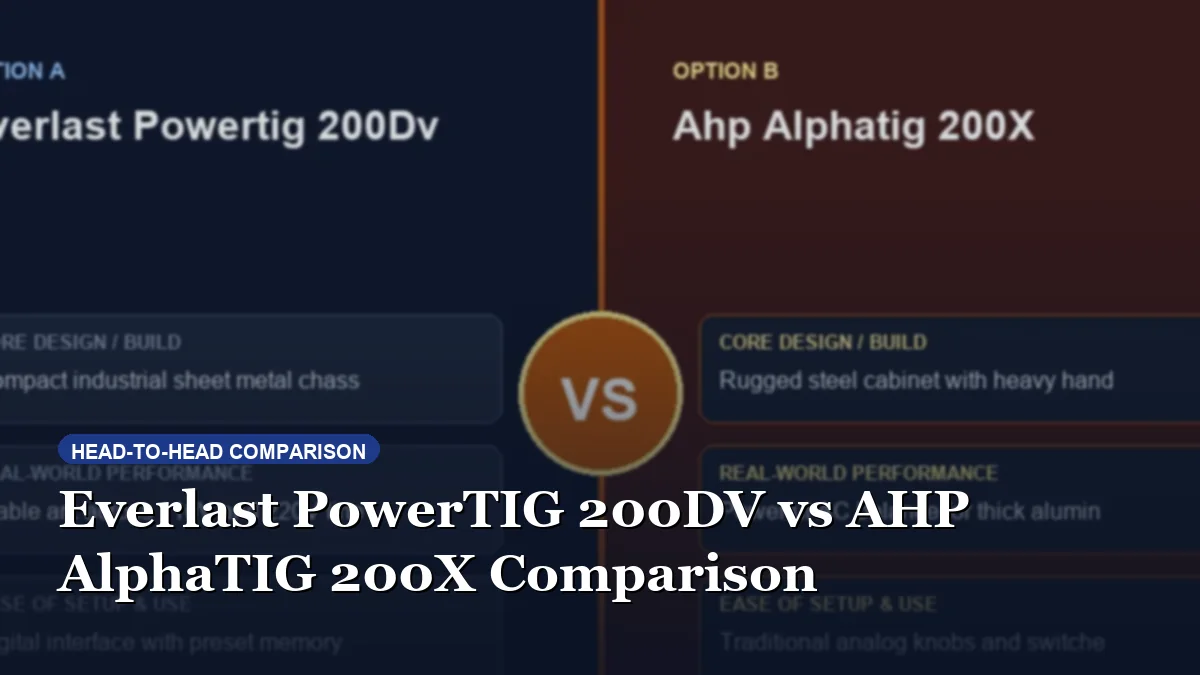
Choose the Everlast PowerTIG 200DV for supreme voltage versatility and advanced pulse controls. Select the AHP AlphaTIG 200X if you need budget-friendly AC/DC aluminum welding performance.
Compare all top models in our Best Welder: Top Home Shop & Jobsite Picks Tested.
Side-by-Side Breakdown
| Criteria | Everlast Powertig 200Dv | Ahp Alphatig 200X | Edge |
|---|---|---|---|
| Core Design / Build | Compact industrial sheet metal chassis | Rugged steel cabinet with heavy handle | Everlast Powertig 200Dv |
| Real-World Performance | Stable arc across 110V and 220V lines | Powerful AC balance for thick aluminum | Ahp Alphatig 200X |
| Ease of Setup & Use | Digital interface with preset memory | Traditional analog knobs and switches | Everlast Powertig 200Dv |
| Durability & Reliability | Advanced IGBT inverter with thermal protection | Proven MOSFET topology with robust cooling | Ahp Alphatig 200X |
| Efficiency / Operating Footprint | High power factor drawing fewer amps | Standard draw requiring dedicated circuits | Everlast Powertig 200Dv |
| Maintenance Requirements | Regular dust clearing and terminal checks | Routine internal inspections of connections | Ahp Alphatig 200X |
| Best Ideal Use Code | Mobile service trucks and precision shops | Garage hobbyists and custom auto fabricators | Everlast Powertig 200Dv |
Input Power Versatility and Voltage Auto-Sensing
As noted in our everlast powertig 200dv review, this machine provides exceptional dual-voltage flexibility for mobile fabricators operating on standard circuits. Selecting the right input line ensures seamless arc ignition without tripping breakers.
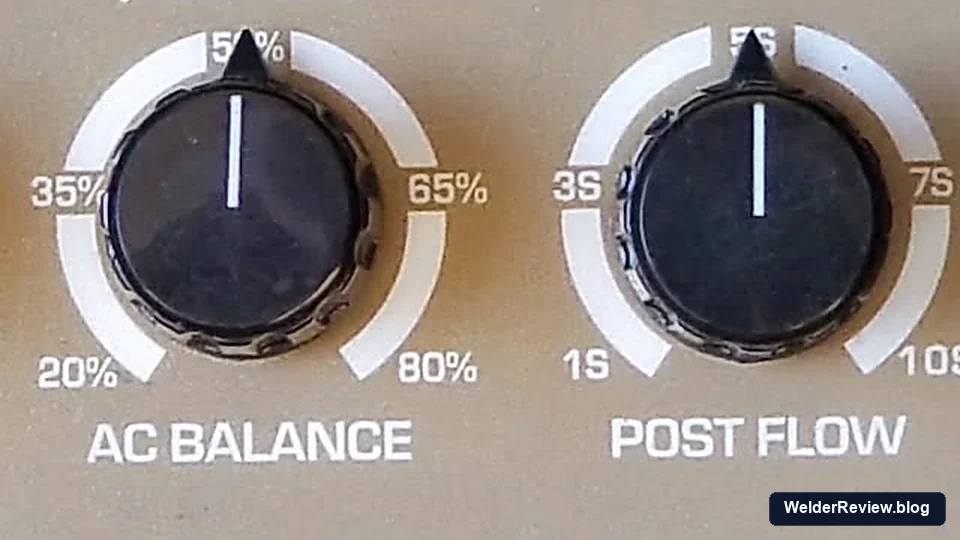
Auto-sensing technology allows the machine to adjust internally when transitioning between 120V and 240V power sources. This eliminates manual jumper changes inside the unit during field service calls.
Conversely, older iterations of rival units required physical rewiring for dual-voltage operation. Modern shop owners demand seamless power adaptation to maintain high productivity across various job sites.
Dual-voltage units require robust circuitry to handle fluctuations smoothly. The Everlast PowerTig 200DV features true dual voltage capability, switching seamlessly between 120V and 240V inputs without manual link bar changes.
Conversely, as detailed in our ahp alphatig 200x review, older revisions relied on manual plug adapters. Modern iterations incorporate basic auto-sensing technology, yet users still report occasional sensitivity on extension cords.
Voltage drop over extended cable runs can trigger under-voltage lockouts. Operating on a dedicated 20-amp breaker ensures both machines deliver maximum rated output without tripping facility breakers during high-frequency arc initiation sequences.
- Automatic detection of 110V and 220V input lines
- Elimination of manual internal terminal rewiring
- Consistent output delivery across fluctuating power grids
Grid Compatibility and Current Draw
Running a high-frequency TIG welder on weak residential circuits often causes breaker faults. The Everlast unit manages current draw efficiently through advanced inverter design.
Operators must still verify breaker amperage ratings before pushing maximum output on 120V lines. Proper circuit planning prevents unexpected shutdowns during critical root passes.
- Reduced inrush current prevents nuisance tripping
- Stable operation on standard 20-amp garage outlets
Arc Stability and High-Frequency Start Performance
High-frequency arc ignition remains critical for preventing tungsten contamination during delicate aluminum and stainless steel welding applications. Both machines utilize HF start modes to initiate the arc cleanly.
The Everlast inverter produces a remarkably crisp arc column that resists wandering even at very low amperage settings. Precision operators benefit greatly from this consistent low-end control.
AHP units deliver robust high-frequency starts that punch through surface oxides on aluminum plate effectively. The resulting puddle wets out smoothly under proper torch manipulation.
High-frequency starts eliminate tungsten contamination by initiating the arc without touching the base metal. The Everlast unit utilizes a crisp, repeatable HF point that establishes instant arcs even on heavily oxidized aluminum surfaces.
As highlighted in our ahp alphatig review, the machine relies on a similar high-frequency board configuration. While generally reliable, point gap adjustments inside the chassis become necessary after thousands of industrial ignition cycles.
Arc stiffness directly influences bead profile consistency during manual TIG welding. Maintaining a stable arc column requires clean shielding gas coverage and precise inverter regulation to prevent wandering arcs across critical structural weld joints.
- Non-contact HF start eliminates tungsten scratching
- Stable low-amperage arc for knife-edge joint prep
- Consistent high-frequency oscillations for instant ignition
Low Amperage Arc Behavior
Striking an arc down at ten amps requires superior inverter programming and clean internal filtering. Thin gauge sheet metal fabrication depends entirely on this low-end stability.
Operators welding automotive body panels will appreciate the refined arc characteristics found on both platforms. Minimizing heat input prevents warping on thin substrates.
- Reliable arc initiation below fifteen amperes
- Minimal risk of tungsten splitting on thin stock
Pulse Control Capabilities and Sheet Metal Mastery
As tested in our everlast 200dv review, advanced pulse parameters allow fabricators to control heat input precisely. The Everlast PowerTIG includes comprehensive pulse frequency and width adjustments for thin sheet metal.
Configuring base current and peak pulse time helps manage the molten pool size during out-of-position welds. Fabricators can freeze the puddle faster to prevent sag on vertical joints.
The competing AHP machine offers simplified pulse controls that satisfy basic sheet metal fabrication requirements. While less granular, it remains accessible for operators new to pulsed TIG.
Pulse welding reduces heat input significantly when joining thin automotive sheet metal or delicate stainless steel assemblies. Everlast provides comprehensive pulse frequency adjustments, allowing operators to fine-tune bead appearance and control penetration depth effortlessly.
AHP features straightforward pulse controls focused on base pulse current and background amperage ratios. While less granular than its competitor, the interface delivers excellent results for hobbyists tackling custom exhaust fabrication and sheet metal repairs.
Mastering pulse parameters prevents burn-through on aluminum alloys. Operators should balance peak amperage durations with appropriate travel speeds to achieve uniform stacked-dime ripples without compromising the structural integrity of thin-walled tubing components.
- Adjustable pulse frequency from slow to fast settings
- Precise control over background current percentage
- Reduced heat-affected zone on stainless steel assemblies
Optimizing Pulse Frequency for Stainless Steel
Setting the pulse to one hertz creates a rhythmic stacking effect on clean stainless steel butt joints. Higher pulse frequencies focus the arc for deeper penetration without burning through.
Mastering these pulse settings dramatically improves cosmetic appearance and structural integrity simultaneously.
- Enhanced ripple spacing control on thin tubing
- Lower total heat input reduces material distortion
Torch Ergonomics and Standard Accessory Packages
Stock welding torches significantly impact day-to-day comfort and consumable longevity in active fabrication shops. Upgrading to flexible head torches is common practice among professional welders.
Everlast supplies a reliable WP-17 style torch equipped with a sturdy rubber power cable sheath. Maneuvering around complex roll cages becomes much easier with flexible torch necks.
AHP includes a standard torch package that performs adequately for general hobbyist and light commercial tasks. Users often replace factory foot pedals with heavy-duty aftermarket alternatives.
Factory-supplied torches heavily impact immediate usability out of the box. Everlast packages standard flexible head torches that improve maneuverability around complex weldments, reducing wrist fatigue during extended fabrication sessions in awkward workshop positions.
AHP traditionally equips machines with standard rigid-neck torches. Many professional fabricators immediately swap these stock configurations for aftermarket silicone-rubber hoses to enhance overall dexterity and eliminate stiffness when routing cables across the shop floor.
Foot pedal construction also dictates fine amperage control. Robust mechanical linkages inside the foot pedal prevent erratic resistance readings, ensuring smooth current ramp-up profiles during critical root passes on pressure vessels or pipe joints.
- Standardized consumable compatibility across industry torches
- Durable power cable covers resist abrasion and heat
- Ergonomic handle designs reduce operator hand fatigue
Foot Pedal Responsiveness and Control
Current modulation via the foot pedal dictates fluid puddle control during complex welding sequences. Smooth potentiometer sweep ensures seamless amperage transitions from start to finish.
Both machines accept standard foot pedals, but tactile feedback varies significantly between stock units.
- Linear amperage control across the pedal travel
- Rugged mechanical construction withstands shop abuse
Duty Cycle Ratings and Thermal Overload Protection
Heavy structural fabrication demands machines capable of sustaining high output currents without premature thermal shutdowns. Checking duty cycle percentages prevents unexpected downtime mid-project.
The Everlast platform maintains a competitive duty cycle rating at maximum amperage on 240V input. Internal cooling fans ramp up dynamically to dissipate transformer and inverter heat.
AHP units handle moderate shop workloads efficiently when operated within specified thermal boundaries. Overloading the machine triggers safety sensors that protect internal power semiconductors.
Duty cycle limitations dictate how long a machine can operate continuously before requiring a cooling pause. The duty cycle on both machines supports intermittent fabrication work, though higher amperage settings demand disciplined monitoring of internal components.
Internal cooling fans run continuously to evacuate heat generated during aluminum AC welding. Adequate ventilation clearance around cabinet louvers prevents premature thermal overload trips that halt production during heavy plate welding tasks.
Operating near maximum capacity on 120V input significantly reduces allowable runtime. Fabricators must respect these electrical thresholds to preserve inverter longevity and avoid costly repairs associated with burned-out power transistors.
- Robust cooling fan placement targets hot components
- Automatic thermal shutdown prevents catastrophic circuit failure
- Clear duty cycle charts printed on chassis panels
Managing Shop Thermal Loads
Maintaining adequate clearance around cooling vents prevents dust buildup and thermal throttling during long sessions. Regular compressed air blowouts keep internal heatsinks operating at peak efficiency.
Industrial environments require diligent maintenance schedules to safeguard sensitive electronics.
- Keep cabinet louvers unobstructed by shop debris
- Monitor duty cycle limits during thick aluminum passes
Serviceability and Internal Component Engineering
Inverter welder repair requires modular circuit board layouts and readily available replacement electronic components. Manufacturer support and warranty terms offer peace of mind for buyers.
Everlast implements organized internal architecture that simplifies diagnostic testing for certified service technicians. Main control boards feature clear labeling for troubleshooting error codes.
AHP utilizes proven MOSFET and IGBT topologies that independent repair shops understand thoroughly. Sourcing replacement parts remains straightforward due to widespread community adoption.
Maintenance accessibility determines how easily technicians can diagnose and repair electrical faults. Everlast organizes internal wire harnesses cleanly, allowing straightforward access to main circuit board terminals and primary transformer assemblies during routine inspections.
AHP units feature compact layouts that economize workspace footprint. However, tightly packed internal components can complicate trace troubleshooting if diagnostic testing becomes necessary following an unexpected power surge or prolonged workshop usage.
Shielding internal electronics from conductive metal dust remains critical. Regularly blowing out accumulated grinding debris with compressed air extends the operational lifespan of sensitive solid-state relays and cooling fan motors.
- Modular circuit board replacement minimizes repair turnaround
- Clear internal wiring harnesses prevent diagnostic confusion
- Accessible fuse locations for quick electrical checks
Warranty Coverage and Customer Support
Evaluating manufacturer warranty periods helps protect your capital investment against unexpected component failures. Prompt customer service response times keep commercial operations running smoothly.
Always register your new machine immediately to validate warranty protection terms.
- Comprehensive multi-year limited warranty coverage
- Dedicated technical support hotlines for troubleshooting
Frequently Asked Questions
Can both welders run on standard household 110V outlets?
Yes, both machines operate on 110V circuits with automatic or manual switching. Lower amperage limits apply when running on standard household breakers.
Are these machines capable of welding aluminum out of the box?
Both units feature full AC balance and frequency controls for aluminum welding. You only need pure argon shielding gas and appropriate tungsten electrodes to start.
Which machine offers better fine-tuning for thin sheet metal?
The Everlast PowerTIG 200DV provides more granular pulse frequency adjustments. This makes it slightly superior for delicate automotive sheet metal applications.
Do the stock foot pedals require immediate replacement?
Stock pedals function adequately for hobbyists and moderate fabricators. Professional welders occasionally upgrade to heavy-duty aftermarket pedals for enhanced comfort.
What shielding gas is required for TIG welding steel and aluminum?
Pure argon gas is mandatory for both steel and aluminum TIG welding processes. Maintaining proper flow meter pressure ensures adequate weld pool protection.