Esab Rebel Emp 215Ic vs 205Ic: Concise Verdict
Choosing between these ESAB multi-process machines requires balancing multi-process versatility against specialized AC TIG capabilities. Reviewing your primary metal fabrication needs ensures you invest in the correct arc welding power source.

Choose the 215ic if you need a true multi-process machine handling MIG, flux-cored, stick, and DC TIG. Opt for the 205ic if your shop demands advanced AC TIG capabilities for aluminum.
Compare all top models in our Best Welder: Top Home Shop & Jobsite Picks Tested.
Side-by-Side Breakdown
| Criteria | Esab Rebel Emp 215Ic | 205Ic | Edge |
|---|---|---|---|
| Core Design / Build | Rugged multi-process chassis | Compact AC/DC specialized frame | Split |
| Real-World Performance | Exceptional MIG and stick output | Superior aluminum TIG welding | Split |
| Ease of Setup & Use | sMIG technology for fast tuning | Advanced digital pulse controls | Esab Rebel Emp 215Ic |
| Durability & Reliability | Roll-cage industrial protection | Reinforced composite housing | Esab Rebel Emp 215Ic |
| Efficiency / Operating Footprint | Dual-voltage auto-sensing capability | Optimized high-frequency inverter draw | 205Ic |
| Maintenance Requirements | Standard wire feed drive service | Precision high-frequency torch upkeep | Split |
| Best Ideal Use Case | General fabrication and field repair | Motorsports and sheet aluminum fabrication | Split |
Core Architecture and Power Delivery
Engineering robust power sources involves balancing heavy-duty transformer designs with modern inverter electronics. The 215ic model utilizes advanced inverter technology to reduce overall weight while maintaining exceptional arc stability under fluctuating input power conditions.
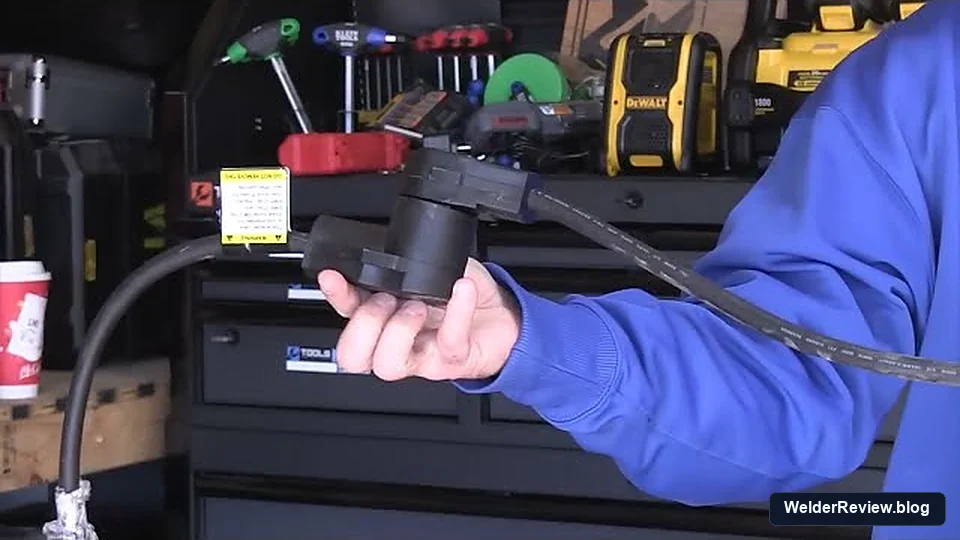
Internal component layout directly affects thermal management during extended welding sessions. Proper airflow routing prevents premature overheating of critical circuit boards, ensuring consistent output voltage even when running demanding constant current operations at maximum amperage thresholds.
Evaluating dual-voltage input capabilities highlights how these machines adapt to various jobsite requirements. Automatic voltage sensing technology simplifies electrical hookups, allowing operators to transition seamlessly between standard household circuits and industrial power supplies safely.
Our ESAB Rebel EMP 215ic review highlights how this machine utilizes a dual-voltage inverter architecture accepting 120V or 230V input power. This topology optimizes internal rectification to maintain stable arc output.
Conversely, the ESAB Rebel 205ic adds specialized high-frequency components for AC/DC TIG functionality. Its power delivery system must manage alternating current polarity shifts while simultaneously supporting MIG and stick welding parameters safely.
Transformer design differences dictate how efficiently each machine handles maximum amperage outputs. Proper primary circuit breaker sizing is essential for both models to prevent nuisance tripping during heavy structural fabrication and field repairs.
- Dual-voltage auto-sensing circuitry accommodates both one-twenty and two-thirty volt inputs.
- Internal thermal overload protection guards against excessive duty cycle strain.
- Optimized inverter topology reduces transformer weight by over fifty percent.
Transformer Design and Inverter Efficiency
Advanced inverter modules convert incoming alternating current into stable direct current with minimal energy loss. This high-frequency switching mechanism allows precise control over droplet transfer during gas metal arc welding processes.
Power factor correction built into the internal architecture maximizes electrical efficiency across standard wall outlets. Welders experience fewer tripped breakers when pushing heavy plate fabrication tasks to the absolute limit.
- High-frequency switching improves arc response time significantly.
- Power factor correction minimizes reactive current draw during operation.
Multi-Process Versatility and Arc Stability
As highlighted in our Esab 215ic review, modern fabrication shops demand equipment capable of switching between distinct joining methods instantly. The 215ic excels by delivering professional-grade performance across multiple welding configurations.
Arc stability remains paramount when depositing filler metal on structural steel joints. Proprietary waveform control algorithms monitor short-circuit transfer in real time, minimizing spatter generation and reducing subsequent post-weld cleanup labor significantly.
Transitioning from heavy plate MIG welding to delicate stick electrodes requires dependable open-circuit voltage parameters. Both machines deliver reliable arc strikes, though the wire feed mechanics differ noticeably in daily shop applications.
Multi-process machines require robust internal switching to transition smoothly between MIG, flux-cored, stick, and TIG modes. The EMP 215ic excels in continuous wire-feed operations utilizing smart-migration technology that adapts to operator technique seamlessly.
Arc stability during short-circuit MIG welding relies on precise voltage control and inductance tuning. Both ESAB units incorporate proprietary firmware algorithms that monitor the weld puddle and adjust droplet transfer rates in real-time.
Stick welding performance demands adequate open-circuit voltage to prevent electrode sticking during initial arc strikes. Hot-start and arc-force controls help operators maintain stable penetration profiles even when utilizing difficult low-hydrogen structural electrodes.
- Four distinct welding processes integrated into a single portable housing.
- Advanced waveform control minimizes weld spatter on carbon steel.
- Reliable hot-start functionality ensures trouble-free stick electrode ignition.
Wire Feed Dynamics and Drive Systems
Cast aluminum drive rolls ensure consistent wire delivery through standard fifteen-foot MIG guns. Proper tension adjustment prevents bird-nesting when feeding softer aluminum or thin stainless steel wires.
Quick-release drive mechanisms allow operators to swap consumable liners and contact tips without reaching for specialized hand tools, speeding up routine maintenance routines in busy fabrication environments.
- Cast aluminum dual-drive roll assembly guarantees positive wire feeding.
- Tool-less tension arm adjustments streamline daily consumable swaps.
Aluminum Welding and AC/DC TIG Performance
Welding aluminum successfully requires precise alternating current controls that standard multi-process units rarely provide. The 205ic introduces comprehensive AC TIG capabilities, featuring adjustable frequency and balance settings for optimal oxide cleaning action.
High-frequency arc starting on the 205ic eliminates tungsten contamination issues common with scratch-start DC setups. Operators can establish stable arcs effortlessly on thin aerospace alloys or thick automotive components alike.
Choosing between DC-only limitations and full AC functionality dictates your project scope. Fabrication shops working primarily with steel lean toward the 215ic, while specialists prioritizing aluminum select the 205ic.
As detailed in our Esab Rebel 205ic AC/DC review, welding aluminum requires the advanced AC output capabilities found exclusively on this model. Clean oxide removal ensures sound weld beads on thin materials.
Frequency adjustment and balance control on the 205ic allow fabricators to fine-tune cleaning action versus penetration depth. These specialized TIG parameters are completely absent on the DC-only 215ic multi-process welding system platform.
High-frequency arc starting eliminates tungsten contamination issues commonly associated with scratch-start DC TIG methods. This feature is crucial for precision aerospace and motorsport applications requiring pristine weld metallurgy and strict visual standards.
- Full AC/DC TIG functionality includes adjustable frequency control.
- High-frequency arc ignition prevents tungsten inclusion defects.
- Waveform balance adjustment optimizes cleaning versus penetration ratios.
High-Frequency Arc Initiation and Pulse Controls
High-frequency arc ignition initiates the tungsten arc without physical workpiece contact, preserving sharp electrode points. This feature proves essential when executing intricate welds on thin-walled structural tubing.
Pulsed TIG parameters allow thermal input management on heat-sensitive alloys, preventing burn-through during critical root pass operations on pressure vessels and thin sheet assemblies.
- Non-contact high-frequency start protects delicate tungsten geometry.
- Pulsed output controls minimize heat distortion on thin materials.
Setup Usability and Digital Interface Design
Minimizing setup time improves overall shop productivity and reduces operator fatigue during long shifts. The sMIG technology featured on these units learns your technique, automatically adapting arc parameters based on wire diameter and plate thickness.
High-resolution TFT display screens provide clear visibility of voltage, amperage, and inductance parameters even under harsh shop lighting. Navigating menu options requires minimal button presses thanks to intuitive software layouts.
Preset memory channels allow fabricators to save preferred parameters for recurring production jobs. This capability ensures repeatability across multiple shifts and different machine operators within the same facility.
Modern welding equipment relies heavily on intuitive digital controls to minimize operator setup errors on demanding job sites. The large TFT display on both Rebel models utilizes sMIG technology to automatically establish optimal welding parameters.
Welders simply input material thickness and wire diameter, allowing the internal computer to calculate optimal voltage and wire feed speed. This reduces trial-and-error waste while accelerating productivity for both novice and experienced fabrication professionals.
Manual override capabilities ensure advanced users can dial in exact arc characteristics for specialized joint configurations. The membrane keypad is engineered to withstand harsh shop environments, resisting dust, moisture, and impact damage effectively.
- sMIG adaptive technology automatically sets optimal welding parameters.
- Bright TFT display enhances visibility in direct sunlight.
- Memory storage channels recall favorite operational settings instantly.
Ergonomics and Control Panel Layout
Ergonomic front panel designs protect delicate control knobs from accidental impact during transport. Recessed display screens survive the rigors of chaotic jobsite environments without cracking or failing prematurely.
Logical menu structures group related parameters together, reducing the learning curve for apprentice welders transitioning from older transformer-based welding equipment to modern digital inverters.
- Recessed control knobs prevent damage from rolling cables or debris.
- Simplified software menus shorten operator training intervals.
Portability, Duty Cycle, and Jobsite Footprint
Field service technicians require lightweight equipment that loads easily into service truck compartments. Weighing under fifty pounds, these machines offer genuine portability without sacrificing structural integrity or heavy-duty operational duty cycles.
Robust roll cages protect internal electronics from impact damage during transit across uneven terrain. Integrated lifting handles provide secure anchor points for rigging straps or manual carrying tasks.
Evaluating duty cycle ratings ensures your equipment handles continuous production welding without tripping thermal protections. Operating at moderate amperages yields sufficient runtime for most general fabrication demands.
Our Esab Rebel 205 AC/DC review notes that field mobility remains a primary design driver for compact multi-process machines deployed in remote maintenance. The lightweight roll cage provides ergonomic lifting points.
Duty cycle ratings dictate continuous operating limits under specific ambient temperature conditions during heavy structural fabrication. Operators must monitor thermal overload indicators to prevent premature inverter component degradation during extended high-amperage welding sessions.
Despite their rugged construction, both units maintain a compact footprint that fits easily inside standard service truck toolboxes. Balancing power output with manageable weight ensures technicians can deploy reliable welding capability anywhere.
- Lightweight composite chassis facilitates easy single-person transport.
- Integrated roll cage safeguards against severe jobsite impacts.
- Reliable duty cycles support sustained production output levels.
Chassis Protection and Transport Practicality
Impact-resistant exterior shells absorb shocks from accidental drops or collisions with shop machinery. Corner bumpers distribute kinetic energy away from sensitive internal inverter transformers and circuit boards.
Compact physical footprints allow storage beneath standard workbench surfaces, freeing up valuable floor space in cramped automotive repair bays and custom metal fabrication shops.
- Impact-absorbing corner bumpers protect the main housing.
- Compact dimensions fit easily into standard service vehicle boxes.
Maintenance Protocols and Consumable Lifespan
Maximizing equipment lifespan requires adherence to scheduled preventive maintenance protocols and daily inspections. Regularly blowing out accumulated metal dust from internal cooling fans prevents electrical shorts and premature component failure.
Consumable management directly impacts weld quality and operating costs over time. Inspecting contact tips, gas nozzles, and drive rolls daily prevents erratic wire feed issues and excessive spatter accumulation.
Using genuine replacement parts ensures proper gas shielding coverage and electrical conductivity throughout extended welding shifts. Neglecting basic torch maintenance leads to poor gas flow and porous weld defects.
Routine maintenance ensures long-term reliability and consistent arc performance across all supported welding processes. Operators should routinely inspect drive rolls, contact tips, and gas nozzles to prevent erratic wire feeding and porosity issues.
Internal dust accumulation can degrade sensitive inverter electronics over time, requiring periodic cleaning with compressed dry air. Following manufacturer guidelines for cable inspection and torch servicing maximizes operational safety and minimizes unexpected equipment downtime.
Consumable lifespan depends heavily on proper shielding gas flow rates and correct amperage matching for selected electrode sizes. Stocking genuine replacement parts ensures optimal electrical conductivity and extends the service life of your equipment.
- Routine internal cleaning prevents conductive dust accumulation.
- Daily consumable inspection ensures consistent shielding gas coverage.
- Genuine replacement parts preserve optimal electrical conductivity.
Preventive Care for Long-Term Reliability
Checking ground clamp connections and welding cable integrity prevents voltage drops during high-amperage operations. Corroded terminals generate excessive heat and reduce arc performance significantly over time.
Lubricating drive gears and replacing worn inlet guides keeps wire feed resistance within acceptable manufacturer tolerances, ensuring smooth performance across spool gun and standard torch setups.
- Inspecting ground connections prevents unexpected voltage drops.
- Periodic drive gear lubrication reduces mechanical wear.
Frequently Asked Questions
Can the Esab Rebel 215ic weld aluminum out of the box?
The 215ic can weld aluminum using a spool gun setup in DC MIG mode. However, it lacks true AC TIG capabilities for specialized aluminum fabrication.
What input power requirements do these machines need?
Both units feature auto-sensing dual-voltage technology that automatically adjusts to standard 120V or 230V input circuits without manual jumper changes.
How does sMIG technology assist beginner welders?
The sMIG feature continuously learns your technique and adjusts arc parameters automatically, making it easier to achieve professional weld profiles quickly.
Which model is better for mobile repair work?
Both machines feature lightweight, portable chassis designs protected by robust roll cages, making them equally suited for field service truck applications.
What is the primary difference in welding processes?
The 215ic focuses on heavy-duty multi-process MIG and stick performance, while the 205ic adds advanced AC TIG functions for thin aluminum projects.