Esab 205Ic vs 215Ic: Multi-Process Showdown
Choosing between these two ESAB Rebel multi-process machines impacts your aluminum fabrication capabilities. Understanding their core power footprints ensures optimal shop productivity.

Choose the 205ic if you require dedicated AC TIG welding for thin aluminum alloys. Opt for the 215ic when prioritizing heavy steel MIG production and portability.
Compare all top models in our Best Welder: Top Home Shop & Jobsite Picks Tested.
Side-by-Side Breakdown
| Criteria | Esab 205Ic | 215Ic | Edge |
|---|---|---|---|
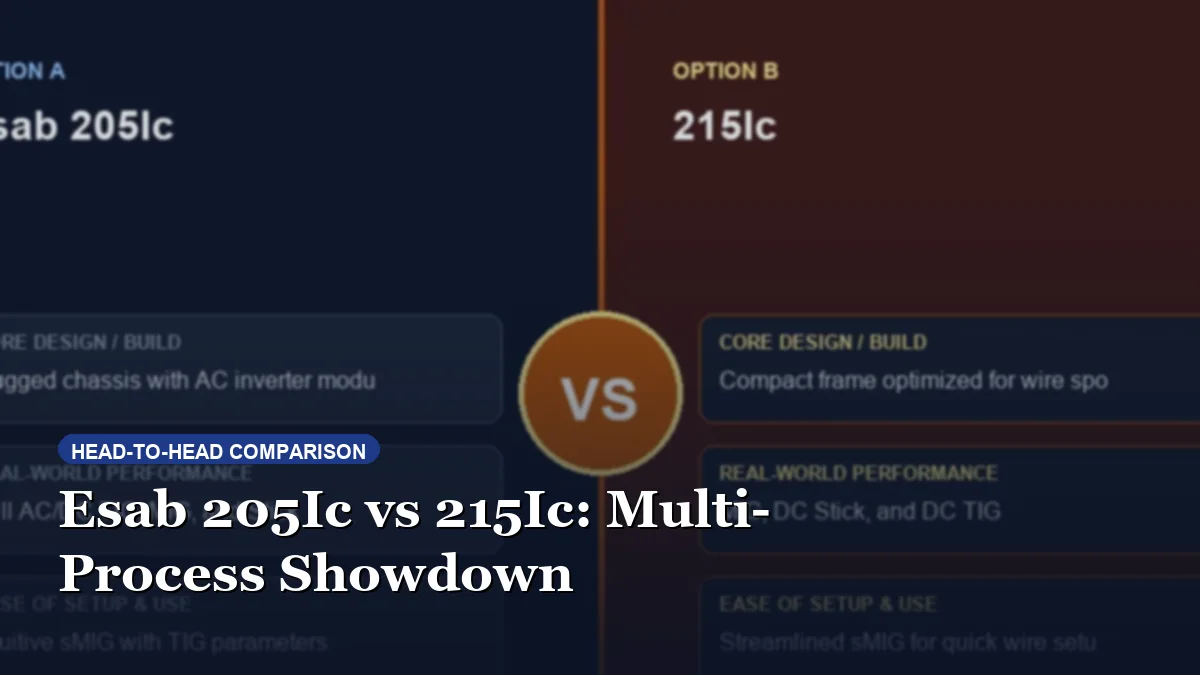
| Core Design / Build | Rugged chassis with AC inverter modules | Compact frame optimized for wire spools | Split |
| Real-World Performance | Full AC/DC TIG, MIG, and Stick | MIG, DC Stick, and DC TIG | Side A |
| Ease of Setup & Use | Intuitive sMIG with TIG parameters | Streamlined sMIG for quick wire setups | Side B |
| Durability & Reliability | Industrial internal cooling architecture | Robust thermal overload protection | Tie |
| Efficiency / Operating Footprint | Dual-voltage with high AC power draw | Optimized dual-voltage current draw | Side B |
| Maintenance Requirements | Requires regular tungsten and torch upkeep | Minimal drive roll and liner checks | Side B |
| Best Ideal Use Case | Multi-alloy fabrication and repair | High-volume carbon steel MIG welding | Split |
Core Design And Engineering Architecture
The engineering philosophy behind these two machines differs significantly in power delivery. ESAB builds both units on rugged industrial frames, but internal component layouts reflect distinct thermal management requirements.
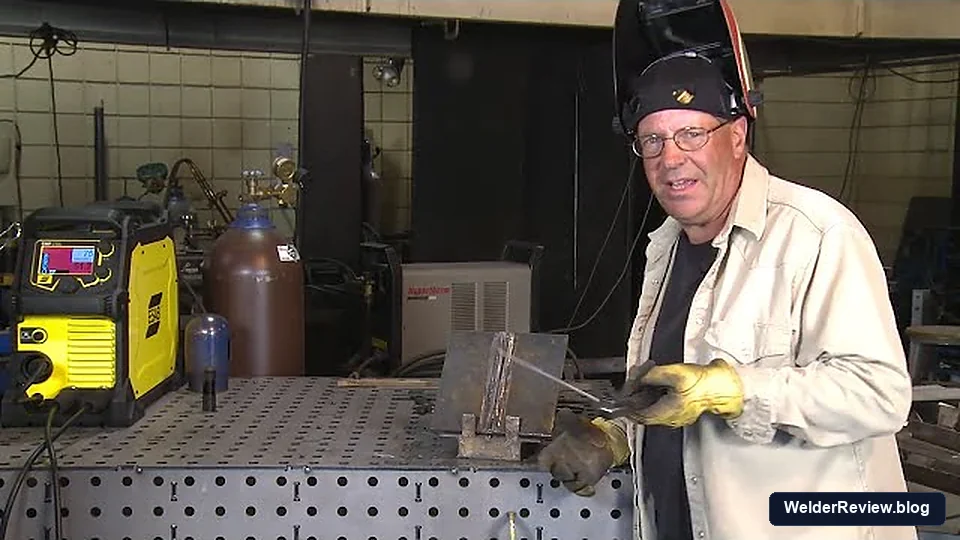
Weight distribution and overall chassis dimensions dictate how easily these units move around busy fabrication shops. Operators must evaluate whether high-frequency AC capability outweighs the lighter overall mass of simpler builds.
We break down these rugged industrial features further in our comprehensive esab 215ic review. ESAB constructs the chassis using heavy-gauge composite materials to withstand harsh jobsite conditions and frequent transport.
Cooling channels are carefully isolated from sensitive printed circuit boards. This thermal management strategy protects electronic components from conductive grinding dust while optimizing airflow across the primary insulated-gate bipolar transistors.
- 205ic chassis incorporates heavy-duty inverter modules for AC TIG duties.
- 215ic frame optimizes internal space for continuous wire spool housing.
Internal Power Module Layouts
Dual-voltage sensing technology allows both machines to automatically adjust to available input power. The internal rectifiers manage voltage fluctuations smoothly to protect sensitive digital control boards during heavy use.
- Advanced inverter topology reduces idle power draw.
- Robust cooling fans prevent thermal overload trips.
Real-World Performance And Process Versatility
Performance metrics reveal a stark functional divide when striking an arc on various metals. The 205ic delivers true high-frequency AC TIG functionality alongside MIG and stick welding processes.
You can learn more about its DC capabilities in our detailed esab rebel 215ic review. The unit focuses heavily on exceptional MIG and DC stick delivery without adding complex AC circuitry.
When executing high-frequency TIG welding, the 205ic introduces specialized AC waveform controls. Fabricators gain precise command over cleaning action and penetration profiles when joining thin aluminum alloys for aerospace or automotive applications.
Conversely, the 215ic focuses strictly on DC output processes, excelling in robust MIG and stick configurations. It delivers exceptional arc stability when running heavy flux-cored wires through deep joint configurations on structural steel projects.
- 205ic AC frequency controls cleaning action on aluminum plates.
- 215ic inductance tuning creates smooth, spatter-free short-circuit MIG beads.
Aluminum Fabrication Capabilities
Aluminum welding demands precise high-frequency arc initiation and adjustable AC balance controls. The 205ic handles these intricate parameters seamlessly, making it a favorite for sheet metal repair shops.
Without AC output, the 215ic cannot weld aluminum effectively using standard TIG processes. Users must rely on spool guns for aluminum wire feeding, altering the overall operational workflow completely.
- AC balance adjustments control heat input on thin foils.
- Spool gun compatibility expands aluminum reach on the 215ic.
Maintenance Efficiency And Component Longevity
Routine upkeep keeps your welding equipment running reliably through demanding fabrication schedules. Both units feature accessible wire feed compartments and clear digital display error codes for quick troubleshooting.
Thermal efficiency ratings dictate how long you can weld before hitting duty cycle limits. Proper internal ventilation protects circuit boards from conductive metal dust accumulation in harsh industrial environments.
Routine maintenance requires inspecting the cast-aluminum drive roll assembly for material buildup or wear. Proper tension adjustment prevents wire slippage and ensures consistent feeding rates during extended MIG welding shifts in production environments.
Operators should periodically blow out internal debris using compressed air regulated below forty psi. Maintaining clean cooling fins significantly extends the operational lifespan of the power source under heavy duty cycles.
- Regular air dusting prevents premature inverter component failure.
- Drive roll inspection ensures consistent wire feeding tension.
Consumable Wear And Tear
Consumable lifespan depends heavily on your chosen shielding gas flows and contact tip sizes. Keeping spare liners and diffusers on hand minimizes unexpected downtime during large structural fabrication runs.
We explore these specific consumable demands inside our full esab 205ic ac dc review. The model introduces strict TIG torch maintenance requirements, including regular tungsten grinding and collet cleaning.
- Tungsten contamination requires immediate grinding attention.
- MIG contact tips wear evenly under standard parameters.
Usability Interface And Setup Ergonomics
Modern welding machines rely heavily on intuitive digital interfaces to simplify parameter adjustments. ESAB equips both units with brilliant TFT displays that guide operators through initial material thickness selections.
The sMIG technology adapts to your unique welding technique over the first few inches of a weld bead. This adaptive control lowers the learning curve for novice fabricators entering demanding shops.
The large TFT display screen utilizes intuitive iconography to streamline parameter adjustments. Welders can easily navigate the sMIG technology, which continuously adapts to individual welding techniques for reduced learning curves.
Physical control knobs feature tactile detents that allow precise adjustments even when wearing heavy leather gloves. This ergonomic foresight minimizes accidental settings changes on busy industrial shop floors requiring rapid process changes.
- TFT screen clarity remains readable under bright shop lighting.
- Dial feedback resistance prevents accidental setting adjustments mid-weld.
Portability And Field Deployment
Field service technicians prioritize lightweight machinery that fits easily into standard service truck compartments. The 215ic offers a slightly more compact profile for mobile repair contractors constantly on the move.
Transporting the 205ic is detailed further within our specialized esab 205 review. Hauling this machine requires managing extra TIG gas hoses and specialized torch packages alongside standard welding cables.
- Integrated handles ease lifting into truck beds.
- Protective roll cages shield displays from impact.
Power Delivery And Input Flexibility
Multi-voltage inputs provide the flexibility needed when moving between home garages and industrial sites. Both welders automatically detect single-phase power sources ranging from standard household circuits to heavy lines.
Operating at maximum output requires dedicated breaker sizes to avoid nuisance tripping during extended structural runs. Understanding your facility's electrical capacity prevents unexpected shutdowns during critical fabrication deadlines.
Both units accommodate dual-voltage input capabilities, automatically sensing 115V or 230V primary sources without manual jumper changes. This flexibility ensures seamless integration across residential service outlets and heavy industrial generator power.
Advanced power factor correction circuitry stabilizes current draw under fluctuating line voltages. Such engineering prevents breaker tripping when operating near the upper limits of rated amperage outputs.
- Dual-voltage plugs switch securely without manual hardwiring changes.
- Input voltage compensation stabilizes arc performance during sags.
Electrical Protection Systems
Internal circuit breakers and thermal sensors protect delicate inverter components from severe power spikes. These protective systems ensure long-term reliability even when operating on unstable generator power in remote locations.
- Generator friendly design prevents inverter board frying.
- Overcurrent alerts flash instantly on digital displays.
Which Option Best Fits Your Production Setup
Selecting the right machine ultimately hinges on your everyday material requirements and process preferences. Shops handling diverse alloys benefit immensely from the comprehensive AC TIG capabilities found onboard.
Conversely, operations focused purely on carbon steel fabrication and heavy wire deposition gain higher value. Carefully auditing your shop's project backlog guarantees long-term satisfaction with your equipment investment.
Choosing the right system depends entirely on your primary material requirements and joint configurations. Operations focused heavily on aluminum fabrication will immediately benefit from the comprehensive AC capabilities of the ac/dc model.
Alternatively, shops prioritizing high-deposition steel welding and heavy stick electrodes will find maximum value in the dedicated DC architecture. Matching machine specifications to workflow demands guarantees long-term equipment reliability.
- Evaluate alloy mix before choosing your primary welding process.
- Assess portability needs against daily output requirements.
Making Your Final Choice
Weighing initial equipment capabilities against future project goals prevents costly secondary machine purchases. Match your primary metal thickness and joint designs directly to the highlighted strengths of each unit.
- Prioritize AC TIG for aluminum sheet metal work.
- Choose MIG focus for rapid structural steel assembly.
Frequently Asked Questions
Can both machines weld aluminum out of the box?
The 205ic features full AC high-frequency TIG capabilities designed specifically for welding thin aluminum sheets without requiring any extra hardware attachments in your shop.
Conversely, the 215ic requires an optional spool gun setup because it completely lacks the internal AC circuitry necessary for direct aluminum TIG welding applications across various fabrication projects.
Which welder is better suited for mobile field service work?
The 215ic is generally better suited for mobile field service work due to its slightly lighter overall chassis and streamlined MIG focus.
Hauling fewer specialized TIG hoses and bulky torch packages makes rapid truck loading much easier for traveling maintenance contractors managing extremely tight daily structural service schedules across multiple remote locations.
Do both units share the same digital sMIG adaptive technology?
Both machines utilize advanced sMIG technology that continuously learns your personal welding technique during the initial bead creation phase.
This brilliant adaptive control automatically adjusts voltage and wire feed speed to maintain an exceptionally stable arc regardless of minor hand movement variations across different joint designs.
What are the electrical requirements for running them at maximum output?
Operating either machine at maximum output requires a dedicated 230-volt input circuit with appropriate breaker ratings to completely prevent nuisance electrical trips.
Connecting to standard household 115-volt lines restricts your maximum amperage output, severely limiting your deep penetration capabilities on heavy structural steel plates during demanding production runs.
How do maintenance requirements differ between the two models?
Maintenance routines are largely similar, but the 205ic demands extra attention for its TIG torch components and delicate high-frequency points.
Operators must regularly grind tungsten electrodes and clean gas lenses, whereas the 215ic primarily requires routine wire drive roll checks and gun liner replacements for standard MIG work.