Arc vs Mig Welders: The Technical Comparison
Choosing the right joining process determines structural integrity. This technical breakdown compares shielded metal arc and gas metal arc performance.

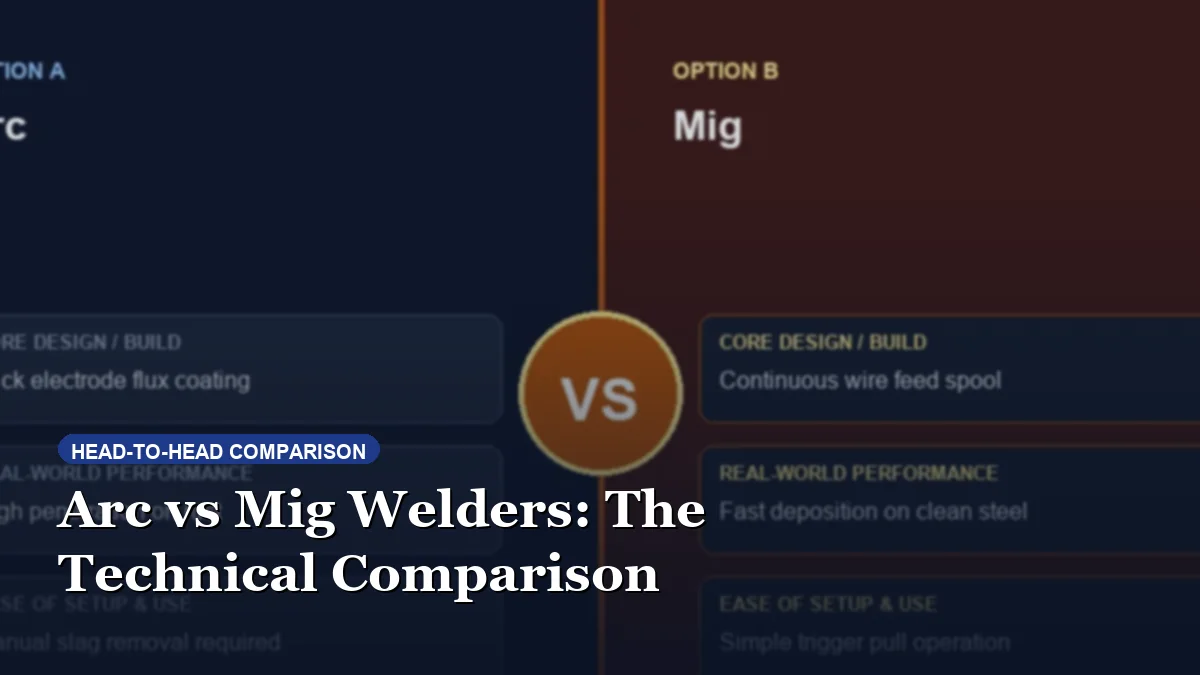
Pick arc welding for heavy outdoor structural steel repairs using robust electrodes. Choose MIG for clean indoor fabrication on thin sheet metal.
Compare all top models in our Best Welder: Top Home Shop & Jobsite Picks Tested.
Side-by-Side Breakdown
| Criteria | Arc | Mig | Edge |
|---|---|---|---|
| Core Design / Build | Stick electrode flux coating | Continuous wire feed spool | Mig |
| Real-World Performance | High penetration on rust | Fast deposition on clean steel | Arc |
| Ease of Setup & Use | Manual slag removal required | Simple trigger pull operation | Mig |
| Durability & Reliability | Rugged transformer chassis | Complex drive roll electronics | Arc |
| Efficiency / Operating Footprint | High duty cycle outdoors | Requires shielding gas cylinders | Arc |
| Maintenance Requirements | Minimal internal cleaning | Regular liner and tip swaps | Arc |
| Best Ideal Use Case | Field pipeline and farm repairs | Automotive body and shop fabrication | Mig |
Understanding Core Arc and MIG Technologies
Shielded metal arc welding utilizes a consumable flux-coated electrode to lay down structural weld beads. This legacy method generates its own gaseous shield through flux degradation, protecting the molten puddle from atmospheric contamination during solidification.
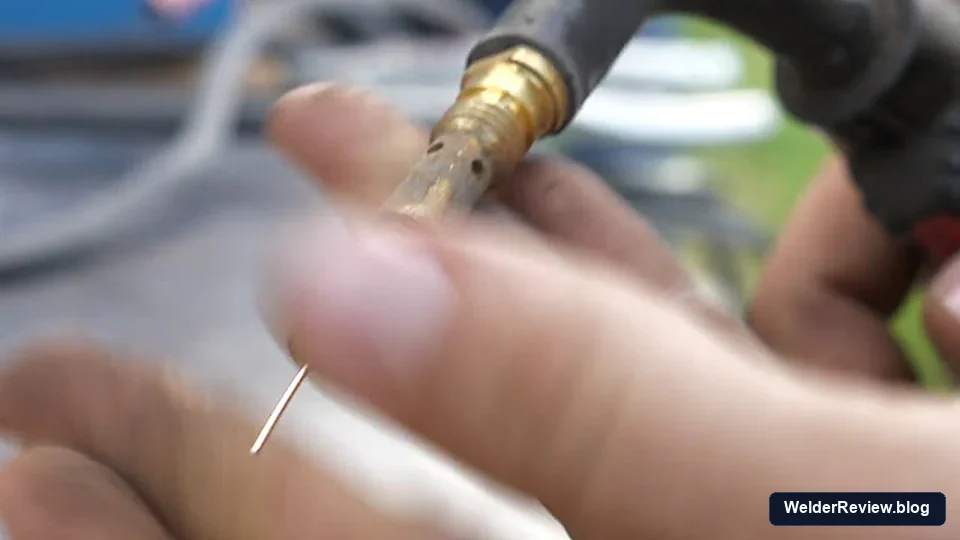
Gas metal arc systems feed a continuous solid wire through a gun alongside external shielding gas. Selecting a model from our best budget mig welder guide eliminates tedious slag chipping and speeds up shop production.
Shielded metal arc welding utilizes a consumable electrode coated in flux that disintegrates to create a protective gas shield. This manual process requires manual slag removal after every single weld pass.
Gas metal arc welding relies on a continuous wire feed paired with an external shielding gas bottle. This semi-automatic technique dramatically increases deposition rates for structural fabrication projects.
- Arc systems rely on stick electrodes with flux coverings.
- MIG equipment feeds continuous wire with external bottled gas.
- Both processes require distinct power source volt-ampere curves.
Fundamental Physics of the Arc
Electric arc stability depends on maintaining a consistent arc length between the workpiece and the electrode tip. Voltage drops across the arc column dictate overall heat input and penetration depth into the base metal.
MIG power supplies maintain constant voltage outputs to automatically adjust burn-off rates when the operator alters gun distance. This self-regulating characteristic simplifies arc management for beginning fabricators working in controlled shop environments.
- Stick welding uses drooping characteristics for manual control.
- MIG systems employ constant voltage for stable wire burn-off.
Power Delivery and Electrical Characteristics
Welding machine power sources must deliver stable amperage under heavy load conditions without excessive voltage sag. Transformer-based arc welders offer legendary durability against harsh industrial environments and contaminated electrical supply grids.
Inverter-based MIG machines utilize solid-state electronics to switch incoming power at high frequencies. This advanced circuitry reduces machine weight while providing precise digital control over inductance and voltage parameters.
Stick machines operate on a drooping power source, delivering constant current despite arc length variations. This steep volt-amp curve prevents excessive amperage spikes during manual hand movement fluctuations.
MIG welders rely on a constant voltage output, maintaining stable arc conditions regardless of wire stickout. Choosing units from our best beginner mig welders roundup ensures reliable performance for new fabricators.
- Inverter technology reduces overall equipment weight significantly.
- Transformer units withstand extreme voltage spikes on job sites.
- Duty cycles dictate continuous operating limits under maximum amperage.
Voltage Control and Amperage Output
Arc welding requires higher open-circuit voltage to initiate the electrical arc safely across coated rods. Once established, operating voltage drops significantly while amperage remains tied to electrode diameter selections.
MIG welding requires fine voltage adjustments to match wire feed speeds precisely. Proper tuning prevents stubbing against the plate or burning back into the contact tip during high-speed production runs.
- Open-circuit voltage ensures safe arc initiation.
- Wire feed speed correlates directly with chosen amperage.
Setup Complexity and Workflow Efficiency
Deploying a traditional arc welder involves plugging in leads, clamping the ground, and striking an arc immediately. Reviewing our best mig welder for home use guide highlights why wire-fed options differ significantly.
MIG setups demand careful attention to gas flow rates, drive roll tension, and contact tip wear. While initial setup takes longer, the resulting workflow eliminates post-weld cleaning and speeds up multi-pass production tasks.
Arc welding requires minimal initial setup since you only need an electrode holder, ground clamp, and matching flux-coated rods. Operators skip gas cylinder rentals and complex regulator adjustments entirely.
MIG systems demand precise tuning of wire feed speed alongside voltage settings. Operators must also manage shielding gas flow rates, cylinder pressures, and contact tip cleanliness for optimal results.
- Stick welding requires zero shielding gas plumbing.
- MIG systems involve gas regulators and drive rollers.
- Slag removal adds considerable labor time to stick welds.
Consumable Management on the Job
Managing stick electrodes requires proper dry storage to prevent moisture absorption in low-hydrogen coatings. Wet flux leads directly to porous weld deposits and unacceptable structural cracking under load.
MIG guns require frequent replacement of contact tips, nozzles, and internal liners to prevent wire feeding friction. Keeping these consumables in stock prevents unexpected downtime during critical fabrication schedules.
- Low-hydrogen stick rods demand heated storage ovens.
- MIG contact tips wear rapidly during high-amperage runs.
Material Compatibility and Thickness Limits
Arc welding excels on thick, rusty, or painted steel plates because the aggressive arc burns through surface impurities effortlessly. Heavy structural beams and thick-walled pipes are prime candidates for high-penetration stick electrodes.
MIG welding demands pristine metal surfaces free of heavy mill scale, rust, or oil contaminants to prevent severe porosity. However, MIG dominates when fabricating thin sheet metal enclosures and automotive body panels.
Stick welding excels on thick, rusty, or dirty carbon steel plates because the heavy flux actively cleans impurities. Structural repair work often relies on this robust penetration capability.
MIG processes struggle with heavy contamination but dominate thin sheet metal applications. Using argon-rich gas blends enables precise heat control without blowing holes through autobody panels.
- Stick handles dirty and oxidized metals with ease.
- MIG requires clean joints for sound structural integrity.
- Thin sheet metal work favors MIG heat control.
Joint Design and Fit-Up Tolerances
Stick welding bridges wide gaps effortlessly when structural fit-up tolerances are less than perfect on older repair projects. The forceful arc digs deep into root openings without risking immediate burn-through faults.
MIG welding requires tight joint fit-up because the shallow penetration profile lacks bridging capability on poorly aligned plates. Proper clamping and beveling become mandatory steps before pulling the MIG trigger.
- Arc welding easily bridges wide joint gaps.
- MIG demands precise fit-up to avoid lack of fusion.
Environmental Resilience and Outdoor Operation
Windy outdoor environments easily disrupt external shielding gas streams, causing severe weld porosity during MIG fabrication operations. Building temporary windbreaks or switching to flux-cored wire becomes necessary in open-air job sites.
Arc welding remains the undisputed king of field repairs because the internal flux shield generates its own protective gas envelope. Gusty winds and adverse weather conditions have minimal impact on stick weld quality.
Shielded metal arc processes remain the gold standard for field repairs because wind cannot blow away the localized flux gas shield. Outdoor structural steel erection depends on this resilience.
MIG welding suffers significantly outdoors as ambient air currents disrupt the external shielding gas envelope. Even moderate breezes cause severe porosity unless operators erect extensive wind screens.
- Wind blows away MIG shielding gas instantly.
- Stick welding operates reliably in heavy gale winds.
- Outdoor construction sites favor robust arc generators.
Weatherproofing Your Welding Gear
Protecting sensitive electronics from rain, dust, and humidity is crucial when operating modern inverter-based equipment outdoors. Ruggedized housing ratings help prevent internal short circuits during unexpected precipitation events.
Traditional transformer machines tolerate harsh job site weather better due to simpler, heavier electrical winding designs. Keeping equipment dry still remains standard safety practice for every professional welder.
- Inverter units need extra protection from moisture.
- Transformer chassis offer rugged field endurance.
Consumable Costs and Long-Term Maintenance
Long-term operating expenses depend heavily on consumable replacement frequency and shielding gas cylinder rentals. Stick electrodes are inexpensive and require no auxiliary gas tanks, keeping upfront consumable costs remarkably low.
MIG welding involves ongoing purchases of solid wire spools, contact tips, gas nozzles, and shielding gas refills. While higher in overall operating overhead, the increased productivity often offsets these additional material expenses.
Arc maintenance focuses on electrode holders and heavy-duty welding leads rather than precision drive rolls. Consumable costs stay low because you only purchase individual flux rods as needed.
MIG equipment requires frequent replacement of contact tips and liner assemblies to prevent wire feeding friction. Upgrading to a unit featured in our best 110v mig welder review helps streamline garage maintenance tasks and consumable costs.
- Stick electrodes represent very low recurring costs.
- MIG requires continuous purchases of shielding gas.
- Consumable wear impacts overall shop profit margins.
Preventative Maintenance Routines
Routine maintenance for arc welders involves blowing out accumulated metal dust and inspecting heavy-duty electrode holders for thermal damage. Ensuring tight cable connections prevents voltage drops and power loss.
MIG maintenance requires cleaning drive rolls, blowing out wire liners, and checking gas solenoid valves for leaks. Regular upkeep prevents birdnesting and ensures smooth wire feeding during long production runs.
- Inspect stinger cables for loose mechanical joints.
- Clean MIG wire liners to stop feeding friction.
Frequently Asked Questions
Which process is better for beginners learning to weld?
MIG welding is widely considered easier for beginners due to the simple trigger operation and continuous wire feed. Proper gun angle and voltage settings still require practice to master successfully.
Can I weld outside on a windy day using a MIG machine?
Wind blows away the external shielding gas, causing severe weld porosity and weak joints. You must install windbreaks or switch to self-shielded flux-cored wire for outdoor work.
Do I need shielding gas for stick arc welding?
No external gas cylinders are required because the flux coating on the electrode generates its own protective gas. This self-contained feature makes stick ideal for remote field repairs.
What is the main advantage of an inverter power source?
Inverter technology significantly reduces machine weight while providing precise digital control over welding parameters. Modern inverters deliver exceptional arc stability across varying input voltages.
How do I prevent porosity when welding rusty steel?
Surface contaminants react with weld pools to create gas pockets and internal cracks. Using an aggressive stick electrode or thoroughly grinding clean the joint prevents defects.