7014 vs 7018: Choosing the Right Shielded Metal Arc Rod
Choosing between iron powder electrodes requires balancing deposition rates and structural integrity. Both classifications serve vital roles in modern American fabrication shops.

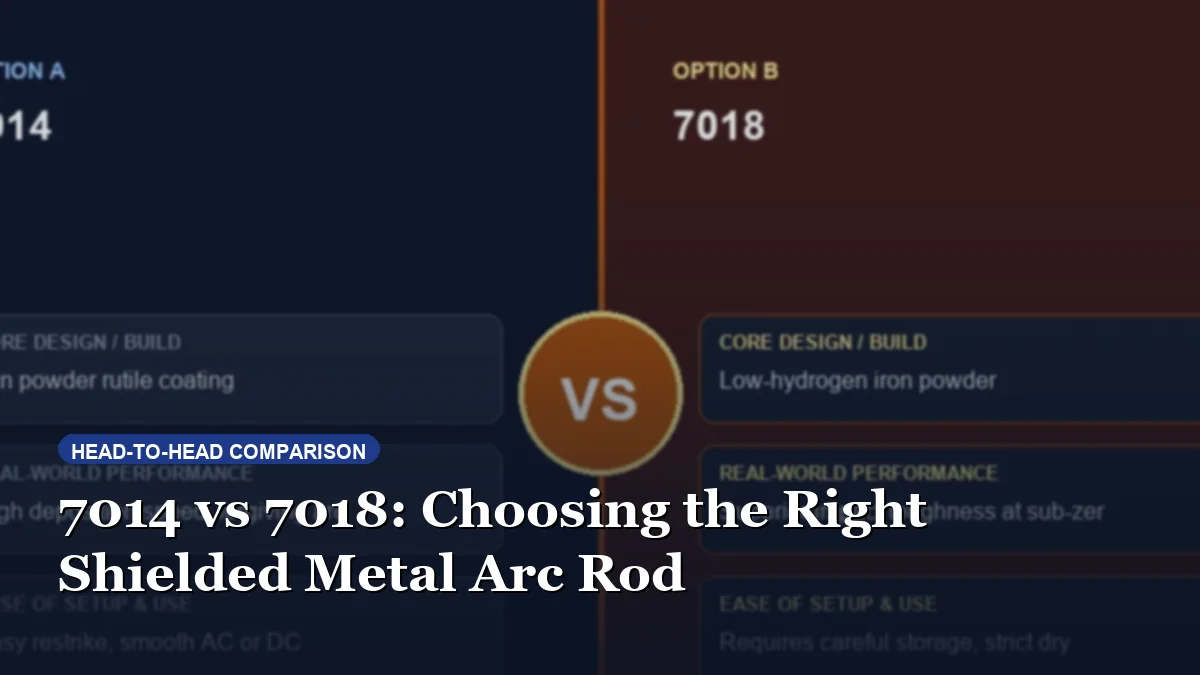
Choose 7014 electrodes for high-speed shop fabrication on clean steel requiring minimal penetration. Select 7018 rods for critical structural projects demanding low-hydrogen toughness and radiographic soundness.
Compare all top models in our Best Welder: Top Home Shop & Jobsite Picks Tested.
Side-by-Side Breakdown
| Criteria | 7014 | 7018 | Edge |
|---|---|---|---|
| Core Design / Build | Iron powder rutile coating | Low-hydrogen iron powder | 7018 |
| Real-World Performance | High deposition speed, forgiving arc | Superior impact toughness at sub-zero | 7018 |
| Ease of Setup & Use | Easy restrike, smooth AC or DC | Requires careful storage, strict drying | 7014 |
| Durability & Reliability | Good tensile strength, moderate crack resistance | Exceptional crack resistance under dynamic stress | 7018 |
| Efficiency / Operating Footprint | Higher fill rate due to iron powder | Standard deposition with maximum structural ductility | 7014 |
| Maintenance Requirements | Standard electrode storage in dry boxes | Strict hermetic sealing and heated rod oven | 7014 |
| Best Ideal Use Case | General shop welding on clean carbon steel | Heavy structural, pressure vessels, and bridges | 7018 |
Core Design and Engineering Differences
Understanding the metallurgy behind these two common filler metals helps welders select appropriate consumables. The American Welding Society classifies both electrodes under a minimum tensile strength of seventy thousand pounds per square inch.
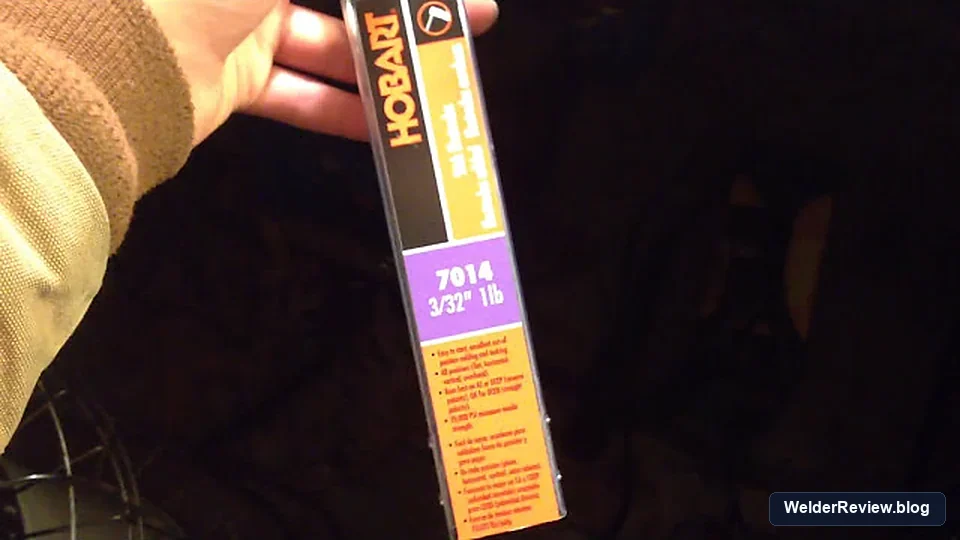
Despite sharing similar ultimate tensile ratings, their internal chemistry differs significantly. One relies on a rutile coating with substantial iron powder, while the other utilizes a basic low-hydrogen formula.
AWS E7014 electrodes feature an iron powder flux coating that increases deposition rates significantly compared to standard rutile rods. Operators often achieve higher travel speeds when running rutile-based coatings on carbon steel fabrication.
Conversely, AWS E7018 rods utilize a low-hydrogen potassium-type coating. This specific chemical formulation minimizes hydrogen-induced cracking risks, making it mandatory for heavy structural load-bearing applications governed by AWS D1.1 structural welding codes.
- AWS A5.1 specification governs carbon steel electrodes.
- Tensile strength reaches seventy thousand psi for both rods.
- Coating chemistry dictates moisture absorption characteristics.
Coating Chemistry and Flux Formulation
The flux coating on a seventy-fourteen electrode contains rutile and potassium compounds. This specific blend promotes smooth arc transfer and creates an easily removable slag layer across the weld bead.
Conversely, the low-hydrogen coating on seventy-eighteen rods uses limestone and fluorspar. This formulation prevents hydrogen molecules from entering the molten weld pool during freezing.
- Rutile coatings improve arc stability on alternating current.
- Limestone flux reduces hydrogen cracking risks in high-stress joints.
Slag Dynamics and Arc Characteristics
Arc stability remains a critical factor for productivity in busy structural fabrication shops. Operators appreciate how easily these electrodes strike and maintain an even arc length during long passes.
Slag behavior directly influences bead contour and cleanup times between multi-pass welds. Fast-freezing slag demands specific manipulation techniques to prevent inclusions in vertical positions.
The E7014 flux produces a heavy, self-peeling slag blanket that detaches effortlessly from the cooling weld bead. Welders enjoy a very smooth, stable arc that operates exceptionally well on standard AC power sources.
E7018 generates a fluid slag that requires more active manipulation by the welder to prevent inclusions. Its steady arc demands DCEP polarity, providing deep root penetration and superior bead profile control.
- Arc action stays smooth across varying machine voltage settings.
- Slag removal speed affects overall daily shop efficiency.
- Weld puddle fluidity requires attentive gun or rod angle control.
Penetration Profiles and Bead Appearance
Review setting amperage for 7018 stick electrode guidelines before striking an arc. These electrodes provide medium penetration profiles suitable for fillet welds on clean plate while increasing deposition rates.
Seventy-eighteen rods offer moderate penetration combined with exceptional puddle control. Welders achieve flat or slightly convex bead profiles that meet rigorous visual inspection standards.
- Medium penetration reduces burn-through risks on thinner joint designs.
- Convex profiles distribute mechanical loads evenly across structural connections.
Mechanical Properties and Tensile Strength
Structural integrity depends heavily on the elongation and impact resistance of deposited weld metal. Engineers specify low-hydrogen electrodes for applications subject to cyclic loading or low-temperature environments.
Standard shop applications often tolerate lower impact toughness values found in rutile-based consumables. Evaluating joint requirements ensures compliance with American Institute of Steel Construction standards.
Both electrode classifications guarantee a minimum tensile strength of 70,000 psi in deposited weld metal. However, E7018 delivers superior impact toughness at sub-zero temperatures due to its low hydrogen matrix.
E7014 achieves adequate mechanical strength for general repairs, yet its ductility metrics generally fall below rigorous structural engineering thresholds. Certified fabricators must verify Charpy V-notch values before approving welds for critical service environments.
- Charpy V-notch testing verifies low-temperature fracture toughness.
- Elongation percentages indicate overall ductility under tensile strain.
- Yield strength standards prevent permanent deformation under load.
Hydrogen Control and Crack Prevention
Hydrogen-induced cracking remains a primary failure mode in high-strength carbon steel structures. Using low-hydrogen consumables virtually eliminates diffusible hydrogen from the molten puddle.
Rutile electrodes introduce minor moisture levels that preclude their use in heavy plate. Welders must adhere to strict preheat guidelines when working with thick structural sections.
- Diffusible hydrogen limits prevent delayed underbead cracking.
- Preheat temperatures mitigate thermal shock and cooling rates.
Storage, Handling, and Moisture Control
Proper electrode storage directly influences weld quality and radiographic inspection results. Finding the best starter welder for your shop helps manage atmospheric humidity that attacks low-hydrogen coatings rapidly.
Rutile-coated consumables exhibit much higher tolerance for ambient moisture during everyday storage. Fabricators enjoy greater flexibility when handling these rods outside climate-controlled environments.
Handling E7014 requires standard shop storage conditions since its rutile coating tolerates moderate atmospheric humidity without immediate degradation. You can store these rods in open bins without specialized electrode ovens.
Conversely, E7018 demands strict moisture control to prevent porosity and hydrogen cracking. Unsealed packs require immediate transfer to heated holding ovens maintained between 250 and 300 degrees Fahrenheit.
- Heated rod ovens maintain electrode temperatures above ambient levels.
- Hermetically sealed cans protect low-hydrogen coatings from moisture.
- Exposure time limits dictate mandatory rebaking procedures.
Field Maintenance and Ovens
Jobsite conditions rarely provide ideal storage for moisture-sensitive welding consumables. Portable scabbards equipped with heating elements help maintain consumable integrity during outdoor erection work.
Failing to store rods correctly leads to porosity and internal discontinuities. Quality control inspectors regularly check electrode handling logs on critical structural projects.
- Portable heated quivers prevent moisture absorption in the field.
- Inspection teams verify electrode baking records before fit-up.
Positional Capabilities and Joint Preparation
Welding position dictates how effectively an operator can manipulate the molten puddle. Both electrode types handle all-position welding, but technique requirements vary noticeably between them.
Joint fit-up tolerances also influence consumable selection for specific production lines. Clean joint preparation ensures optimal performance regardless of the chosen electrode classification.
E7014 excels in flat and horizontal fillets, allowing operators to run high amperage levels safely. Joint fit-up tolerances can be relatively loose because the iron powder helps bridge minor gaps in joints.
E7018 provides true all-position performance, making it the preferred choice for vertical-up and overhead structural welds. Proper preparation involves grinding away mill scale to eliminate potential weld defects.
- Flat, horizontal, vertical, and overhead positions require adjusted amperage.
- Root opening dimensions affect penetration and back-bead formation.
- Bevel angles facilitate complete fusion on thicker steel plates.
Vertical and Overhead Techniques
Welding vertically upward with low-hydrogen rods demands steady hand-eye coordination. Operators use a slight weaving motion to tie in the sidewalls without creating excessive buildup.
Rutile electrodes simplify vertical down welding for lighter gauge sheet metal. This technique maximizes travel speed but limits structural load-bearing capacity.
- Vertical up progression ensures adequate root penetration and fusion.
- Weave patterns distribute heat evenly across thick structural joints.
Real-World Performance Comparison
Comparing these electrodes in everyday fabrication reveals distinct operational advantages. Production speed increases when using iron powder rutile rods on non-critical shop assemblies.
Structural reliability takes precedence when constructing bridges, heavy machinery, and pressure vessels. Selecting the best welder and matching consumables to engineering specifications guarantees success every single time.
In commercial farm repairs and light fabrication shops, E7014 speeds up production due to effortless restarts and minimal slag cleanup. Welders appreciate the fast deposition rates on non-critical structural assemblies.
Heavy equipment repair and pressure piping projects demand E7018 for its certified mechanical integrity. Professional pipefitters rely on its radiographic quality welds to pass stringent ultrasonic nondestructive testing.
- Production throughput rises with high-deposition rutile consumables.
- Structural certification requires documented low-hydrogen electrode usage.
- Operator skill levels influence final weld quality and appearance.
Efficiency and Cost Factors
Consumable costs represent a small fraction of total fabrication expenses in modern shops. Reducing cleanup time through better slag release offers substantial labor savings.
Selecting the correct rod minimizes costly repairs and destructive retesting. Shop foremen evaluate total project costs rather than initial purchase prices alone.
- Labor efficiency outweighs minor differences in electrode costs.
- Minimizing rework preserves profit margins on competitive contracts.
Maintenance, Efficiency and Longevity
Maintaining welding machines and storage equipment ensures consistent electrode performance. Power source calibration directly affects arc stability and puddle control during critical passes.
Routine equipment inspections prevent unexpected downtime on demanding fabrication schedules. Preventive maintenance programs protect both machine investments and structural weld quality.
Minimizing operational downtime requires matching your consumable choice to shop environmental conditions. E7014 lowers overhead expenses by eliminating the need for continuous electrode storage ovens.
Conversely, managing E7018 rod longevity mandates strict adherence to re-baking protocols if moisture exposure exceeds allowable exposure limits. Proper inventory rotation prevents costly scrap rates in certified welding operations.
- Calibrated welding machines deliver precise voltage and amperage output.
- Storage oven thermostats require periodic temperature verification checks.
- Cable connections must remain tight to prevent voltage drop.
Equipment Upkeep and Power Sources
Direct current constant current power sources provide optimal arc characteristics. Ensuring proper polarity settings prevents excessive spatter and unstable arc behavior.
Regular cleaning of internal machine components extends operating life significantly. Technicians verify output accuracy using calibrated digital multimeters.
- Direct current electrode positive maximizes penetration profiles.
- Dust removal prevents electrical shorts inside power sources.
Which Option Fits Your Setup
Choosing between these electrodes depends on your specific shop requirements and project codes. Reviewing structural blueprints helps determine whether low-hydrogen toughness is strictly mandatory.
Investing in proper storage equipment enables the safe use of advanced consumables. Matching your power source capability ensures successful arc starts and stable operation.
Select E7014 when your primary goals involve fast workshop repairs, mild steel fabrication, and easy slag removal using basic welding machines. It offers great value for general utility tasks.
Choose E7018 if your projects require code-compliant structural integrity and high impact resistance. Finding the best welder for beginners ensures maximum weld quality for demanding engineering applications.
- Evaluate project engineering specifications before purchasing consumables.
- Assess your shop storage capacity for moisture-sensitive rods.
- Match machine output ratings to recommended electrode operating ranges.
Final Selection Criteria
Prioritize rutile iron powder electrodes for general repairs and shop projects. Select low-hydrogen options when building certified structures that demand maximum impact resistance.
Consult welding engineers whenever structural code requirements remain unclear. Proper planning guarantees successful project completion and flawless inspection results.
- General repairs benefit from forgiving arc characteristics.
- Certified structures demand strict adherence to AWS standards.
Frequently Asked Questions
Can seventy-fourteen electrodes be used for structural welding projects?
These electrodes suit general fabrication on carbon steel. However, structural codes often mandate low-hydrogen consumables for certified load-bearing applications.
Why do seventy-eighteen rods require heated storage ovens?
Their basic flux coatings readily absorb atmospheric moisture. Proper baking eliminates diffusible hydrogen to prevent underbead cracking in high-stress joints.
What is the primary difference in arc behavior?
Seventy-fourteen offers a smooth, forgiving arc with easy restrikes. Seventy-eighteen requires a tighter arc length to maintain puddle stability consistently.
Do both electrodes operate on alternating current power sources?
Seventy-fourteen runs smoothly on alternating current or direct current. Many seventy-eighteen formulas also support AC operation, though direct current positive remains preferred.
How does iron powder affect deposition rates?
Iron powder added to the flux coating increases metal transfer efficiency. This enhancement results in higher deposition rates and faster travel speeds.