6013 vs 6010: Electrode Comparison
Choosing between these two classic shielding metal arc welding electrodes dictates your arc stability, penetration depth, and mechanical strength. Selecting the correct rod ensures structural integrity across demanding industrial fabrication environments.

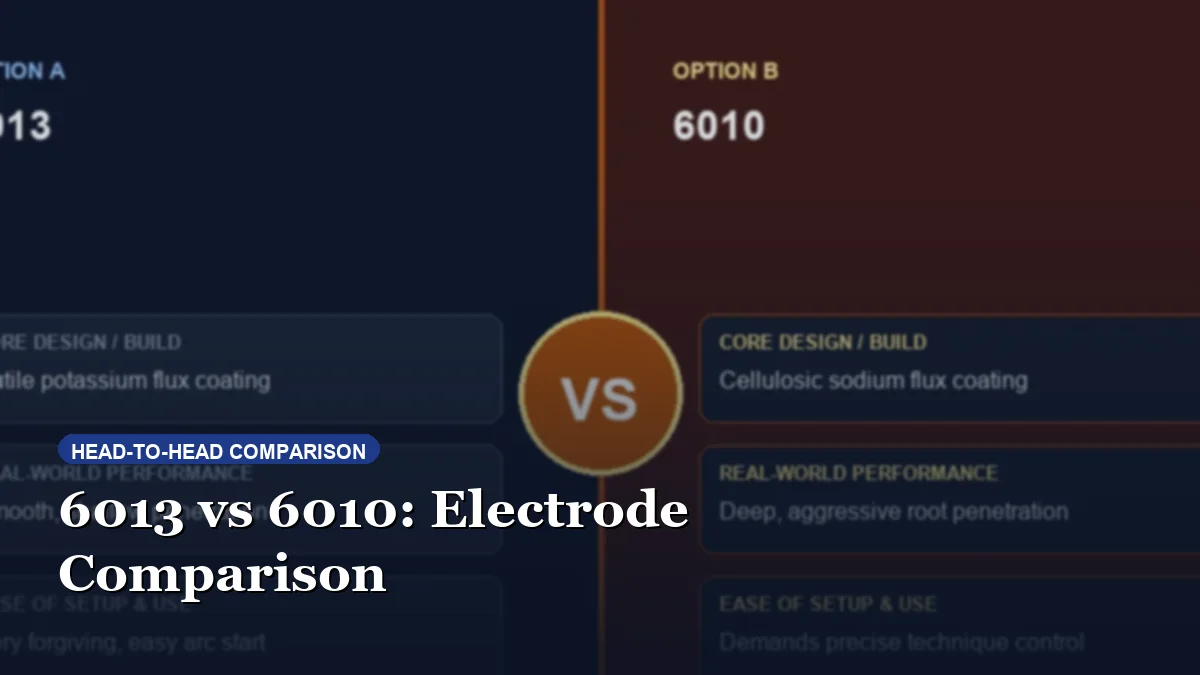
Pick 6013 for smooth, low-spatter sheet metal fabrication with AC power sources. Choose 6010 when you require deep penetration and out-of-position pipeline welding using DC- positive current.
Compare all top models in our Best Welder: Top Home Shop & Jobsite Picks Tested.
Side-by-Side Breakdown
| Criteria | 6013 | 6010 | Edge |
|---|---|---|---|
| Core Design / Build | Rutile potassium flux coating | Cellulosic sodium flux coating | 6013 |
| Real-World Performance | Smooth, shallow penetration | Deep, aggressive root penetration | 6010 |
| Ease of Setup & Use | Very forgiving, easy arc start | Demands precise technique control | 6013 |
| Durability & Reliability | Moderate moisture tolerance | Requires strict moisture control | 6013 |
| Efficiency / Operating Footprint | Works well on AC or DC | Requires DC power source | 6013 |
| Maintenance Requirements | Standard dry storage methods | Strict oven baking protocols | 6013 |
| Best Ideal Use Case | Sheet metal and general shop fabrication | Pipeline welding and dirty steel repair | 6010 |
Electrode Chemistry and Coating Compositions
Coating compositions fundamentally dictate how each electrode performs under varying environmental conditions and electrical parameters. Manufacturers engineer these consumable fluxes to produce specific shielding gases and slag blankets during the welding process.
The chemical formulation directly influences arc stabilization, weld pool fluidity, and mechanical properties. Operators should review a quality best welder option to understand core metallurgical traits before selecting structural rods.
Understanding flux chemistry helps prevent common discontinuities such as porosity, slag inclusions, and lack of fusion. Proper selection ensures compliance with AWS structural codes and rigorous quality control testing standards.
- Cellulosic sodium coatings for rapid gas generation
- Rutile titanium dioxide for smooth arc transfer
- Iron powder additions for increased deposition efficiency
Cellulosic Versus Rutile Coatings
Cellulosic coatings rely heavily on organic materials that decompose under extreme heat to create a protective gaseous shield. This design produces vigorous gas expansion that blasts away surface contaminants effectively.
Rutile coatings utilize titanium dioxide to establish a very stable arc with minimal spatter and fine droplet transfer. Welders appreciate this formulation for its aesthetic finish and exceptional ease of operation.
- High moisture sensitivity in cellulosic formulations
- Smooth bead appearance from rutile shielding elements
Penetration Profiles and Base Metal Prep
Penetration depth remains a critical distinguishing factor for any fabricator using a best starter welder setup. Deep digging arcs interact aggressively with contaminated steel plates to ensure full root fusion.
Surface preparation requirements change dramatically based on the specific electrode selection and coating chemistry involved. Mill scale, rust, and oil demand different levels of mechanical cleaning prior to arc initiation.
Welders working on heavy structural joints rely on aggressive arc characteristics to bridge minor gaps effectively. Conversely, delicate sheet metal fabrication requires gentler heat input to prevent catastrophic burn-through.
- Deep root penetration on uncleaned structural steel
- Shallow wetting action preventing thin metal distortion
Deep Digging Versus Gentle Wetting
Digging arcs utilize forceful plasma streams to blast through heavy contaminants and establish deep root fusion. This characteristic is mandatory for rigorous pipeline construction and ASME pressure vessel manufacturing.
Gentle wetting action deposits molten metal smoothly across joint surfaces without gouging the base material. Fabricators prefer this controlled heat transfer when joining thin automotive panels and architectural tubing.
- Forceful plasma stream for contaminant displacement
- Smooth puddle transfer for delicate sheet fabrication
Power Source Compatibility and Arc Dynamics
Electrical compatibility dictates whether an electrode operates efficiently on standard workshop transformers or an advanced best inverter welder for 6010 power source. Voltage stability heavily influences arc behavior during manipulation.
Direct current electrode positive polarity maximizes heat input into the base material for maximum fusion depth. Alternating current options provide versatile operation while eliminating the frustrating effects of magnetic arc blow.
Advanced inverter machines equipped with adjustable dig controls alter arc characteristics to prevent electrode sticking. Understanding these electrical dynamics ensures consistent arc performance across diverse job site environments.
- DC-positive requirement for deep cellulosic penetration
- AC transformer compatibility for versatile shop use
Transformer Versus Inverter Performance
Traditional heavy-duty transformer welders deliver robust electrical output suitable for continuous industrial production demands. These machines handle high duty cycles without thermal overload during rigorous structural fabrication projects.
Modern inverter systems offer precise digital control over amperage and arc force parameters for specialized applications. Their lightweight portability makes them indispensable for maintenance work across remote industrial facilities.
- High duty cycle endurance from copper transformers
- Digital microprocessor regulation in portable inverter units
Positional Versatility and Joint Configuration
Positional welding demands exceptional skill, a trait often mastered when learning on a best welder for beginners machine. Welders must manipulate the electrode correctly to prevent molten metal sagging during out-of-position vertical operations.
Joint configurations including butt, tee, and lap joints require careful amperage adjustments to achieve required penetration standards. Proper travel speed prevents undercut defects while ensuring adequate fill across complex structural geometries.
Mastering positional techniques guarantees structural soundness across challenging overhead and vertical upward welding scenarios encountered daily. Inspectors verify these parameters through rigorous radiographic and visual examination protocols.
- Vertical downhill progression for rapid pipeline passes
- Overhead weaving techniques for complete joint fill
Vertical Downhill and Overhead Techniques
Vertical downhill progression allows rapid travel speeds necessary for high-production pipeline root and hot passes. Operators manipulate the arc carefully to prevent slag entrapment ahead of the advancing weld pool.
Overhead welding requires tight arc lengths and precise heat control to defy gravity successfully. Welders utilize short whipping motions to allow momentary freezing of the puddle and prevent dripping failures.
- Rapid travel speed during vertical downhill runs
- Short arc manipulation during critical overhead passes
Mechanical Properties and Tensile Strength
Mechanical properties define the ultimate tensile strength, yield strength, and elongation percentage of deposited weld metal. Engineers evaluate these structural parameters carefully to ensure assemblies withstand maximum operational load requirements safely.
Classification numbers indicate minimum tensile strength capabilities measured in thousands of pounds per square inch under standard conditions. Meeting these rigorous industrial specifications prevents catastrophic structural failure under heavy operational stress.
Impact toughness testing at sub-zero temperatures confirms weld metal ductility and resistance to brittle fracture propagation. These laboratory metrics guide structural engineers when designing equipment destined for harsh northern climates.
- Sixty thousand psi minimum tensile strength rating
- High elongation percentages for superior impact resistance
Elongation and Yield Stress Standards
Elongation percentage measurements demonstrate the ability of the weld metal to deform plastically without cracking under stress. High ductility is essential for structures subjected to dynamic loading and severe vibrational forces.
Yield stress thresholds determine the exact point where permanent deformation begins within the welded steel assembly. Maintaining strict compliance with these engineering standards guarantees long-term durability across heavy industrial applications.
- Plastic deformation tracking via tensile coupons
- Yield stress verification under controlled laboratory loads
Storage, Moisture Control, and Maintenance
Proper electrode storage protocols prevent moisture absorption that degrades arc stability and causes hydrogen-induced cracking. Maintaining controlled environmental conditions in storage facilities preserves consumable quality over extended periods.
Cellulosic electrodes require specific moisture content levels to maintain proper arc characteristics and gas shielding effectiveness. Excessive drying ruins their performance, whereas damp storage leads directly to severe porosity defects.
Routine maintenance of electrode ovens and portable storage quivers ensures consistent welding performance on demanding job sites. Welders must follow manufacturer guidelines regarding temperature settings and holding time parameters precisely.
- Hermetically sealed container storage requirements
- Re-baking protocols for moisture-compromised rutile rods
Oven Baking and Scavenging Protocols
Oven baking at elevated temperatures restores moisture balance in hydroscopic flux coatings before critical structural welding. Technicians monitor thermal cycles closely to prevent flux degradation and thermal cracking issues.
Chemical scavenging agents within the electrode flux actively bind with residual impurities during the melting phase. This metallurgical cleaning action protects the final weld matrix from harmful inclusions and structural weaknesses.
- Precise temperature monitoring inside electrode ovens
- Active chemical scavenging of residual steel impurities
Frequently Asked Questions
Can I run 6010 on an AC welding machine safely?
Standard 6010 electrodes require direct current positive polarity to maintain a stable arc during demanding operations. Operating these cellulosic rods on alternating current causes erratic arc outages and severe operational instability.
What causes porosity when welding with 6013 rods?
Excessively long arc lengths or severe moisture absorption within the rutile flux coating typically trigger porosity defects. Keeping electrodes properly stored in heated ovens eliminates this common welding frustration completely.
Which electrode is better for rusty or dirty steel?
The aggressive digging arc of a 6010 electrode effortlessly blasts through heavy rust and mill scale. This makes it the superior choice for uncleaned field repairs and structural maintenance tasks.
Do 6013 electrodes produce heavy slag deposits?
They generate a thick, easily removable slag blanket that shapes a very smooth bead appearance. This self-peeling characteristic significantly reduces post-weld cleanup time on general fabrication projects.
Can beginners easily learn to weld with 6010?
Beginners often struggle with 6010 electrodes because the fast-freezing puddle requires precise and continuous manipulation. Novices should master the smoother handling characteristics of 6013 rods first before attempting cellulosic welding.