6010 vs 6011 Vs 6013: Electrode Comparison Guide
Selecting the right shielding electrode determines structural integrity. This guide evaluates cellulosic and rutile formulations for your specific shop requirements.


Choose 6010 for deep penetration on dirty DC-only steel joints. Select 6011 or 6013 when working with AC power sources or thinner sheet metal applications.
Compare all top models in our Best Welder: Top Home Shop & Jobsite Picks Tested.
Side-by-Side Breakdown
| Criteria | 6010 | 6011 Vs 6013 | Edge |
|---|---|---|---|
| Core Design / Build | Cellulosic sodium flux | Cellulosic potassium / rutile | 6010 |
| Real-World Performance | Deep digging arc | Balanced penetration | 6011 |
| Ease of Setup & Use | Demands skilled hand | Forgiving arc dynamics | 6013 |
| Durability & Reliability | High tensile weld metal | Dependable fillet integrity | 6010 |
| Efficiency / Operating Footprint | DC-only operational limits | AC/DC machine versatility | 6013 |
| Maintenance Requirements | Strict moisture storage | Standard dry storage | 6013 |
| Best Ideal Use Case | Pipe and structural welding | Sheet metal and general repair | 6011 |
Core Metallurgy and Design Architecture
Understanding electrode classifications requires examining the core wire and outer flux coating. These chemical compositions dictate arc stability, moisture absorption rates, and mechanical properties across various structural carbon steels.
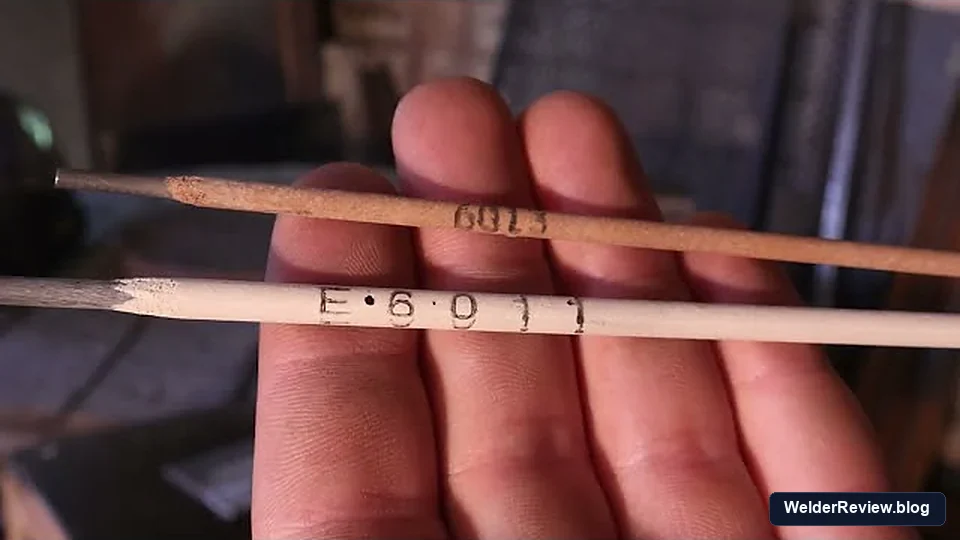
The cellulosic sodium and potassium components create a protective gaseous shield during combustion. Analyzing these fluxes, much like evaluating our best starter welder choices, helps fabricators understand how molten metal interacts with atmospheric contaminants.
- Cellulosic coatings generate high hydrogen shielding gas.
- Rutile additions improve arc smoothness and slag detachability.
- Core wire chemistry meets AWS structural steel standards.
Cellulosic Flux Formulations
Electrodes rely on organic materials like wood flour within the flux. During combustion, this material produces a forceful gas envelope that pushes molten slag away from the active weld pool.
This aggressive digging action requires an experienced operator to manage puddle fluidity. Welders must master rod manipulation techniques to prevent excessive undercut on thin structural joint configurations.
- High cellulose content creates intense arc force.
- Moisture retention is critical for proper flux activation.
Rutile Shielding Mechanics
Titanium dioxide rutile coatings offer completely different operational dynamics for everyday shop welding. They provide smoother, more stable arcs that require less manipulative skill from the machine operator.
The resulting slag layer solidifies quickly over the bead. This protective blanket shields the cooling weld metal while promoting an easily detachable surface finish after freezing.
- Rutile formulas stabilize the welding arc efficiently.
- Slag removal requires minimal chipping hammer effort.
Electrical Requirements and Power Source Compatibility
Power source selection remains critical when choosing between specific electrodes. Utilizing our best inverter welder for 6010 options ensures stable arc performance and deep penetration on heavy steel plates.
Matching the correct amperage range ensures proper heat input without damaging the flux coating. Operators must verify polarity settings to achieve optimal penetration profiles on heavy plates.
- Inverter welders provide precise current control.
- Polarity matching prevents unstable arc blow issues.
DC-Only Operational Constraints
Traditional cellulosic rods demand direct current electrode positive configurations to maintain stability. Attempting to run them on standard alternating current sources causes severe arc interruption and erratic behavior.
This DC requirement limits their use in older legacy transformer shops. Technicians must evaluate their existing electrical infrastructure before stocking large quantities of high-cellulose inventory.
- DCEP polarity ensures maximum arc penetration depth.
- Legacy AC machines cannot sustain cellulosic arcs.
AC/DC Transformer Versatility
Alternative formulations accept both alternating and direct current power sources seamlessly. This electrical flexibility makes them exceptionally popular for utility maintenance trucks and rural farm repair facilities.
Operators can switch power supply types without experiencing performance degradation or arc instability. Such versatility reduces equipment downtime and simplifies consumable management across diverse mobile job sites.
- AC compatibility expands shop machine utilization.
- Stable ignition works well on basic transformers.
Penetration Profiles and Arc Characteristics
The physical depth of fusion dictates how well a consumable handles structural loads. Deep penetrating rods anchor deeply into joint roots, securing critical weldments under severe stress.
Softer arc behaviors deposit cleaner surface beads with minimal spatter generation. Fabricators must balance penetration depth against workpiece thickness to avoid burn-through issues during assembly.
- Digging arcs cut through heavy mill scale.
- Soft arcs create cosmetic fillet profiles.
Digging Arc Dynamics
Aggressive arc force blasts away contaminants instantly upon contact. This characteristic allows fabricators to weld dirty or slightly rusted steel without extensive mechanical preparation beforehand.
The forceful plasma stream demands steady hand-eye coordination from the operator. Maintaining a tight arc length prevents shielding loss and porosity formation within the solidifying bead.
- High arc force pierces through surface rust.
- Strict arc length control prevents porosity.
Softer Deposition Behaviors
Lighter arc actions lay down smooth, uniform reinforcement profiles on clean joints. These rods minimize operator fatigue during long production runs in controlled fabrication shop environments.
The gentle transfer of metal reduces cleanup time significantly between successive passes. Welders appreciate the predictable puddle behavior when working on intricate joint geometries.
- Smooth metal transfer minimizes weld spatter.
- Gentle arc action suits thin plate fabrication.
Material Preparation and Joint Cleanliness
Shop efficiency often depends on how much time workers spend preparing metal joints. Certain electrodes tolerate surface impurities much better than others due to their unique chemical formulation.
Grinding away paint, oil, and heavy rust ensures sound welds across all classifications. However, field repair scenarios frequently demand consumables that burn through minor surface contamination.
- Surface contaminants cause dangerous weld porosity.
- Cellulosic fluxes tolerate minor rust layers.
Handling Mill Scale and Rust
Field construction projects frequently involve weathered steel components covered in heavy scale. Choosing equipment from our best welder for beginners guide helps operators utilize specialized formulations that blast through surface barriers effectively.
This capability saves valuable labor hours on remote outdoor job sites. Operators can strike an arc directly on unpolished structural members and achieve reliable fusion.
- Reduces pre-weld mechanical grinding time.
- Maintains fusion through thin oxidation layers.
Precision Fit-Up Demands
Cleaner rutile formulations require tightly fitted joints to prevent burn-through. Gaps in the metal assembly cause molten puddles to drop through easily when using low-penetration rods.
Fabricators must ensure accurate cutting and clamping before striking an arc. Proper joint preparation guarantees structural soundness and eliminates costly rework procedures.
- Strict gap tolerances prevent puddle drop-through.
- Clean metal surfaces yield superior X-ray results.
Positional Welding and Arc Control
Gravity constantly influences molten metal behavior during vertical and overhead fabrication tasks. Selecting an electrode with fast-freezing slag characteristics simplifies out-of-position welding operations dramatically.
Operators must adjust travel speeds and amperage settings to match specific joint angles. Mastering these techniques ensures uniform bead reinforcement without excessive sagging or undercut defects.
- Fast-freeze slag supports vertical upward welding.
- Gravity affects puddle control on overhead joints.
Overhead and Vertical Mastery
Welding upwards against gravity requires quick-setting slag to hold the puddle. Cellulosic and semi-cellulosic rods excel in these challenging orientations by freezing rapidly as the arc passes.
Welders rely on whipping motions to control heat input and puddle size. This technique prevents molten metal from dripping onto the operator or surrounding equipment.
- Rapid slag freeze aids vertical progression.
- Whip and pause techniques manage heat input.
Flat and Horizontal Efficiency
Flat plate groove welds and horizontal fillets benefit from smooth-filling electrodes. These consumables lay down heavy deposits efficiently when gravity assists the molten metal transfer.
Operators can maintain steady drag angles to achieve excellent tie-in at the toes. Production output increases significantly during long horizontal structural welding sequences.
- Gravitational assistance speeds up flat welding.
- Steady drag angles ensure proper toe wetting.
Slag Management and Post-Weld Cleanup
Post-weld cleanup consumes considerable labor time in busy fabrication workshops. The type of flux coating directly influences how easily the solidified slag layer detaches from the finished bead.
Efficient slag removal prevents inclusion defects between multi-pass layers. Welders must chip and brush surfaces thoroughly before depositing subsequent weld passes.
- Slag inclusions weaken multi-pass structural welds.
- Proper cleaning ensures NDT inspection readiness.
Removing Heavy Cellulosic Slag
Cellulosic electrodes produce a thin, tightly adherent slag covering. Operators often need chipping hammers and wire brushes to clear this residue from deep joint grooves.
Multi-pass pipe welds require meticulous interpass cleaning to prevent slag entrapment. Skipping this vital step compromises the structural integrity of high-pressure piping systems.
- Tightly adherent slag demands mechanical chipping.
- Interpass cleaning prevents harmful slag inclusions.
Self-Peeling Rutile Deposits
Titanium-based coatings create a heavy slag that frequently lifts off independently. As the weld cools, thermal contraction causes the slag layer to crack and peel away smoothly.
This self-cleaning property reduces post-weld processing time and labor costs. Fabricators appreciate the clean, attractive bead appearance revealed immediately after the slag separates.
- Thermal contraction promotes self-peeling slag.
- Minimizes manual chipping hammer requirements.
Practical Applications and Shop Selection
Matching electrode characteristics to specific industrial applications ensures optimal project outcomes. Reviewing our best welder recommendations helps pipeline contractors and maintenance mechanics select proper AWS classifications for daily tasks.
Evaluating structural load requirements and environmental exposure guides the final consumable selection process. Proper matching prevents premature structural failures in demanding operational environments.
- AWS standards classify electrodes by tensile strength.
- Application demands dictate consumable inventory choices.
Structural and Pipeline Fabrication
Heavy structural erection and cross-country pipeline construction demand high tensile strength. Cellulosic rods dominate these industries due to their exceptional root penetration and mechanical durability.
Code compliance requires rigorous testing to prove joint quality under extreme stress. These specialized consumables consistently pass strict radiographic inspections on critical energy infrastructure projects.
- Meets strict radiographic pipeline test standards.
- Provides high tensile strength for buildings.
Maintenance and Sheet Metal Repairs
Farm repairs and general sheet metal fabrication require versatile, user-friendly consumables. Rutile options perform exceptionally well on thin gauges and standard shop transformer machines.
Maintenance technicians stock these rods for quick machinery fixes and bracket fabrication. Their ease of use allows apprentices to produce acceptable welds with minimal training.
- Ideal for thin gauge steel repairs.
- Simplifies training for novice shop operators.
Frequently Asked Questions
Can I run cellulosic electrodes using an alternating current machine?
Choosing the correct electrode depends entirely on your specific power source capabilities, base material thickness, and joint cleanliness requirements for demanding structural steel fabrication projects encountered daily.
Cellulosic rods strictly demand specialized direct current systems, whereas rutile options easily accommodate standard alternating current workshop transformers without experiencing any arc stability issues.
Why do rutile electrodes require less cleaning preparation than cellulosic types?
Choosing the correct electrode depends entirely on your specific power source capabilities, base material thickness, and joint cleanliness requirements for demanding structural steel fabrication projects encountered daily.
Cellulosic rods strictly demand specialized direct current systems, whereas rutile options easily accommodate standard alternating current workshop transformers without experiencing any arc stability issues.
Which electrode classification works best for vertical up pipe welding?
Choosing the correct electrode depends entirely on your specific power source capabilities, base material thickness, and joint cleanliness requirements for demanding structural steel fabrication projects encountered daily.
Cellulosic rods strictly demand specialized direct current systems, whereas rutile options easily accommodate standard alternating current workshop transformers without experiencing any arc stability issues.
How does moisture affect the performance of cellulosic flux coatings?
Choosing the correct electrode depends entirely on your specific power source capabilities, base material thickness, and joint cleanliness requirements for demanding structural steel fabrication projects encountered daily.
Cellulosic rods strictly demand specialized direct current systems, whereas rutile options easily accommodate standard alternating current workshop transformers without experiencing any arc stability issues.
What causes slag inclusions during multi-pass structural welding operations?
Choosing the correct electrode depends entirely on your specific power source capabilities, base material thickness, and joint cleanliness requirements for demanding structural steel fabrication projects encountered daily.
Cellulosic rods strictly demand specialized direct current systems, whereas rutile options easily accommodate standard alternating current workshop transformers without experiencing any arc stability issues.